
Final revised ESRS published



On September 21, 2026, the final revised European Sustainability Reporting Standards (ESRS) were published in the Official Journal of the European Union. That brings roughly a year and a half of Sustainability Omnibus discussion to a close, and companies in scope of the CSRD can plan their sustainability reporting on a reliable basis again.
Background: from EFRAG draft to delegated regulation
The revised ESRS are the result of a multi-stage process. EFRAG submitted a draft in November 2025, the European Commission put an adjusted version out for public consultation in May 2026 and adopted the final delegated act on July 3, 2026. With the two-month scrutiny period for Parliament and Council now expired, the act has been published as Commission Delegated Regulation (EU) 2026/1563. Commission Delegated Regulation (EU) 2026/1560, covering the voluntary sustainability reporting standard (VS) for companies outside the scope of the CSRD, was published alongside it.
The most important changes compared to the previous ESRS
The revised version runs to 163 pages instead of 284. Four changes matter most:
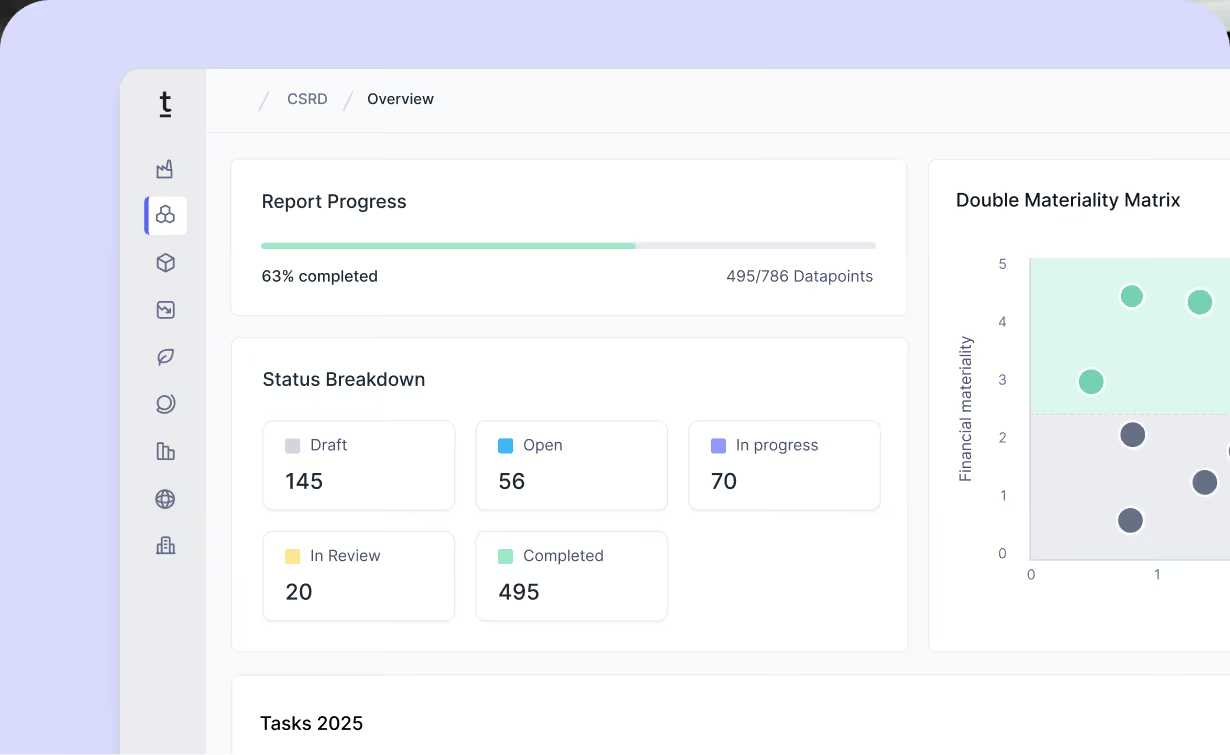
- Double materiality assessment: the process is described more clearly and slightly simplified, including a recommendation to use a top-down approach.
- Fewer redundancies: overlaps between ESRS 2 and the topical standards have been removed, for example in headcount disclosures and human rights policies.
- Considerably fewer data points: the number of data points drops sharply (by around 60 percent according to the EU), while the thematic scope of reporting stays the same.
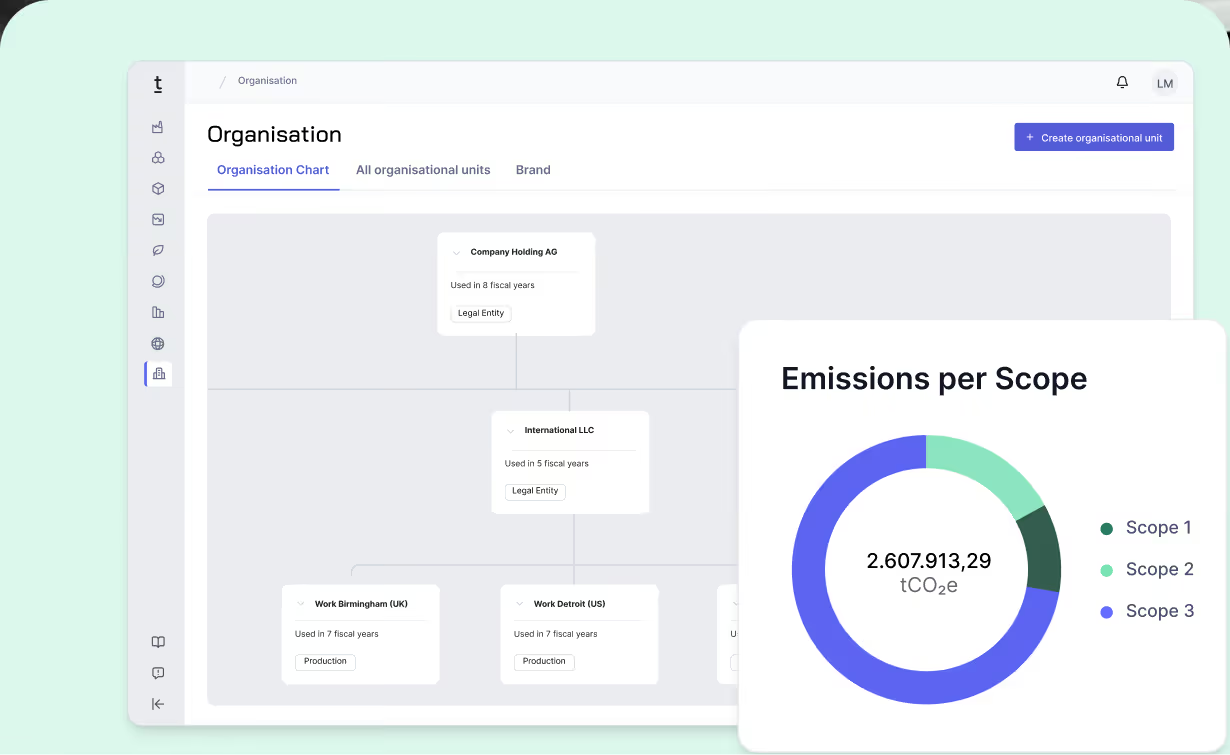
- More flexibility in application: broader exclusion options, a free choice between the financial and operational control approach for greenhouse gas emissions, and clarifications on climate transition plans.
No substantive surprises compared to the July version
Anyone who has already worked through the version adopted on July 3 does not need to start over. The differences are formal, such as placeholder references to other pieces of legislation that have now been filled in. The 23 fewer pages compared to the July version come purely from a changed page layout, not from deleted content.
Transitional rules: an option for financial year 2026
The regulation enters into force on November 10, 2026. The revised ESRS are mandatory for financial years beginning on or after January 1, 2027. For financial years beginning between January 1 and December 31, 2026, companies have three options:
- Apply the previous ESRS in their most recent version
- Apply the revised ESRS in full
- Apply the previous ESRS combined with selected reliefs from the revised version
The option chosen has to be disclosed in the sustainability statement.
What companies can do now
Companies can already prepare their 2026 reporting on the basis of the revised ESRS. The VDMA expects the effort involved to fall by 20 to 25 percent. Moving now also avoids a second changeover when financial year 2027 makes the revised standards mandatory.
One open point remains the final list of data points: EFRAG plans to publish it in November 2026. The public fatal flaw review of the draft list runs until October 23, 2026. For the technical implementation in systems and data processes, that list is the decisive basis.
How Tanso helps
Tanso helps manufacturing companies build sustainability management that is structured and built to last, from the strategic assessment of regulatory requirements through to operational implementation. At its core is integrated ESG data management that creates transparency across processes, metrics and responsibilities, and that can be used as a strategic advantage in ESG ratings and in financial incentives from banks and insurers.
Tanso software captures CCF, PCF and social KPIs consistently and aligns them with stakeholder requirements. In the context of the Sustainability Omnibus, Tanso also enables flexible multi-reporting across different ESG standards, including ESRS, EcoVadis, SAQ 5, GRI and VSME.















































































.avif)





.avif)
.jpg)


