


Which PPWR software is right for your manufacturing business? Five solutions compared


Starting August 12, 2026, the EU Packaging Regulation (PPWR, Regulation (EU) 2025/40) applies directly in all Member States. It replaces the previous Packaging Directive and turns a fragmented patchwork of national rules into a single, directly applicable regulatory framework for the first time. For industrial companies, this means: every packaging item placed on the EU market must demonstrably meet specific requirements for recyclability, recycled content, hazardous substance limits, and labeling. And every one of those requirements needs data.
That's where the real challenge lies. The regulatory requirements are demanding but manageable. The data foundation to meet them rarely is. Packaging information is scattered across ERP systems, Excel spreadsheets, supplier specifications, and PDF data sheets. Companies that compile declarations of conformity, technical documentation, and EPR reports manually tie up months of capacity and risk errors that become costly in an audit.
Specialized PPWR software addresses exactly this problem. In this article, we map the market, outline what matters when choosing a solution, and present the five most relevant tools for industrial companies in our view.
Why companies are turning to specialized PPWR software
The PPWR shifts the compliance burden from a one-time filing to an ongoing, data-driven process. Three developments are driving the need for dedicated software:
- Per-packaging proof of conformity: Conformity must be demonstrated per packaging unit, including material composition, weights, and components. For portfolios with hundreds or thousands of packaging items, spreadsheets simply cannot handle this cleanly.
- Supply chain dependency: A large share of the relevant data, on materials, recycled content, or PFAS, comes from suppliers. Without a structured data collection process, the data foundation remains incomplete.
- Multi-country complexity: EPR registration and modulated fees differ from one Member State to another. Companies selling in multiple EU markets need a system that can handle this logic.
A specialized solution consolidates these tasks in one place, instead of distributing them across departments and tools.
The challenges of manual data collection
Most industrial companies start their PPWR preparation with an Excel spreadsheet. This works up to a point, but hits limits quickly:
- Data silos: Master data lives in the ERP, material data sits with the supplier, recyclability assessments are in a third tool. No one has the full picture.
- No audit trail: Who changed which entry, and when? A traceable audit trail is mandatory for an audit-proof dossier - something spreadsheets cannot provide.
- Supplier communication via email: Data requests by email are error-prone, hard to track, and don't scale across dozens or hundreds of suppliers.
- No direct link to the regulation: A spreadsheet doesn't know whether a hazardous substance limit is being met or a recycled content target is being missed. The assessment remains manual work.
There is also the EPR dimension: extended producer responsibility, modulated fees, and registration in the LUCID Register are a topic in their own right, closely intertwined with packaging data.
Benefits of PPWR software
A specialized solution addresses these problems systematically:
- Centralized data management: All packaging-relevant master data, material data, and component data in one place.
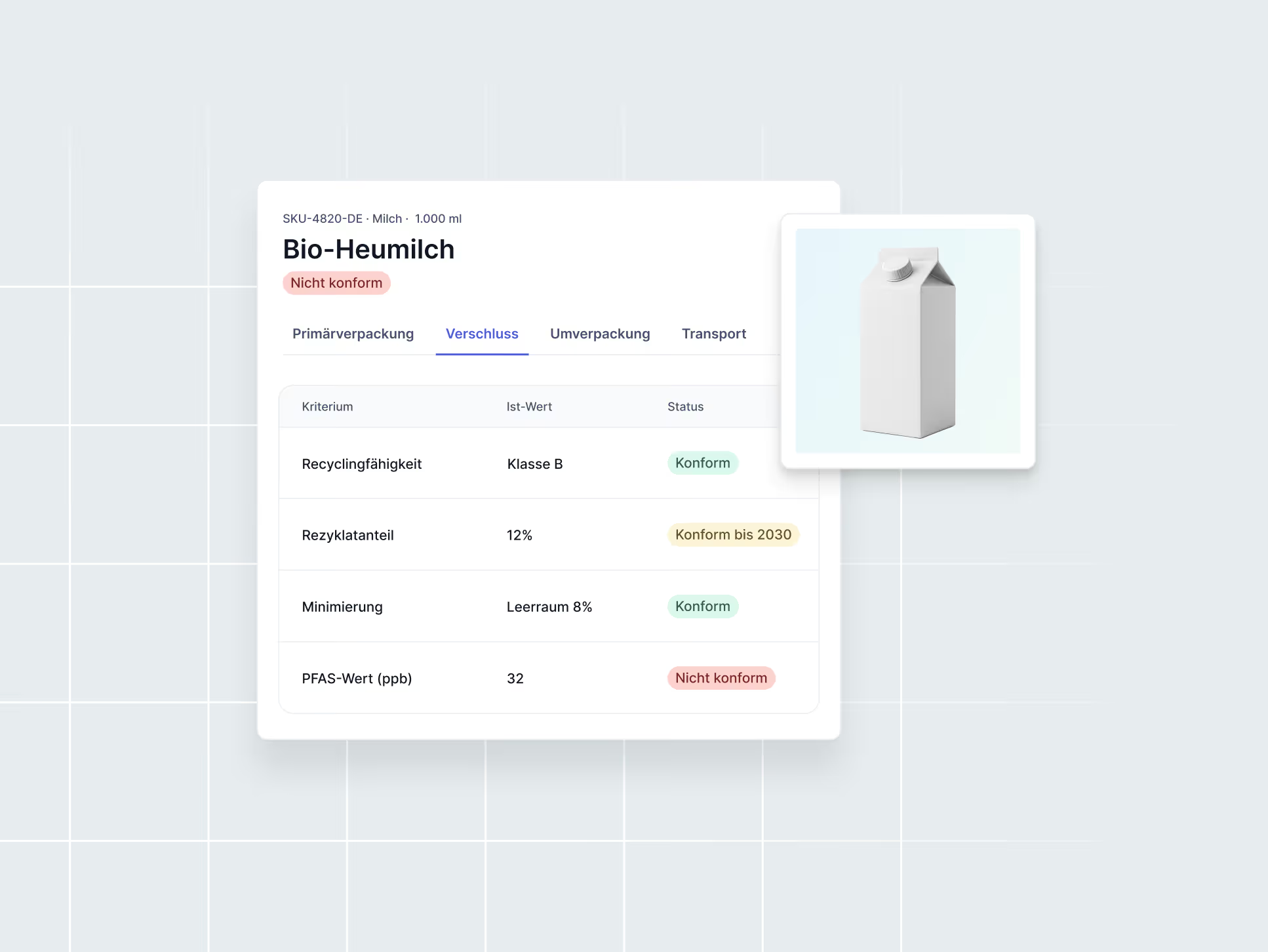
- Automated compliance assessment: The software checks every packaging item against PPWR requirements and immediately shows where conformity is met and where data or action is missing.
- Structured supplier data collection: Standardized questionnaires and portals replace email communication and close data gaps in a traceable way.
- Automatic document generation: Declarations of conformity and technical documentation generated at the click of a button, audit-proof.
- Audit trail and scalability: Every change is traceable, and the system grows with the portfolio.
The top 5 PPWR software solutions
The PPWR software market is young and fast-moving in 2026. The following five solutions cover different priorities - from ERP-integrated compliance platforms to specialized packaging management tools. Which one fits best depends on portfolio size, data maturity, and existing system landscape.
Note: This article is published by Tanso. We include ourselves in the comparison.
1. Tanso
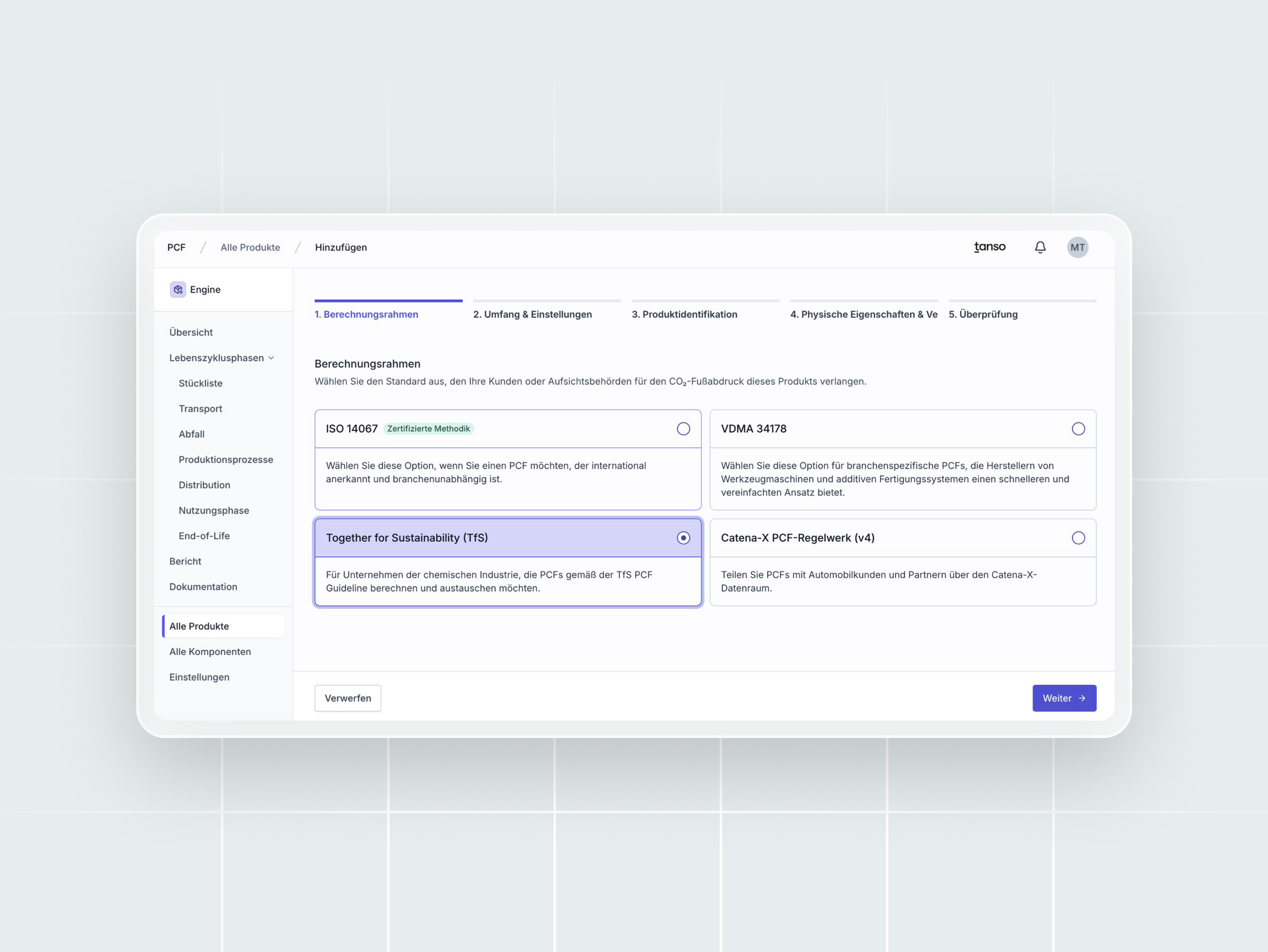
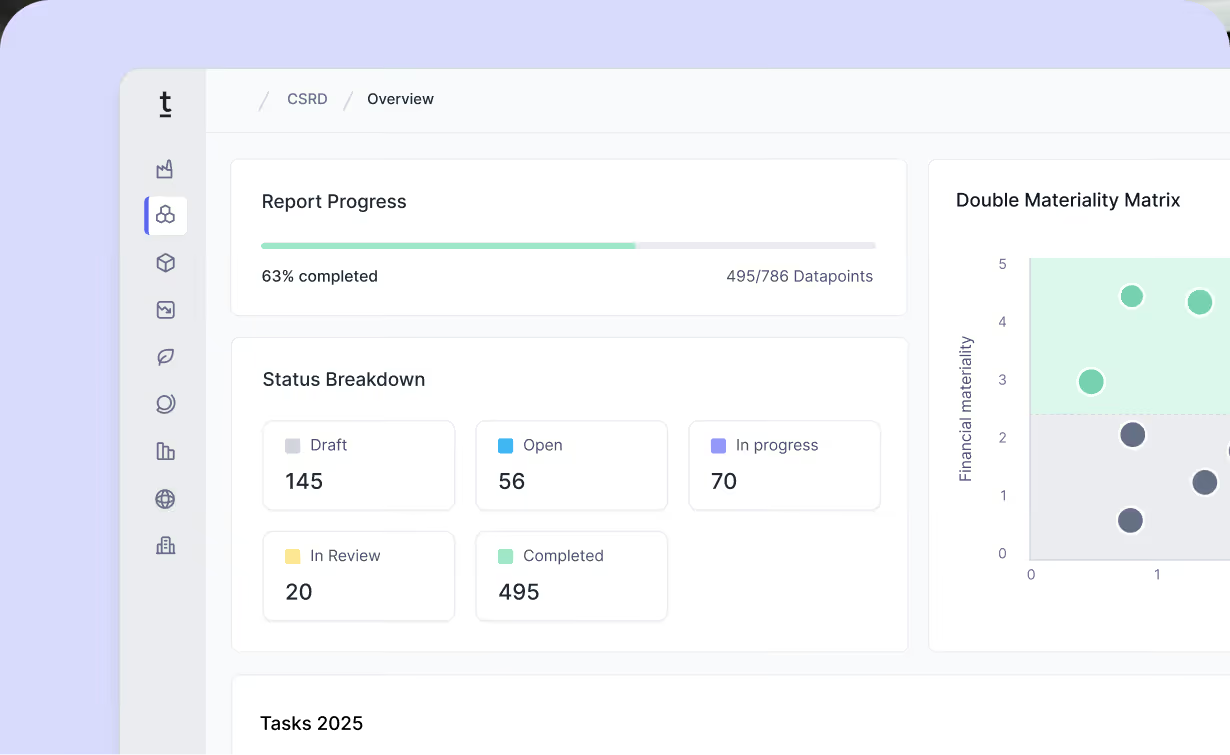
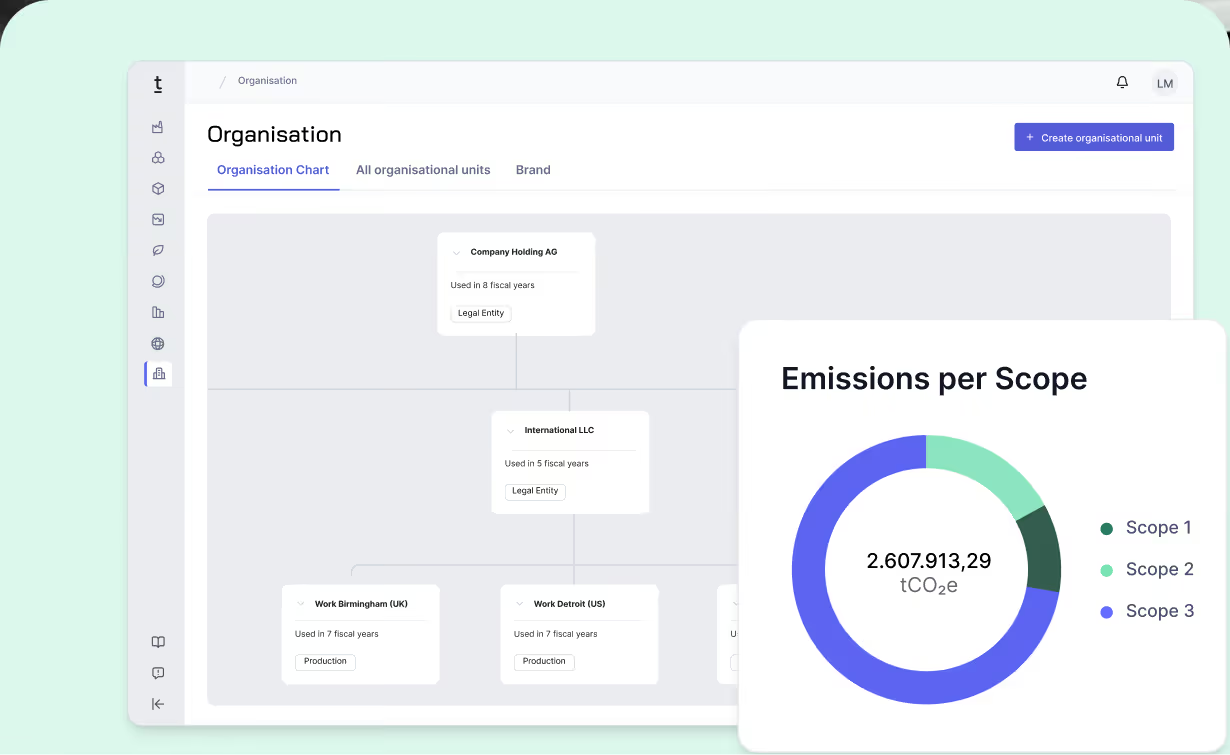
Tanso is an ESG and product compliance platform for mid-sized and large industrial companies in the DACH region that combines carbon accounting (CCF and PCF), CSRD reporting, and packaging compliance for PPWR in a single system. The PPWR module maps the packaging world in a clear hierarchy, from articles to packaging units and their components through to the associated suppliers, and automatically assesses every packaging item against PPWR requirements. What sets Tanso apart from pure packaging tools: PPWR data can be directly linked to Product Carbon Footprints, life cycle assessments, and CSRD reporting, since all modules are built on the same data foundation.
Key features
- Data model spanning article, packaging, component, and supplier
- Automated compliance assessment per packaging item (hazardous substance limits, recycled content, recyclability)
- Integrated supplier portal with structured questionnaire
- Automatic generation of declarations of conformity and technical documentation; AI Copilot reads PDF data sheets
- Connectivity to existing systems including SAP, Microsoft Dynamics, SharePoint, and Excel
Companies that anticipate further product-related compliance requirements to follow after PPWR, and that approach PPWR not in isolation but alongside their broader sustainability and ESG obligations, are building on a platform with Tanso that is designed for exactly that today.
2. PackIntelX
PackIntelX is a PPWR-specialized digital compliance platform that emerged from the recycling and plastic waste sector. The platform is aimed at packaging producers, brand owners, and importers placing packaging on the EU market.
Key features
- Centralized data management with supplier portal
- Declaration of conformity generation with guided templates and automated workflows
- Recyclability assessment per PPWR Article 6
- PFAS and heavy metal analysis per PPWR Article 5
- EPR Navigator: multi-country licensing and PRO offer comparison
PackIntelX is particularly well suited for companies where the recyclability of packaging and proof per PPWR Articles 5 and 6 are the primary concern, and that need to manage EPR across multiple EU markets.
3. Packa
Packa is a packaging management solution with a clear focus on large, data-intensive portfolios, particularly in the FMCG space. The platform consolidates packaging data, specifications, and compliance documentation in one system. In addition to PPWR, Packa also addresses EPR costs and the Digital Product Passport.
Key features
- AI-assisted extraction of packaging data (material, layers, weight, recycled content) from documents
- Automated compliance checks, recyclability assessment, and CO₂ calculation at article level
- Declaration of conformity generation and EPR cost analysis
- Data gap analysis for PPWR, EPR, and the Digital Product Passport
Packa can be interestingfor consumer goods manufacturers with very large portfolios that want to tackle PPWR compliance and packaging optimization together. For industrial B2B structures outside the FMCG environment, however, the solution is only partially tailored.
4. Consust
Consust is a German ESG software platform with a focus on reporting obligations. PPWR is added as one of several modules and remains closely tied to the reporting-oriented core structure: AI-assisted data collection, guided workflows, and accompanying consulting.
Key features
- PPWR module with data management, target definition, and action tracking
- AI-assisted workflows, integrated FAQs, and best practices
- Coverage of further ESG obligations: CSRD/ESRS, EU Taxonomy, LkSG/CSDDD, CCF, VSME, and others
- Audit-proof workflows with full change log
Consust can be a fit when PPWR is one part of a broader ESG reporting agenda. For companies that need to implement PPWR operationally and down to the component level, however, a specialized platform is a better choice.
5. SAP Responsible Design and Production
SAP Responsible Design and Production (RDP) is SAP's answer to EPR, plastic taxes, and packaging regulation. The solution is natively integrated into S/4HANA and the SAP Business Technology Platform, making it particularly relevant for companies already deeply embedded in the SAP ecosystem. The approach is transaction-oriented: packaging data is linked to real sales and volume data, providing an especially robust foundation for EPR reporting.
Key features
- Native integration into S/4HANA and the SAP Business Technology Platform
- EPR fees, plastic taxes, and reporting obligations for many countries
- Packaging compositions across primary, secondary, and tertiary levels
- Link to real sales data for audit-proof EPR reports
- Pre-configured reports for CITEO, CONAI, Spanish plastic tax, and others
SAP RDP is the natural choice for large companies already fully built on S/4HANA that want to manage EPR reporting and packaging data from one system.
Conclusion: The right solution depends on your starting point
Each of the five solutions has its place. SAP RDP is the natural choice for companies already fully built on SAP. Packa addresses FMCG companies with large, data-intensive portfolios. Consust works well when PPWR is only a secondary aspect of a broader ESG reporting strategy. PackIntelX stands out with proven recycling expertise and a structured EPR approach for multiple markets.
For mid-sized and large industrial companies whose packaging data is still scattered today and who want to manage PPWR alongside their other sustainability and ESG obligations, Tanso is particularly relevant. The decisive difference: Tanso does not require what is rarely available in practice: a complete, clean data foundation. The platform meets companies where they actually stand and guides them from there to conformity in a structured way.
What matters most is acting now. The PPWR applies from August 12, 2026. Companies that start their software selection today give themselves the lead time they need before the deadline.
Still have questions about the specific PPWR requirements? Our PPWR FAQ for manufacturers answers the most common questions on conformity, labeling, and EPR.
Disclaimer: The information about the software solutions compared in this article is based on publicly available sources (websites, product pages, documentation) as of June 2026. We have aimed for a fair and factual representation but cannot guarantee completeness or ongoing accuracy. Features are subject to change, we recommend contacting vendors directly before making a purchasing decision.













































































.avif)





.avif)
.jpg)


