


Tanso's new ESG module: One data foundation for every report, every analysis, every AI application


Whether you're preparing your first CSRD report or have already completed several reporting cycles: the most time-consuming part is rarely the reporting itself, but the data behind it. Where is it collected? How often? By whom? How does it flow between reports, into analytics, and into AI applications? How is it consolidated and reviewed across sites?
After hundreds of reports with more than 300 industrial customers, we've restructured our ESG module around exactly these questions.
Indicators as your central data foundation
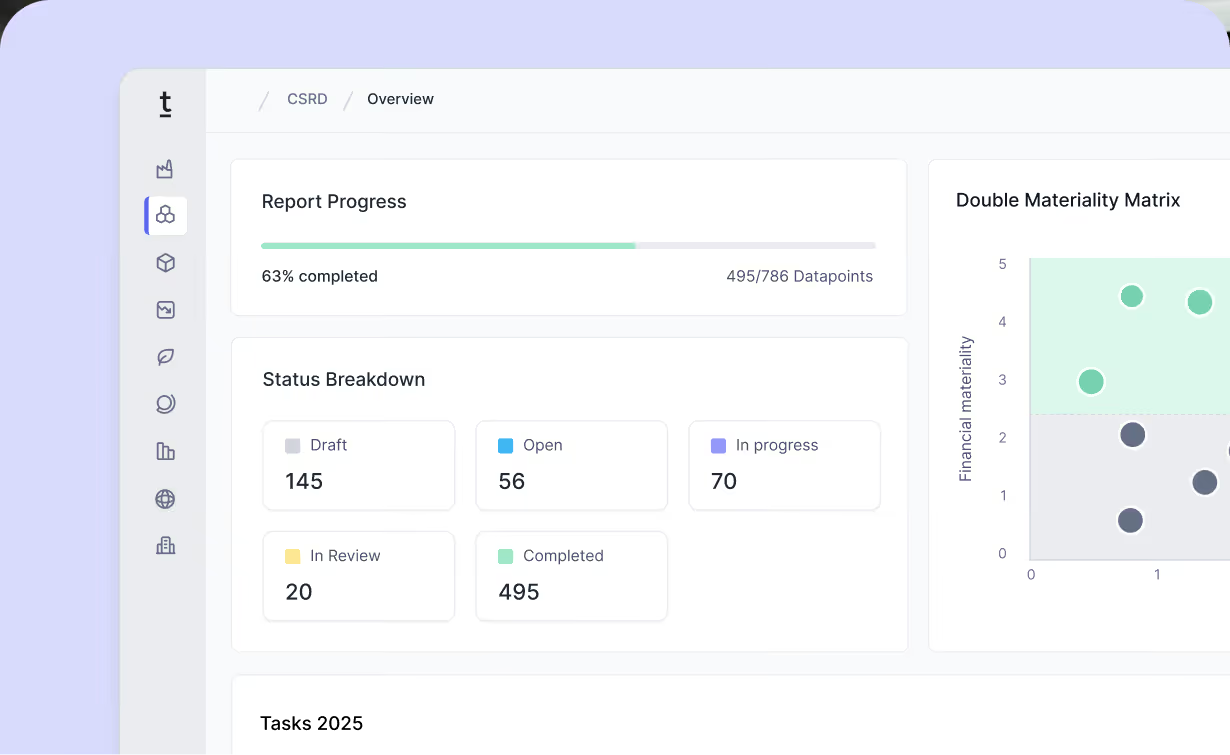
You now manage sustainability Indicators (such as emissions, energy consumption, employee data, workplace incidents) centrally, across every report and every standard.
Each Indicator is defined and collected once, then reusable for any output: reports, analytics, AI applications. The underlying data can come from any source: existing systems, direct employee input, or unstructured documents. Depending on your data quality, you can choose from a wide range of collection methods, from AI-assisted direct entry and bulk upload to direct integration with your existing systems through APIs. Tanso ESG adapts to your data reality and your goals.
You decide which organizational units collect data, and how often (monthly, quarterly, annually), using predefined templates from ESRS or VSME, or your own custom Indicators.
Especially relevant for controlling and finance: calculated Indicators. You can combine any Indicators with each other: emissions per 1,000 employees, energy costs per revenue, ISO or EMAS-relevant intensity metrics. This turns the ESG module into a tool for connecting sustainability figures with operational ones, exactly the kind of context that standards increasingly require and that boards expect.
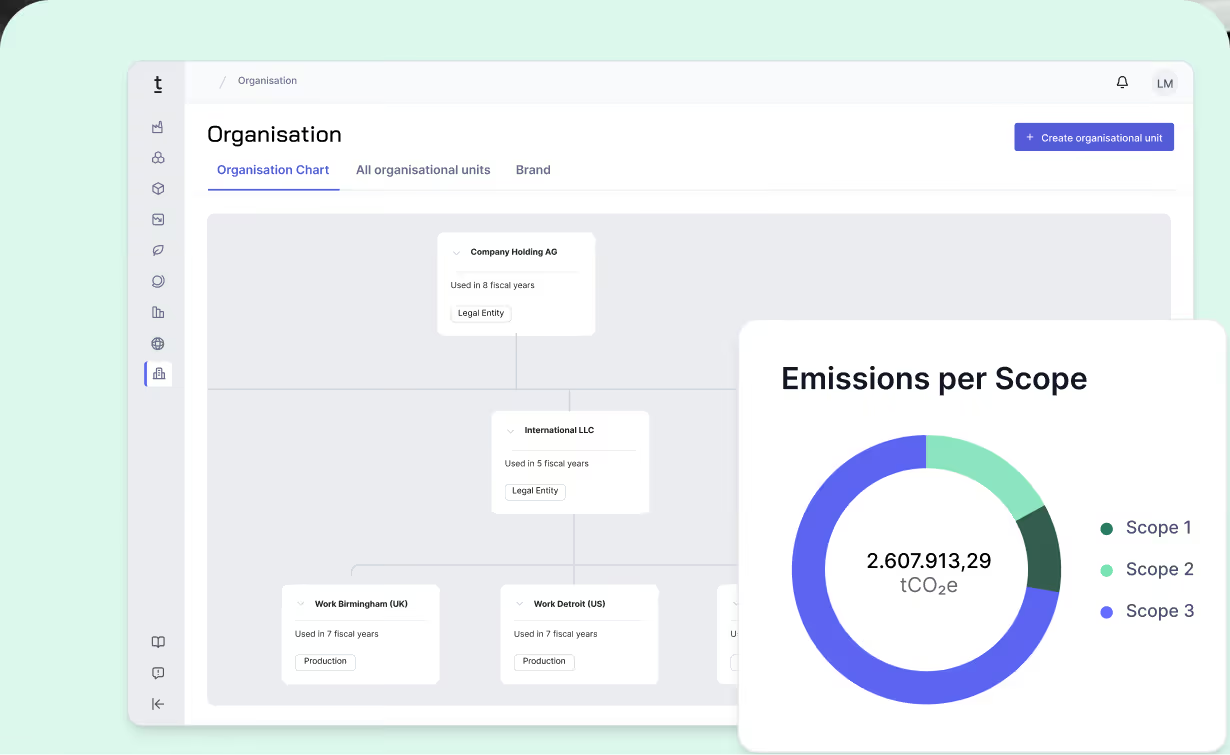
The result: one source-of-truth for all your quantitative ESG data, with a complete audit trail and, if you choose, automatic aggregation across time and organizational units.
Data collection without the friction
Decentralized data collection, gathering data from employees at different sites, in HR, or in facility management, has so far been the most time-consuming part of every reporting cycle.
With our new data request system, you can bundle dozens or hundreds of datapoints from multiple reports into a single request per person and site, instead of sending them out fragmented one by one. For recipients, that means no more flood of individual requests with abstract labels. Instead, they get one clean, multilingual form with clear questions and progress tracking.
Your data and supporting evidence remain fully traceable throughout: every response, every change, and every attached document is captured in the audit trail and automatically consolidated at every organizational level, from individual site to group level, so you can always trace what a number is made up of and who contributed which value, and when.
AI-supported data quality monitoring automatically flags anomalies for you, and the same data foundation can be shared directly with other Tanso modules, such as Corporate Carbon Footprint (CCF). You collect your data once and can then use it across other Tanso modules.
And because campaigns can repeat on different rhythms (monthly, quarterly, annually), ESG data collection becomes a plannable, continuous process instead of an annual scramble.
Analytics for internal decisions
ESG data is increasingly needed not just for reporting, but for internal decision-making. Site managers ask for comparisons, boards want trend analyses, and CFOs want to see Indicators in the context of other operational figures.
Tanso lets you analyze any captured data field and visualize it with a range of chart types, freely aggregated across any organizational level, time period, or dimension. Reduction potential becomes visible, and the results of sustainability measures can be evidenced both internally and externally. Stakeholder requests that used to cost two days in Excel, such as energy consumption per site or workforce structure per legal entity, are now a single query.
Even smarter Tanso AI
Tanso AI now works with more context: it reads across all your data requests and your central document library when helping you with datapoints, including qualitative information such as social protection for your workforce, which can vary significantly from country to country and site to site. Tanso AI automatically consolidates the individual responses from your sites into one coherent, company-wide statement, with citation markers that link straight back to the source with a single click.
Either way, whether a figure was entered by a person or suggested by Tanso AI, it passes through the same governance layer, with the same audit trail and the same approval workflows. That means you get the speed of AI without giving up control over your data, which matters most when auditors ask questions.
The underlying data structure is also optimized for integration with your existing IT landscape. Your ESG data connects to your analytics, BI, and data warehouse systems instead of ending up in yet another silo.
What this means in practice
Here's what customers using the new ESG module in their daily work have to say:


Available now
The new ESG module is available now. Our Customer Success team is happy to help with any questions.
Interested in a demo? Book a 30-minute meeting with our team, and we'll walk you through the module using your own use cases.












































































.avif)





.avif)
.jpg)


