

Audit-ready PCFs for your key accounts, Catena-X and TfS
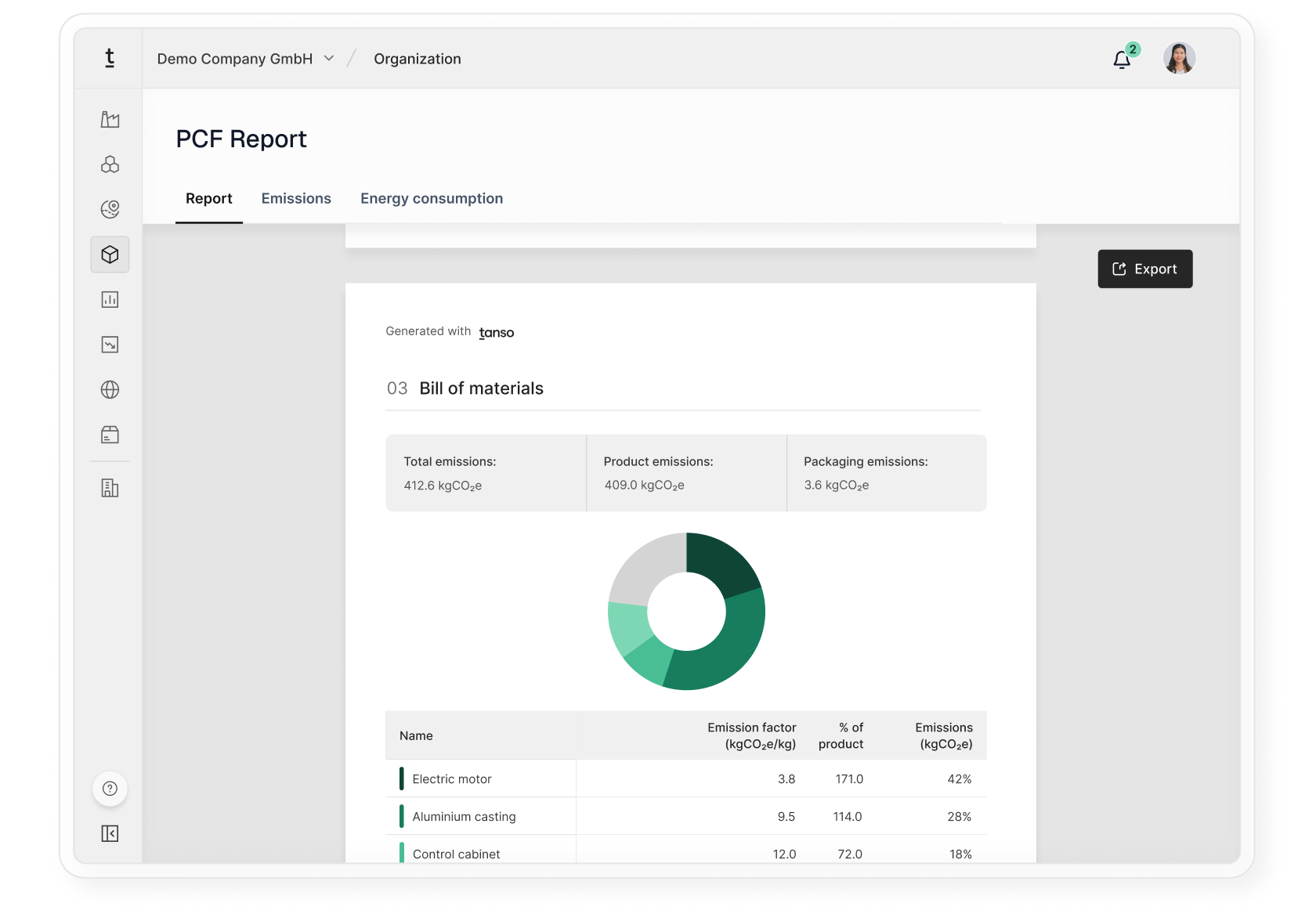
From bill of materials to PCF report on one data foundation, in line with ISO 14067.





What our customers say
We first calculated our CCF with Tanso and now our PCF as well. Tanso's holistic approach lets us reuse values we've already determined, which helps us avoid duplicate work and save significant time.


Tanso is our central solution for carbon accounting and ESG management: a single platform that brings CCF, PCF, and CSRD together seamlessly and creates synergies where duplicate work used to be necessary.


With Tanso, we reduced the effort required for PCF calculations from 1.5 hours to a single click - while simultaneously increasing transparency and data quality.


For Catena-X data exchange, what matters most is how well the PCF has been prepared in advance. Tanso delivers Catena-X-compliant PCF data that can be calculated efficiently and easily thanks to AI-powered data management. That's exactly the foundation that lets us at sovity calculate and exchange PCF data for our customers across entire value chains.


Today, I can calculate in five minutes how much CO₂ we would save by electrifying a furnace. This level of flexibility would have been impossible in the past.


Everything you need for a scalable PCF process
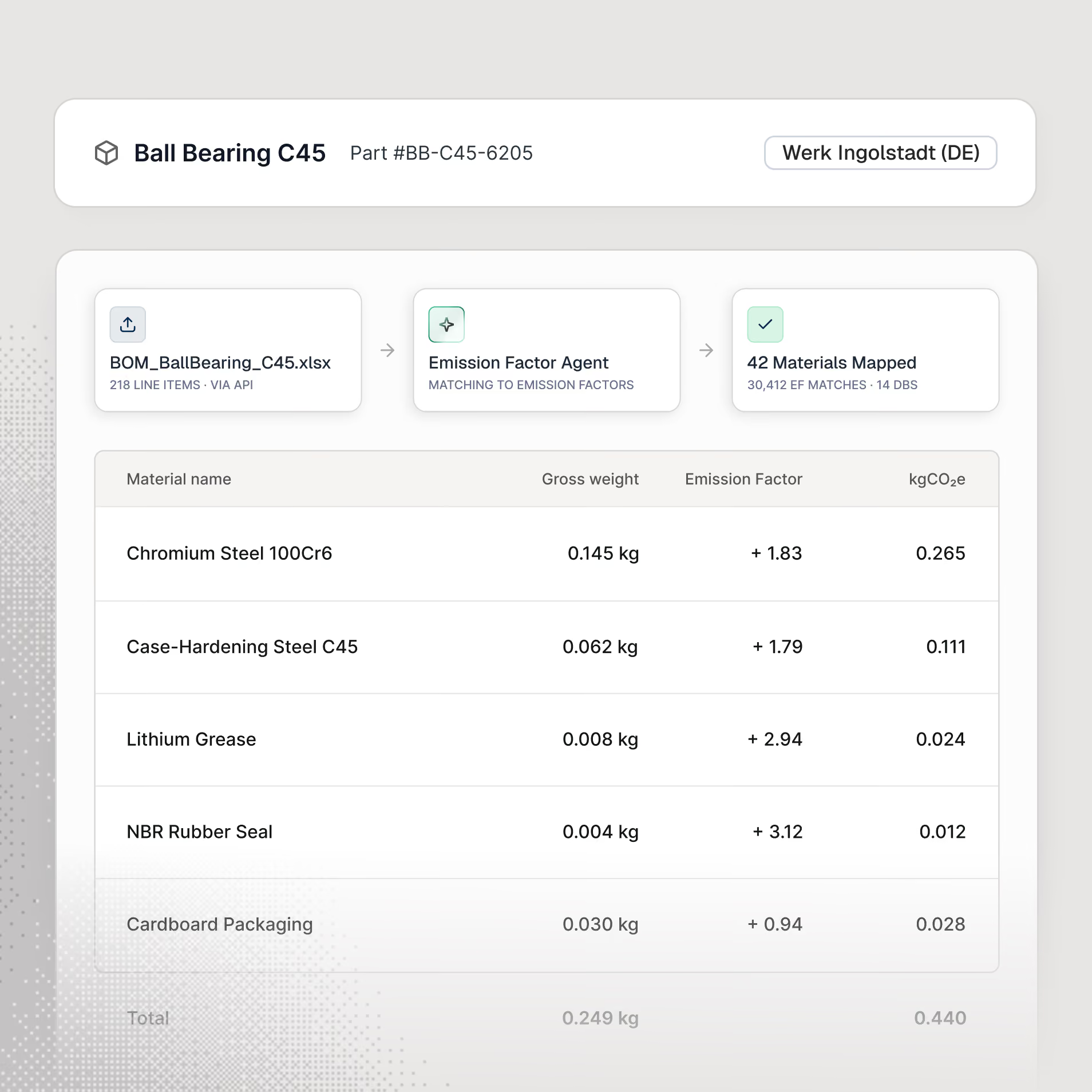
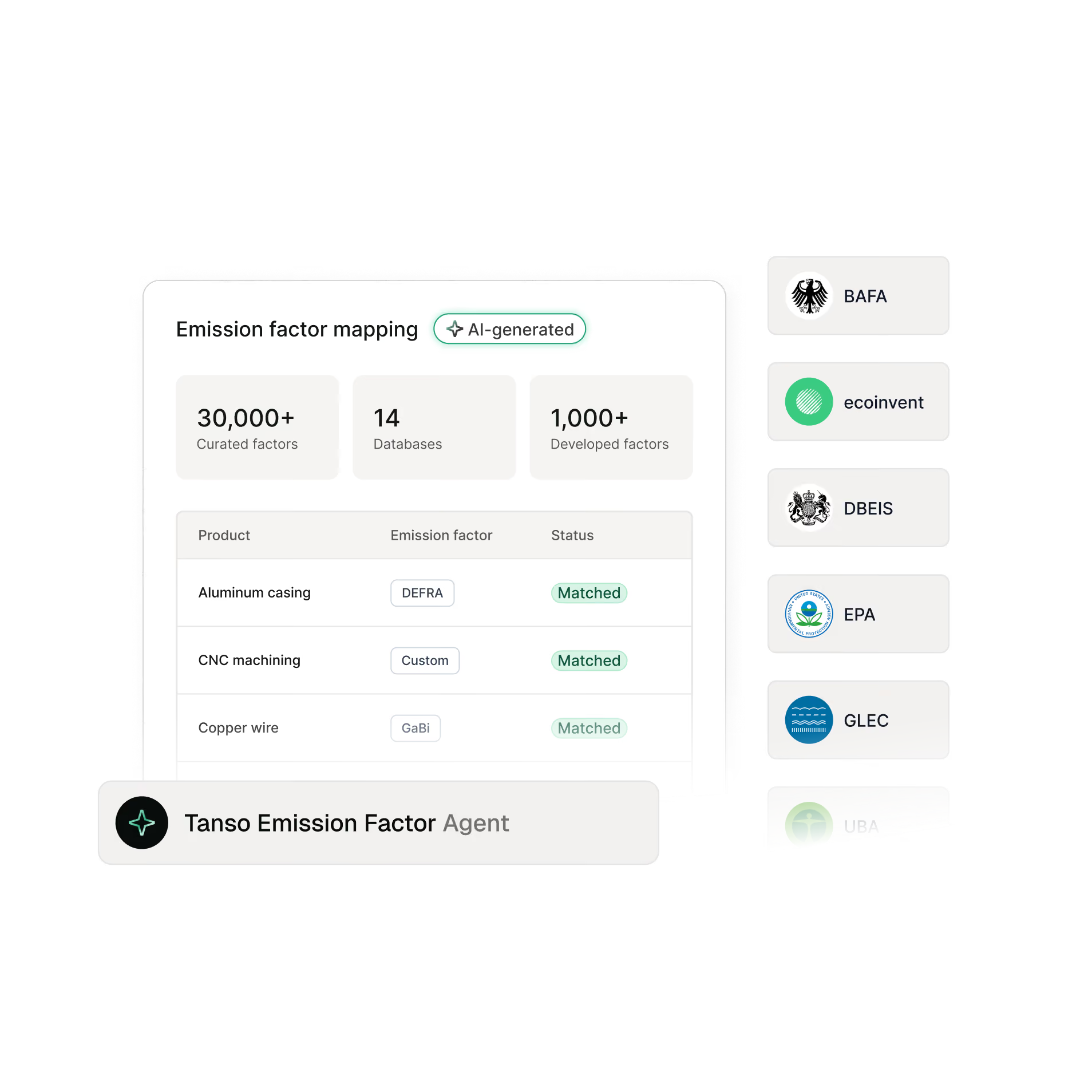
Collect data efficiently with AI
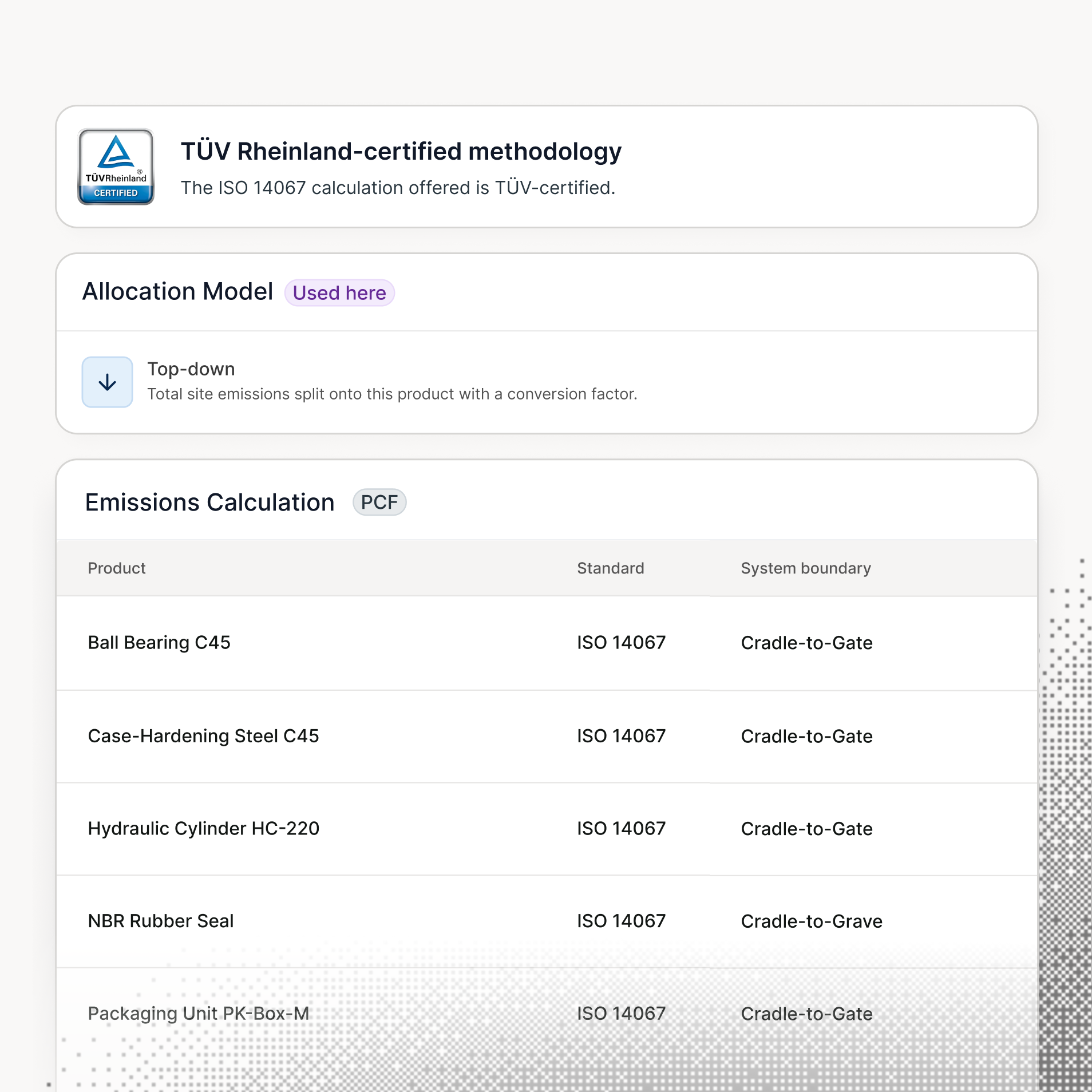
Calculate emissions automatically in line with ISO 14067
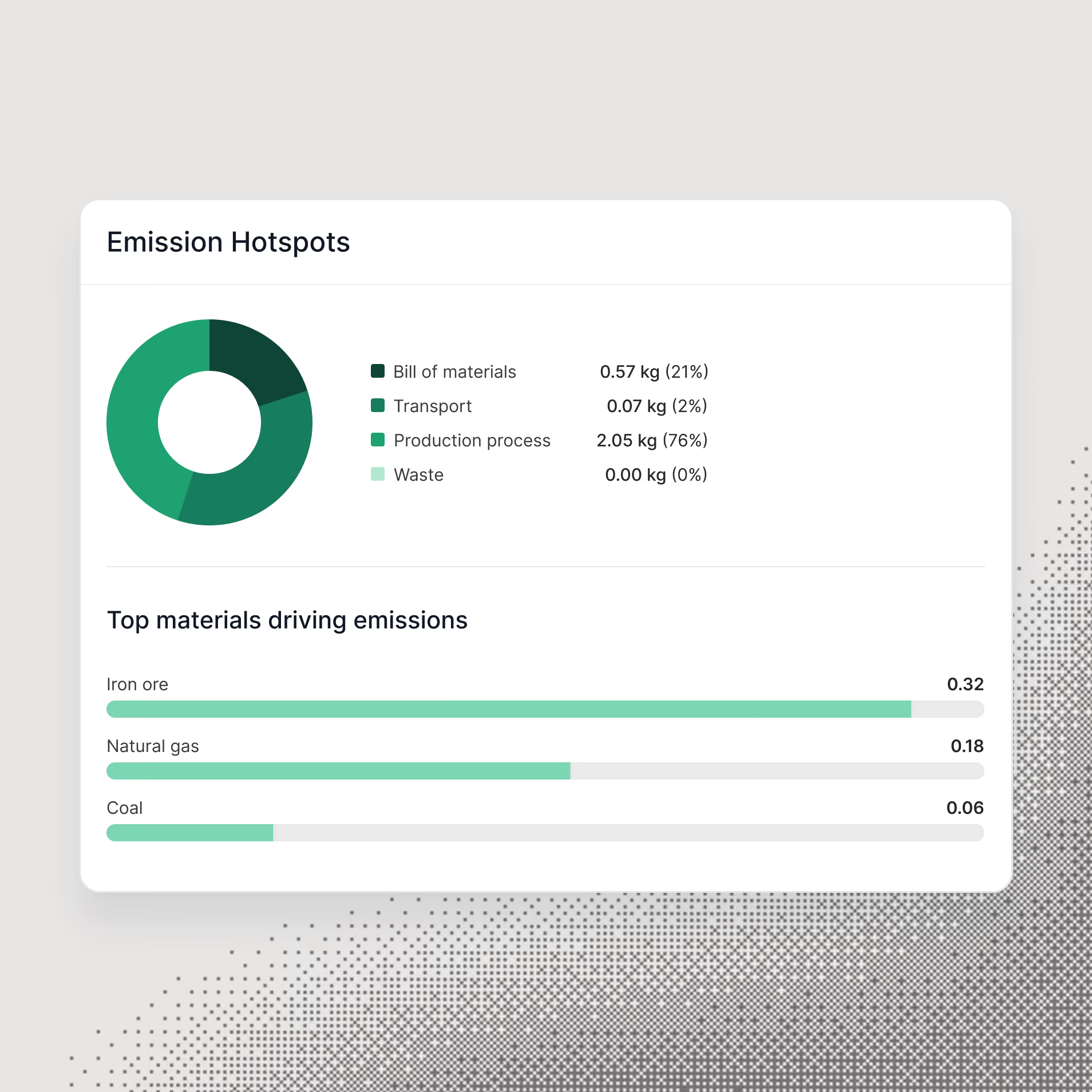
Identify optimization potential
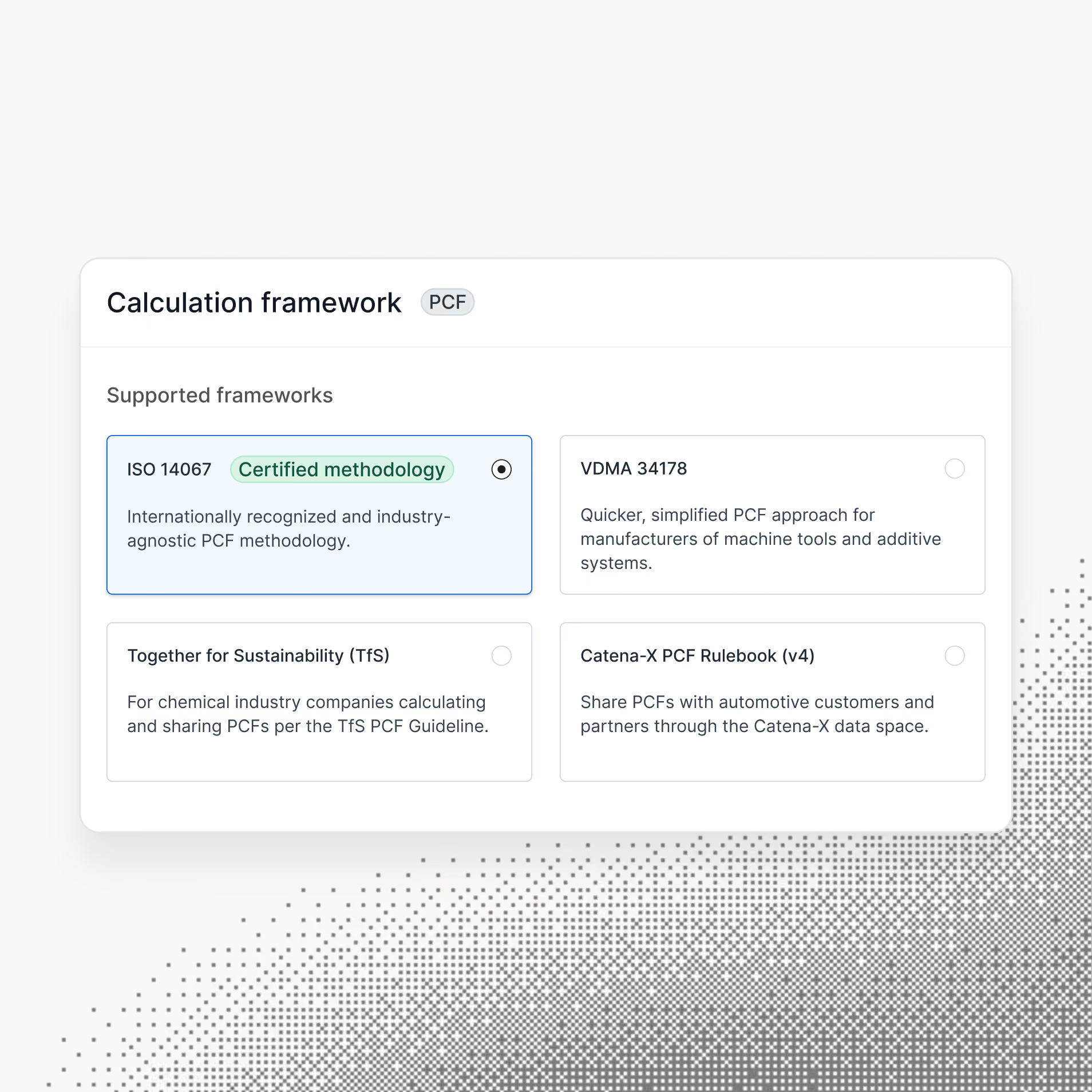
Meet industry-specific requirements efficiently
Communicate effectively with customers and auditors

Three product options, one scalable process
Pragmatic entry point
TÜV-certified methodology with AI support for varying data quality
Immediate results for customer requests. Ideal for companies that need to respond quickly to their first PCF requests
Core features: automated PCF calculation from bills of materials, AI support for data gaps, standard-compliant customer communication
Optimization and steering
Understand product emissions and reduce them strategically
For companies with complex products, hierarchical bills of materials, and industry-specific requirements
Core features: hierarchical bills of materials and an extended component library, variant comparisons for reduction planning, industry-specific standards (FLAG, PCR, Catena-X, TfS), preparation for DPP
Portfolio scaling
Automated PCF calculation across your entire product portfolio
Add-on for customers who want to scale calculations after a successful initial calculation
Core features: OpenAPI 3.1.0 specification for easy SDK generation, separate sandbox and production environments, direct connection to ERP and data warehouses, secure data transfer (HTTPS, TLS 1.2+, Azure Frankfurt)
Results with Tanso
70%
3x
PCF standards for your industry
Catena-X
ISO 14067 with specific extensions for automotive data exchange
Standardized communication with OEMs via defined interfaces
API connection for direct data transfer to OEM systems
Partnership with sovity as a certified connector provider
Together for Sustainability
chemicals
TfS PCF Guideline based on ISO 14067 with chemical-specific rules for allocation, by-products, and system boundaries
Chemical-specific allocation rules and system boundaries
Clearly defined, comparable methodology for external audits
Compatibility along the value chain
VDMA
mechanical engineering
VDMA Product Category Rules as an industry-specific methodology for machinery and plant engineering
Selectable for each product in addition to ISO 14067
Choice of methodology between VDMA PCR and ISO 14067 for each product
Consistent audit trail across both methodologies
Your PCF in five steps
Import bill of materials
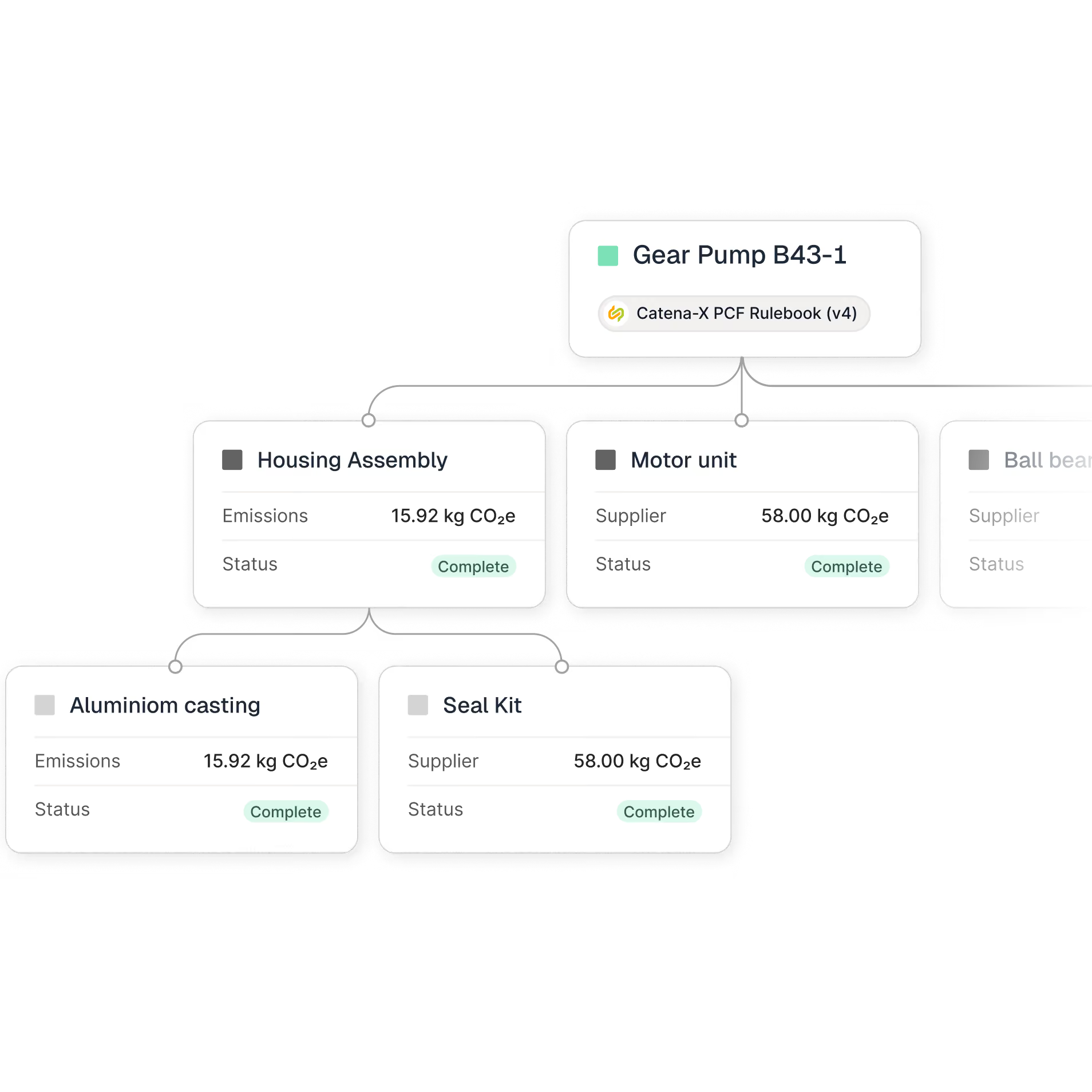
Map materials and processes
Calculate your PCF in line with ISO 14067

Prepare optimization and customer communication

Export and transfer

More PCF resources






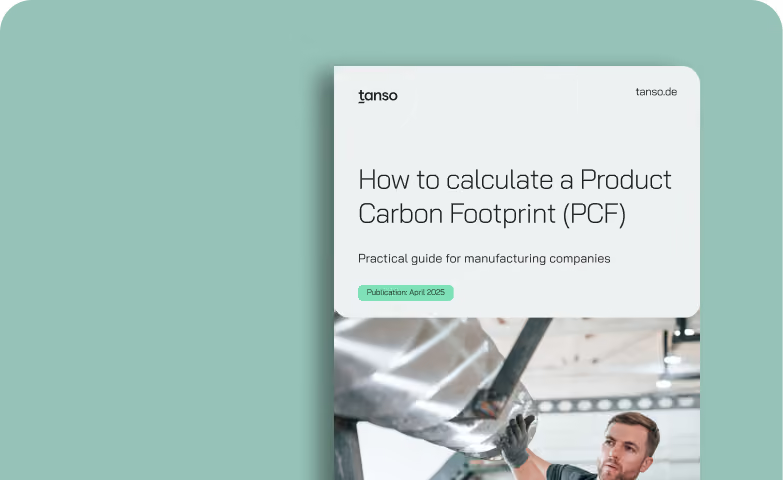





Talk to our PCF experts.


Frequently asked questions
How do I calculate PCFs for products with deeply nested bills of materials?
Tanso PCF Pro supports hierarchical bills of materials and an extended component library. Changes to materials or suppliers propagate automatically through the entire structure, without having to rebuild the dataset.
Does Tanso PCF prepare for the DPP?
Yes. The data captured in Tanso PCF Pro forms the methodological foundation for a later extension to the Digital Product Passport (DPP). As soon as these requirements apply to your product category, your existing PCF dataset can be extended without re-entering data.
Can Tanso calculate PCFs with incomplete data?
Yes. The calculation methodology adapts to the available data quality: you start spend-based with secondary factors and later switch to quantity-based calculations with primary data from the supplier portal, without having to rebuild the system.
Does Tanso support Together for Sustainability (TfS) for the chemical industry?
Yes. The TfS PCF Guideline is based on ISO 14067 with specific extensions for chemical processes. Tanso calculates PCFs using industry-specific parameters for the chemical industry and exports the results in TfS format.
What is the difference between PCF, PCF Pro and PCF API?
PCF is the pragmatic entry point for companies receiving their first PCF requests. PCF Pro addresses complex products with hierarchical bills of materials and industry-specific requirements such as FLAG, PCR or Catena-X. PCF API is the add-on for automated PCF calculation across the entire product portfolio, connected to your ERP or data warehouse. All three versions share the TÜV-certified methodology and ISO 14067 compliance.
How does Tanso fit into our ERP or PLM system?
Tanso PCF and PCF Pro are ERP, PLM and data lake compatible. You get started with structured CSV imports. For scaled use across the entire portfolio, the PCF API is available with an OpenAPI 3.1.0 specification and separate sandbox and production environments.
How do I deliver PCF data for Catena-X requests from my OEM customers?
As PCF software, Tanso is Catena-X compatible. You calculate the PCF according to ISO 14067 in Tanso and export the results in the Catena-X standard format. For direct API transfer to OEM systems such as Mercedes, we work with sovity as a certified connector provider.