Heller Hintergrund mit grünem, punktförmigem Farbverlauf in der unteren rechten Ecke und subtilem Radialverlauf nach innen
Double materiality assessment

A methodologically sound DMA for your CSRD and VSME process

Determine the sustainability topics that are material to your company in a structured process, and thus the scope of your sustainability report.
Produktkarten mit Emissionswerten und Status neben einer Fertigungslinie mit Autokarosserien

What our customers say

EMAG

The platform and the knowledgeable Tanso team provide clear, easy-to-follow guidance on many topics, for example on legal requirements and detailed questions around DWA and data collection.


Julia Eisert
Julia Eisert
Governance, Compliance & Sustainability Officer at EMAG
Grenzebach

Tanso's CSRD module wins us over with its clear structure, from the double materiality assessment to efficient data collection. Instead of confusing Excel spreadsheets, we get a user-friendly interface. The built-in AI is especially helpful for routine tasks and gave us valuable support in the early stages.


Dominik Schwarz
Dominik Schwarz
Sustainability Manager at Grenzebach
implantcast

The materiality assessment is a process, but one that can be set up in a structured, audit-proof way with Tanso. Getting it right the first time makes things significantly easier in the years that follow. Even our auditor was pleasantly surprised by the depth and precision of Tanso's methodology.


Kim Hermann
Kim Hermann
Strategic Assistant to the Management Board at implantcast

Everything you need for your Double Materiality Assessment

STAKEHOLDER MANAGEMENT

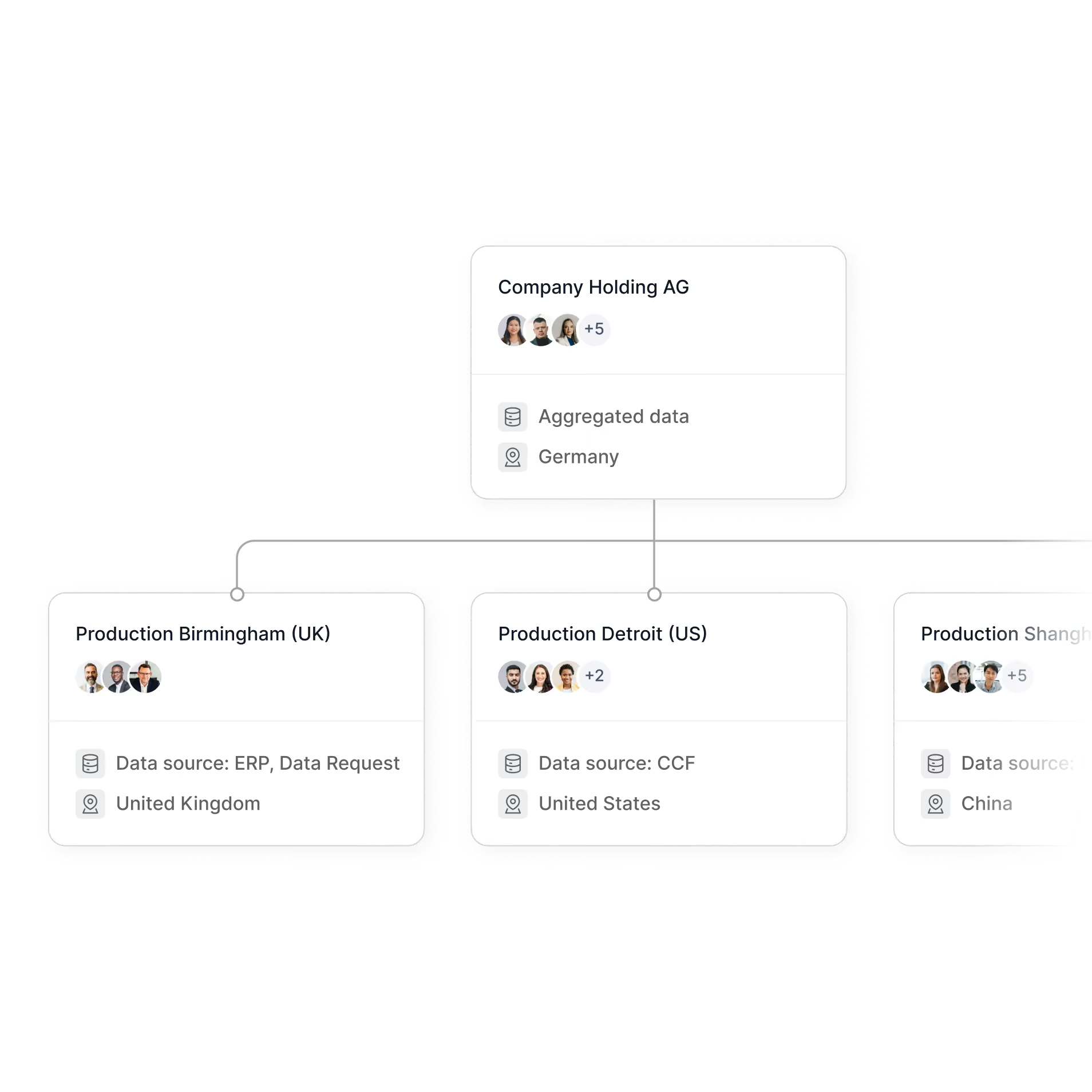
Identify and engage stakeholders systematically
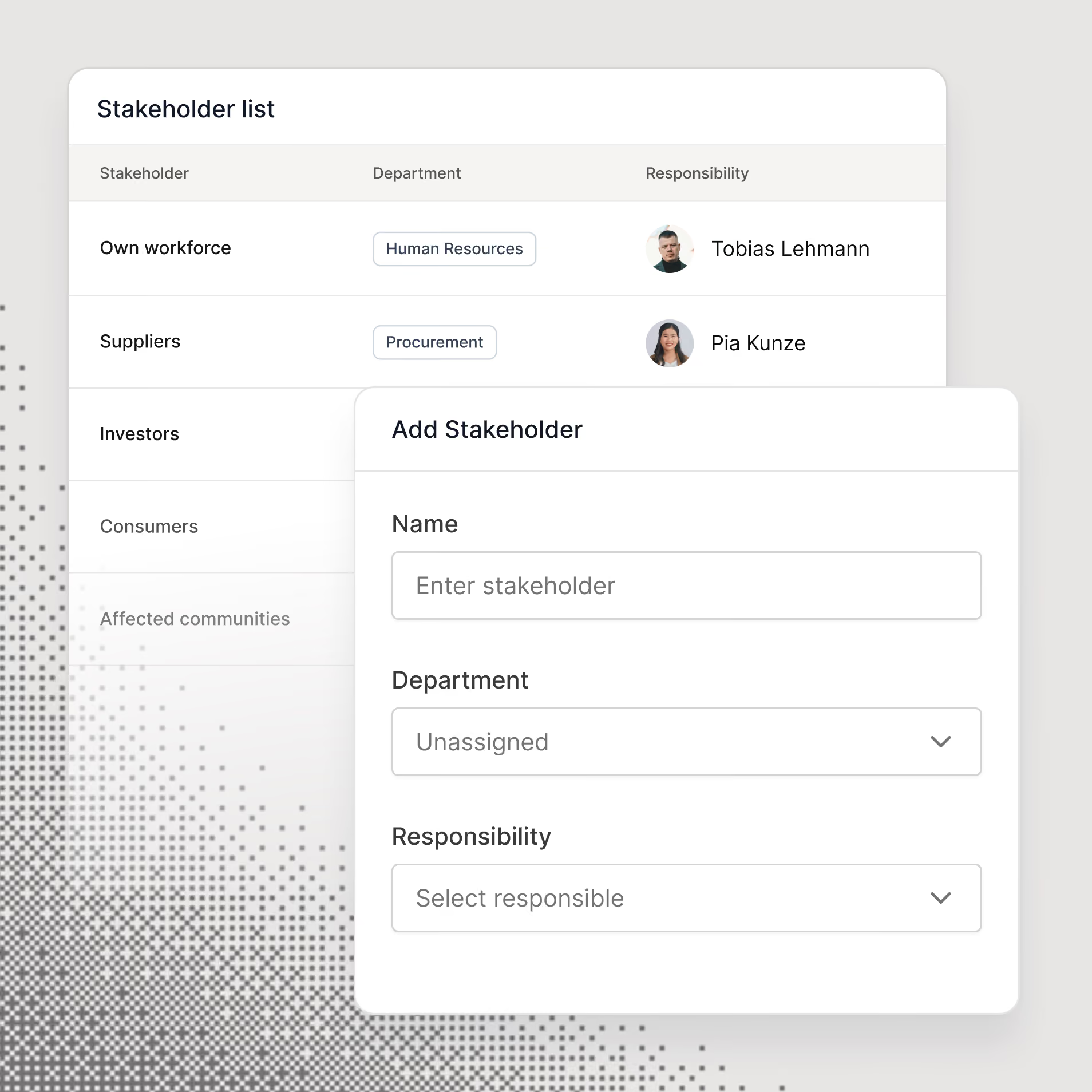
Suggested ESRS stakeholder groups, ready to adopt or adjust
Clear owners and departments for each stakeholder group
Report-compliant documentation of engagement methods and results
Tanso-Dashboard mit Inventarübersicht, Aufgabenstatus und Balkendiagramm nach Organisationseinheiten
Tanso-Aktivitätenliste mit Emissionsquellen und Kategorien, daneben TÜV-Rheinland-Siegel
IRO LONGLIST

Capture all relevant sustainability topics

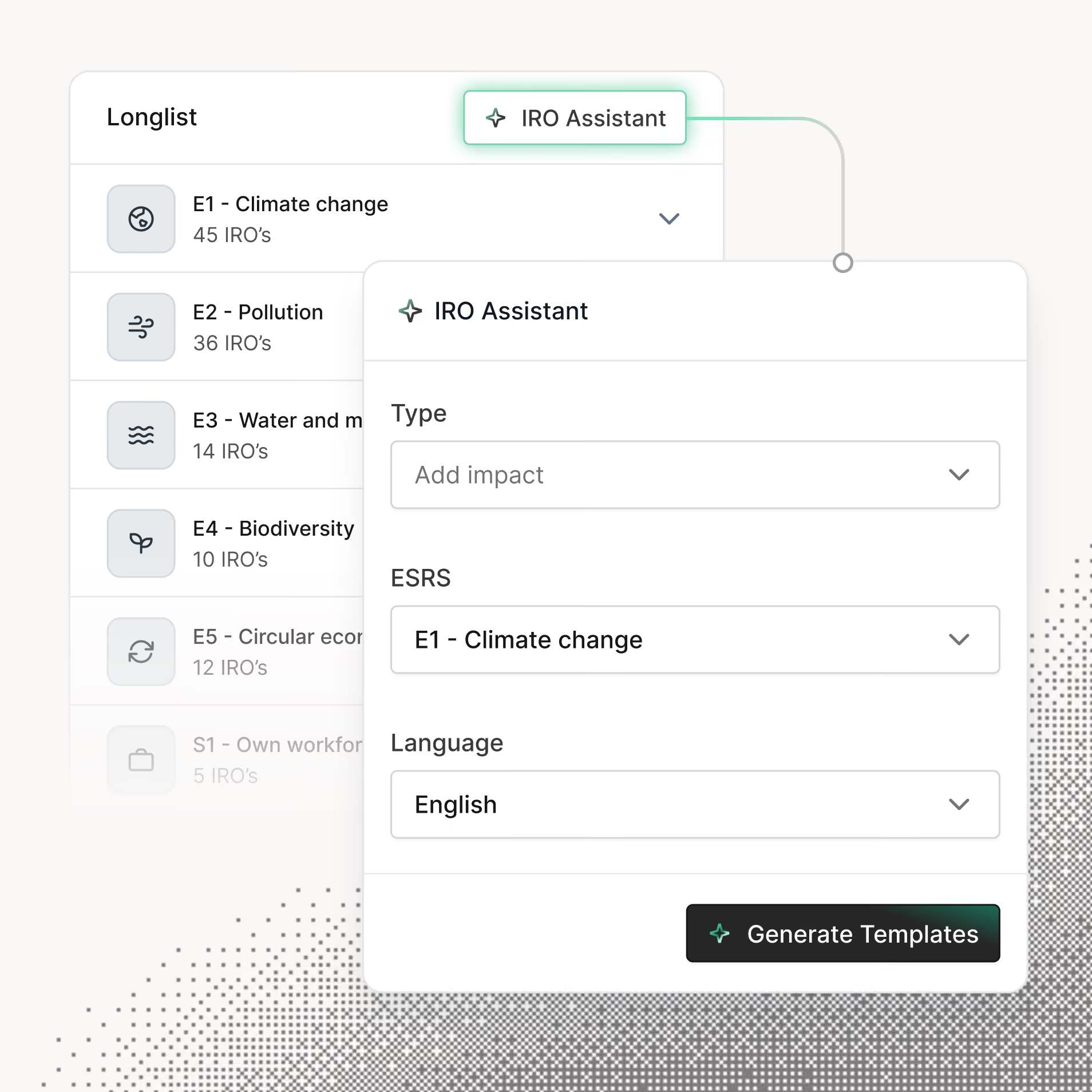
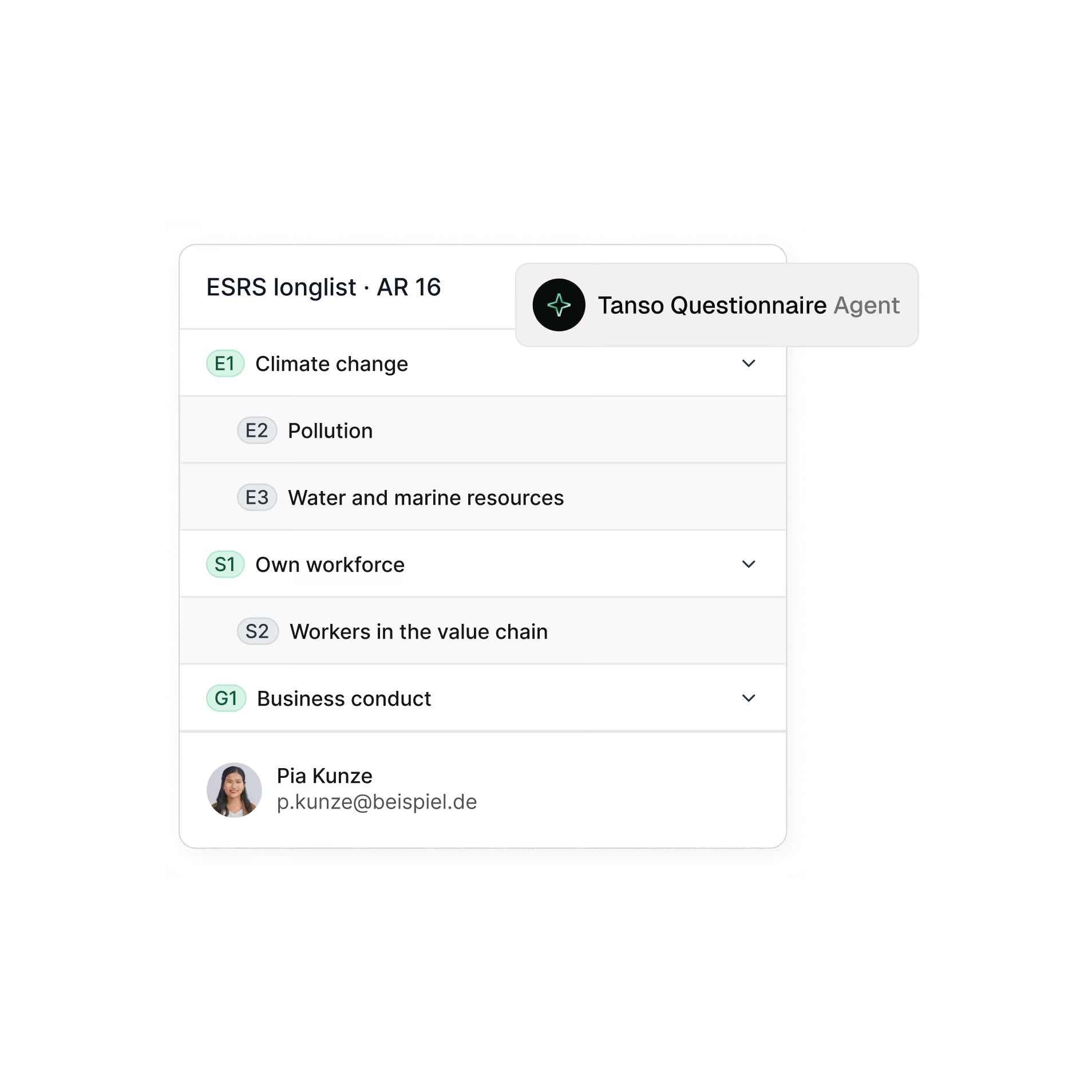
All ESRS sustainability matters (E1–E5, S1–S4, G1) as a preconfigured basis
Tanso AI generates templates for impacts, risks, and opportunities (IROs) based on your company context
Custom subtopics wherever the ESRS allow flexibility
IRO ASSESSMENT

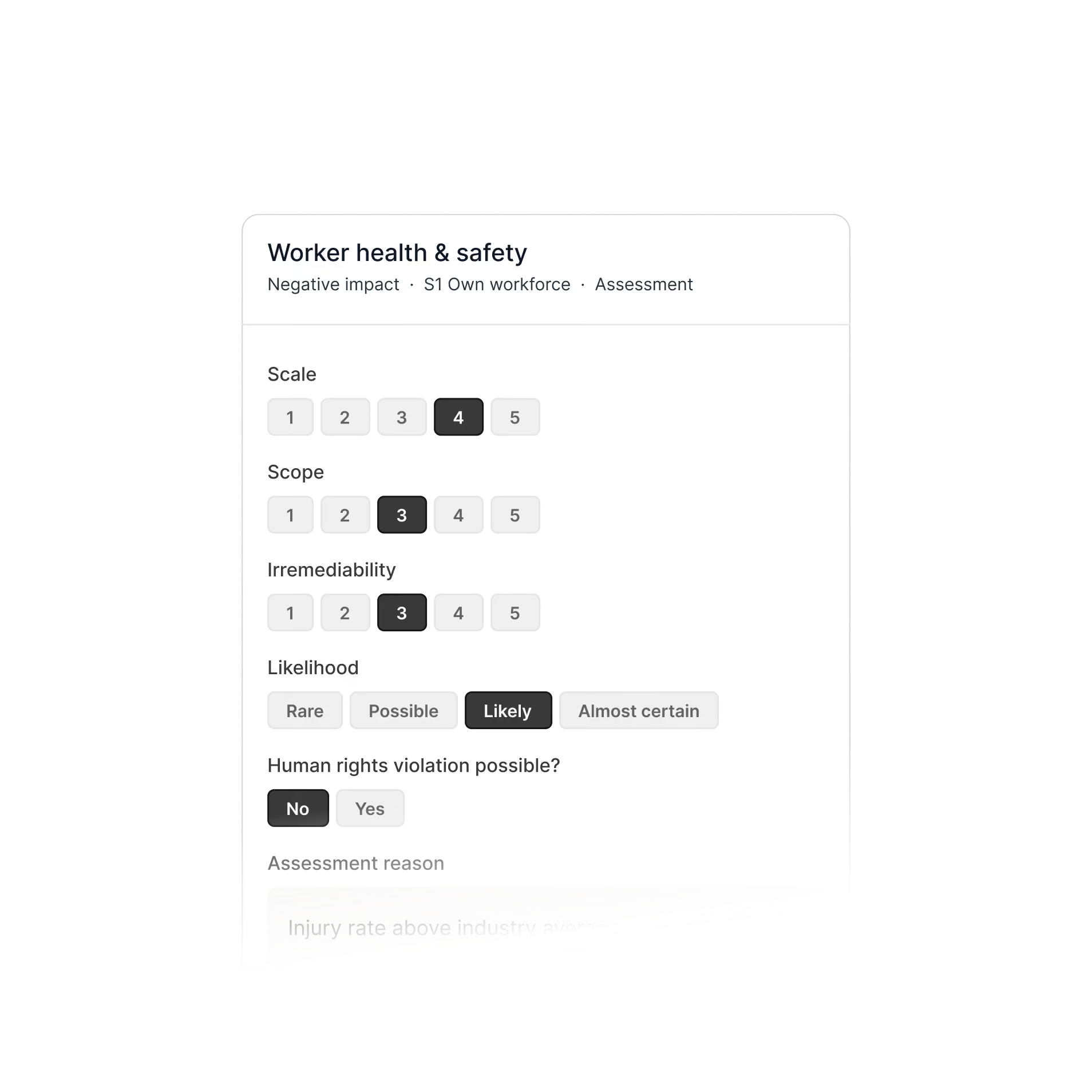
Assess impacts, risks, and opportunities in line with the ESRS
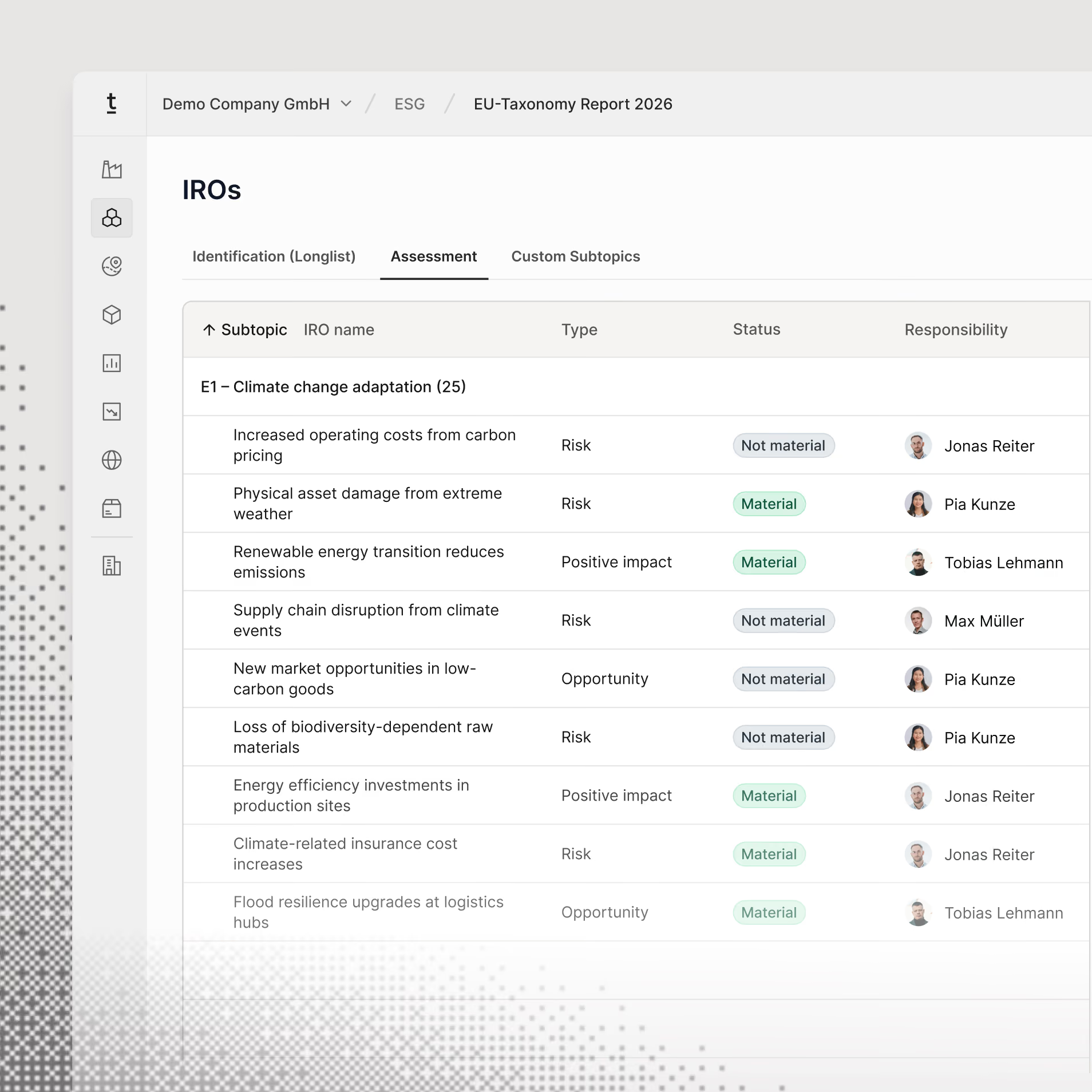
Tanso standard scale (1–5) or custom rating scales
Fully configurable materiality thresholds, with a Tanso recommendation of 50%
Consistency check of all ratings in the assessment overview
All ratings and rationales stored in an audit-ready way
Balkendiagramm „Aufgaben nach Organisationseinheit“ mit Statusübersicht für Tanso Holding
Produkttabelle mit Emissionswerten, Status und Download-Links in Tanso
RESULTS AND MATRIX

Analyze, export, and report your materiality matrix

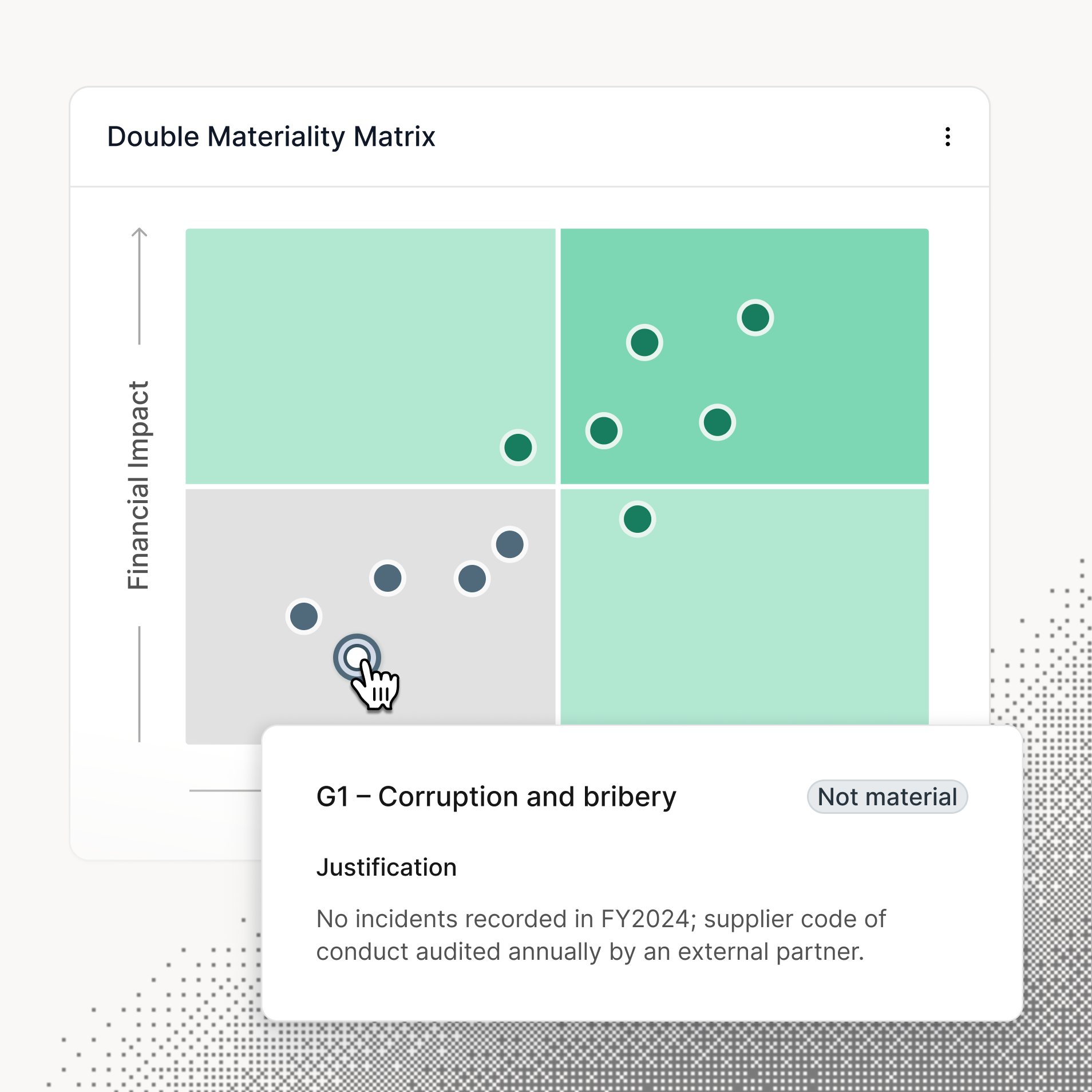
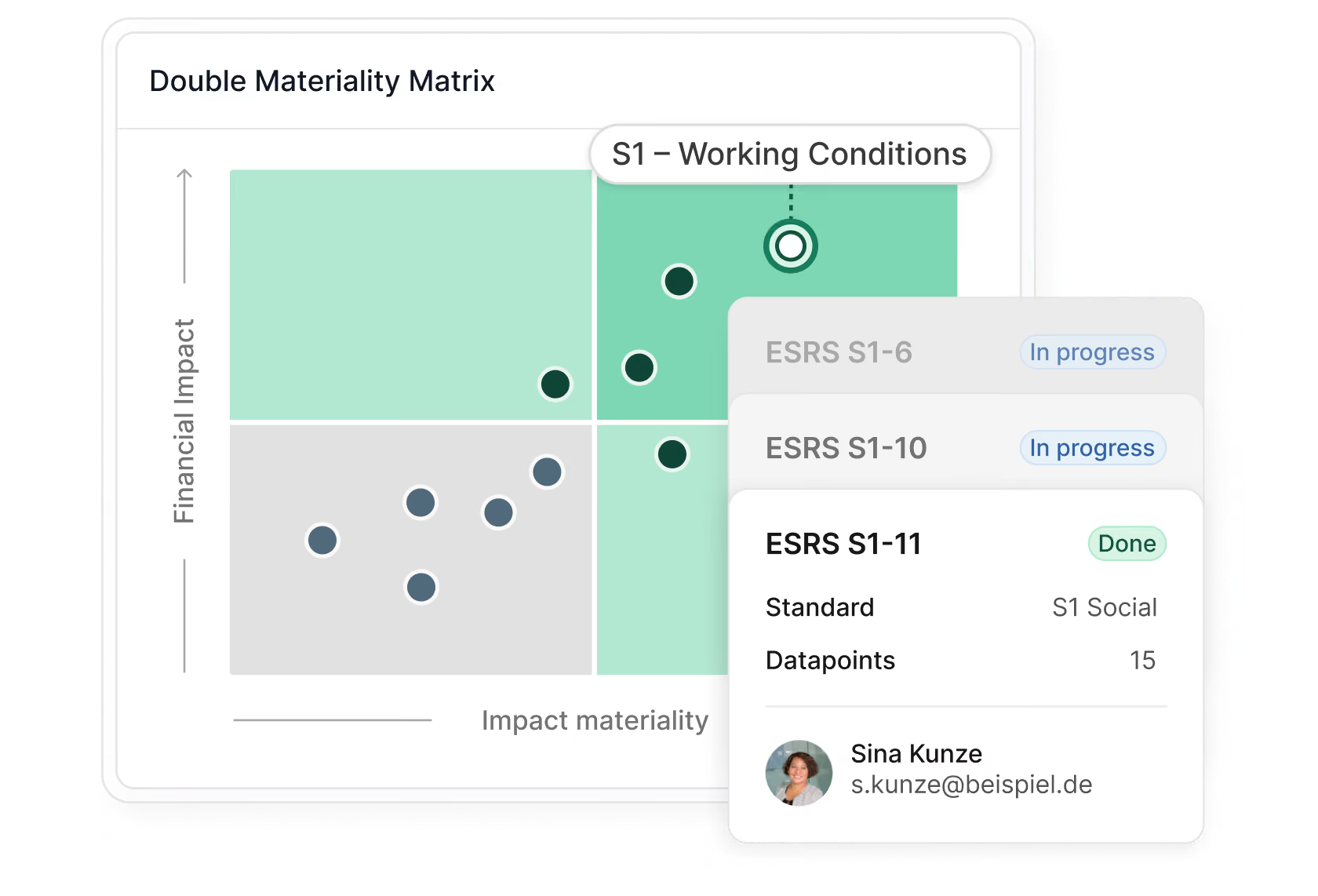
Automatic consolidation of all IRO ratings for each topical ESRS
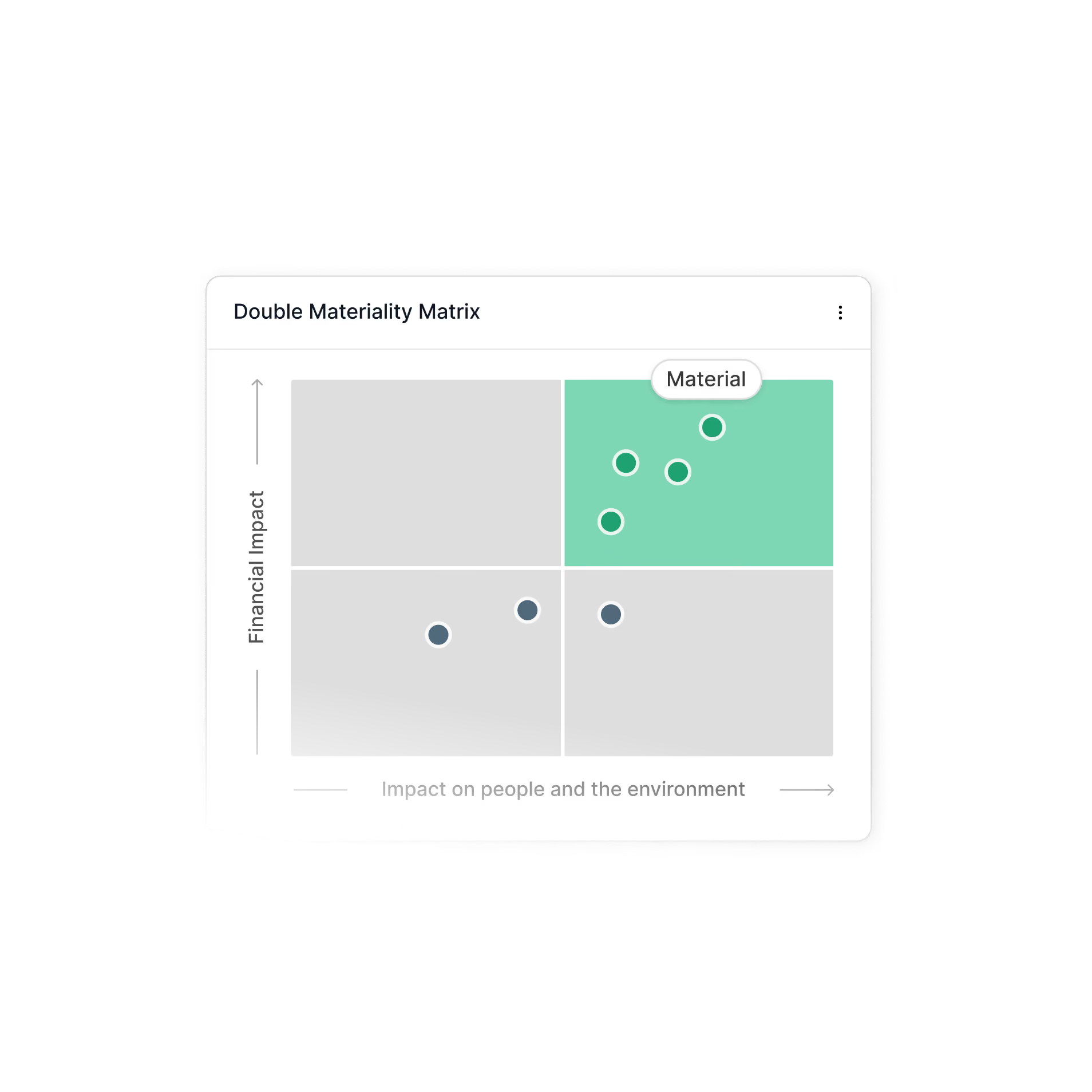
Report-ready matrix with export for the management report and auditors
ESRS-compliant documentation of non-material topics, including rationale
DOCUMENTATION AND AUDIT

Document in an audit-ready way and involve your auditors
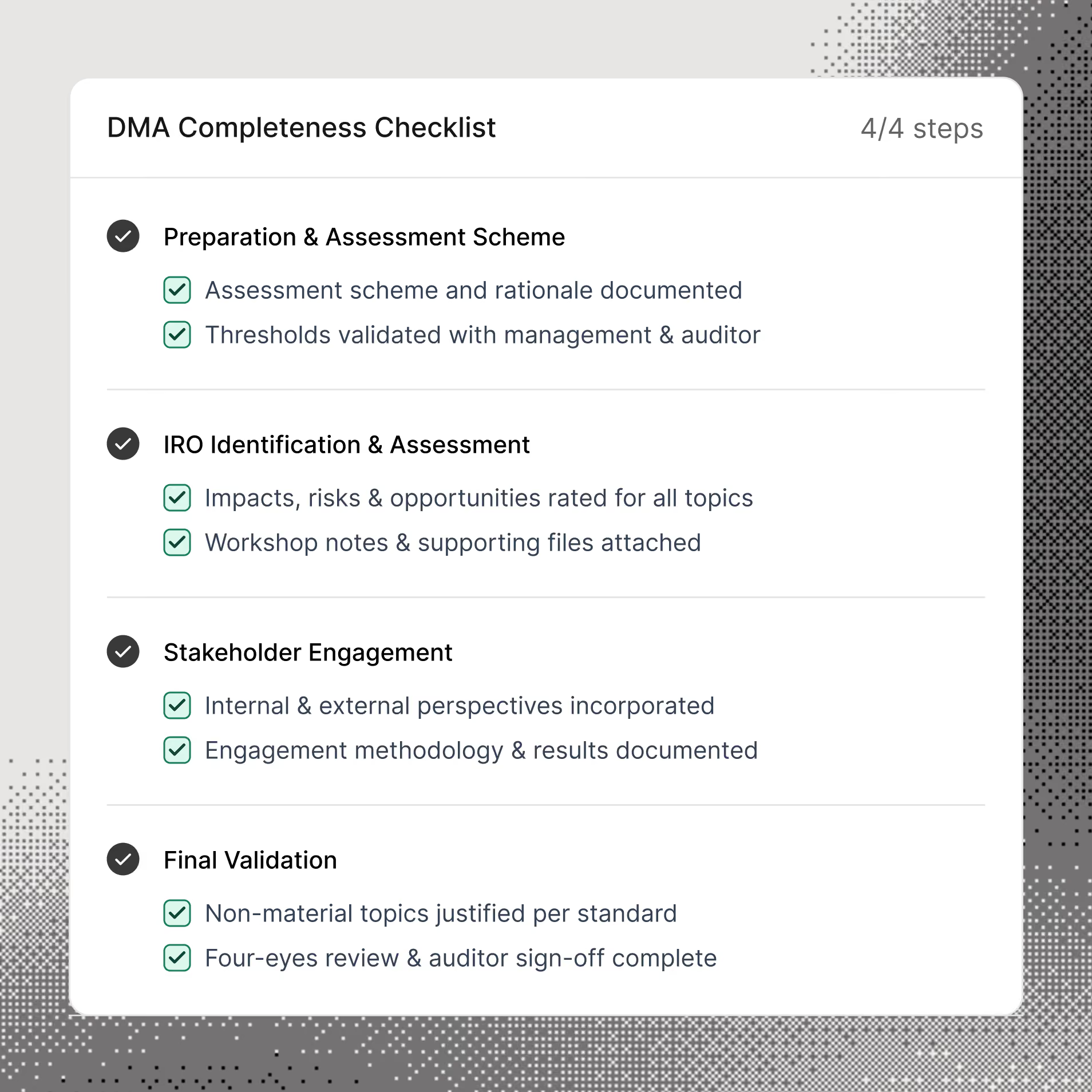
Based on your DMA results, Tanso determines which ESRS datapoints you must report for CSRD and VSME
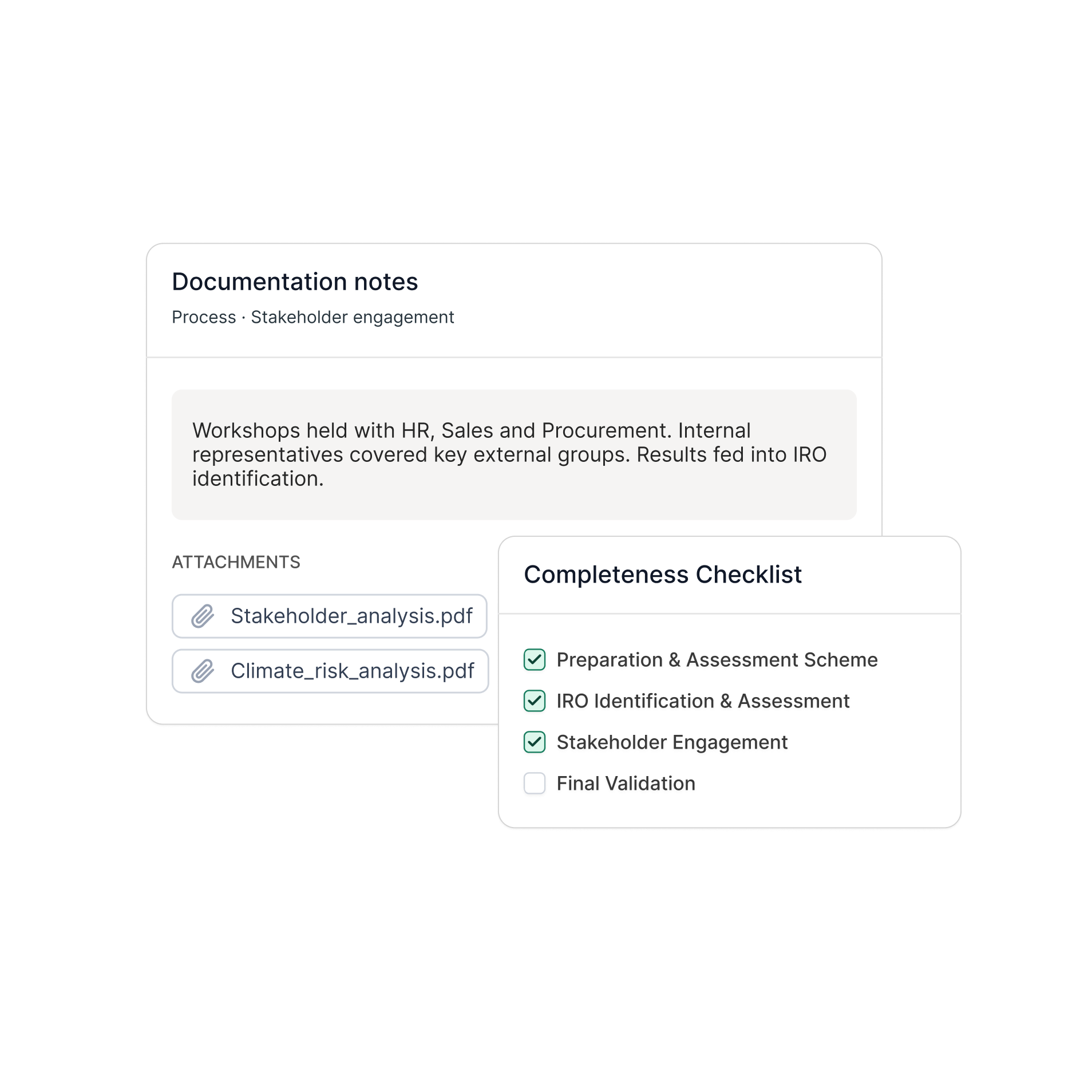
Central management of process notes, method descriptions, and attachments
Final DMA checklist to confirm completeness before closing
Produkttabelle mit Emissionswerten und Freigabestatus für Kunden und Auditoren in Tanso

Your completed DMA in six steps

01

Preparation

Recommended stakeholder groups added in one click, with owners assigned to each group
Review of the organizational structure for the fiscal year
Value chain analysis stored in the documentation
Produktstruktur mit Bauteilen, Emissionswerten und Status in Tanso
02

Build your longlist

Review of the ESRS longlist based on the AR16 sustainability matters
IROs created from the template database or with Tanso AI
Custom subtopics where needed
Produktstruktur mit Bauteilen, Lieferanten, Emissionswerten und Status in Tanso
03

IRO identification

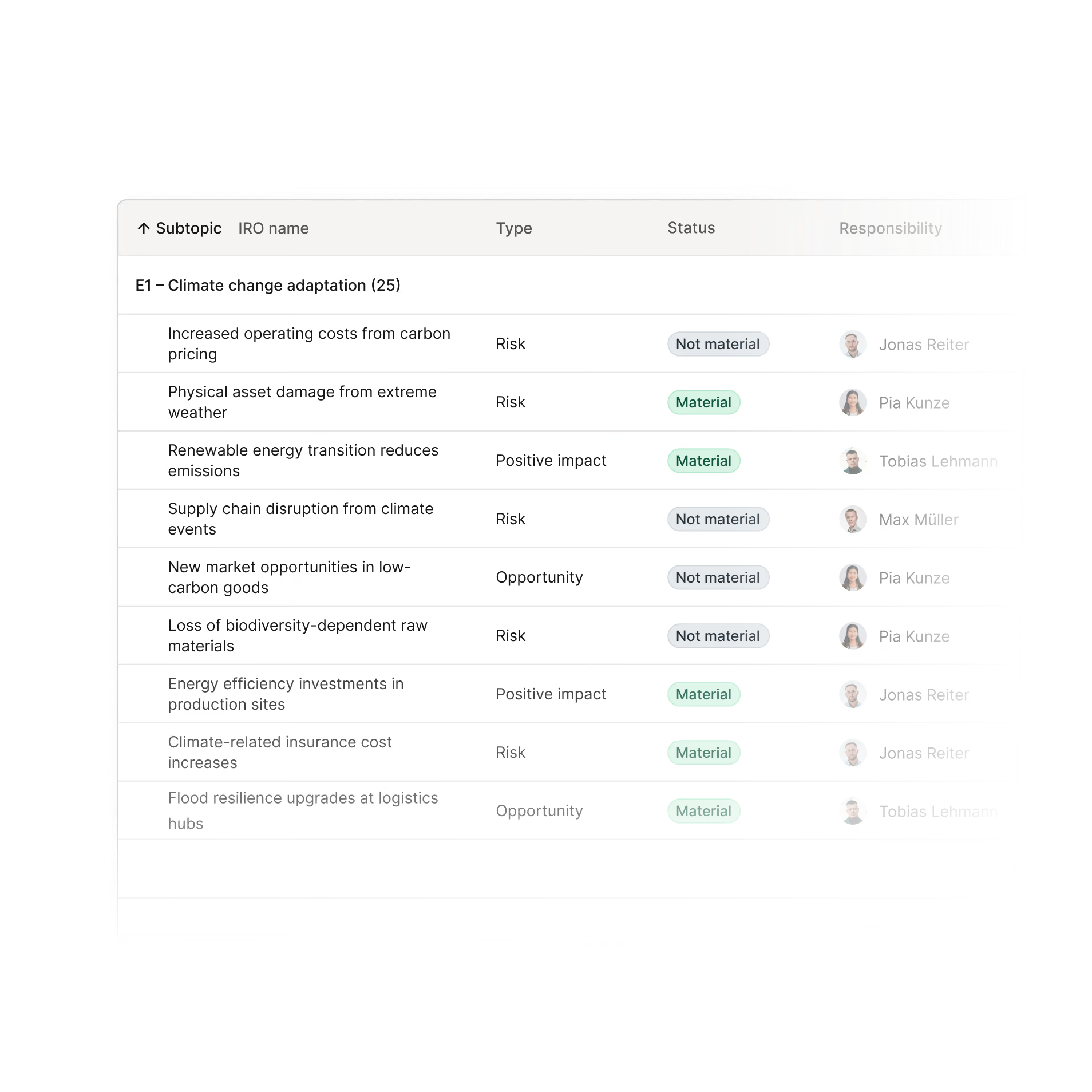
Identification of IROs for each relevant sustainability matter
Complete master data: type, stakeholders, value chain stage, time horizon
IROs moved from draft status to "Not assessed."
Produktstruktur mit Bauteilen, Lieferanten, Emissionswerten und Status in Tanso
04

IRO assessment

Assessment of all IROs using the Tanso rating scheme
Adjustable rating scales and thresholds in the settings
Consistency check of all ratings in the overview
Produktstruktur mit Bauteilen, Lieferanten, Emissionswerten und Status in Tanso
05

Results

Review of results for each sustainability matter
Materiality made transparent in the DMA matrix
Rationale for excluded and unassessed matters documented in notes
Produktstruktur mit Bauteilen, Lieferanten, Emissionswerten und Status in Tanso
06

Documentation

Approach recorded in documentation notes, with ESRS data points for the DMA process filled in
Attachments added: stakeholder analysis, value chain analysis, and climate risk analysis if applicable
Checklist completed to close the DMA

Talk to our DMA experts.

During the meeting, we'll show you:
Your specific use cases: stakeholder management, IRO assessment, or reporting under CSRD and VSME
A live demo of the platform with examples from your industry
How Tanso fits into your existing IT landscape (SAP, ERP)
Blaues Quadrat mit weißem ISO-Logo: stilisierte Weltkugel und ISO-Schriftzug oben rechts
ISO/IEC 27001
Runde EU-Flagge mit gelbem Sternenkranz auf blauem Grund
GDPR compliant
Abstraktes, zweifarbiges Icon: oben roter, unten goldgelber horizontaler Halbkreis, klare Kanten, flache Darstellung
Developed & hosted in Germany
Request a consultation
Türkisfarbene, gepunktete Farbschicht verläuft diagonal über dunklen Hintergrund, wirkt wie digitaler Farbschleier

Frequently asked questions

Can we integrate Tanso into our existing IT landscape?

Yes. Tanso is ERP and data lake compatible. You get started with structured CSV imports. REST API interfaces to SAP and other systems are available as an option. Your ERP remains the leading system: Tanso data can flow back into SAP or your BI environment as needed.

Can the DMA also be used for VSME reporting?

Yes. In Tanso, you set up your materiality assessment independently of the reporting standard. You can use the results both for CSRD reporting under the ESRS and for a voluntary report under the VSME standard. Both run on a shared data foundation without duplicate data entry. If you later switch from the VSME to the CSRD, your assessment is retained.

What are IROs and how are they assessed?

IROs are impacts, risks and opportunities: the building blocks of your materiality assessment. Impacts are assessed by scale, scope and irremediability, while risks and opportunities are assessed by financial materiality (magnitude and likelihood). Tanso offers a configurable rating scale, either as a standard scale from 1 to 5 or tailored to your organization.

What is double materiality?

The double materiality assessment (DMA) looks at sustainability topics from two perspectives at the same time: the outside-in perspective (financial materiality: which external sustainability trends affect your business?) and the inside-out perspective (impact materiality: what effects do your activities have on the environment and society?). If a topic is material from at least one perspective, it is relevant for your reporting.

Who needs to conduct a DMA?

All companies that fall under the CSRD (Corporate Sustainability Reporting Directive) must conduct a double materiality assessment as the first step of their sustainability reporting under the ESRS. The DMA determines which of the roughly 1,200 ESRS datapoints your company is required to report. Companies that report voluntarily under the VSME standard also use the materiality assessment to define their reporting scope.

How does the DMA reduce my reporting scope?

Thanks to the filtering function of the DMA, the reporting scope in the manufacturing industry typically shrinks by a third to a half in the first reporting year. Non-material ESRS topical standards can be omitted with a justified exclusion, although in practice ESRS E1 (climate change) is rarely dropped entirely due to high justification requirements.

weißes Logo mit dem Schriftzug tanso auf schwarzem Hintergrund, abgerundete Kleinbuchstaben, modernes Logo.

Tanso is the ESG and carbon accounting software trusted by industrial companies across the DACH region to stay competitive and compliant.

700+ industrial companies trust Tanso
Stay in the loop

ESG and carbon updates from industrial practice, straight to your inbox.