To overview

Audit-proof CSRD reporting through transparent data and clear evidence

Audit-Proof CSRD Reporting Through Transparent Data and Clear Evidence

Intro

Pankl Racing Systems, a leading global company, has been working with Tanso since 2023 to create an audit-compliant CO₂ balance sheet and CSRD report quickly and efficiently. Compared to its previous tool provider, Tanso's sustainability software delivers real value by offering the necessary transparency around emission factors, alongside task distribution across departments and locations.

In this case study, you'll learn how Pankl Racing Systems:

  • Achieved a 33% time savings compared to its previous tool provider
  • Increased data quality and efficiency
  • Can quickly identify and correct errors thanks to clear, traceable data capture
  • Created an audit-proof CSRD report

About Pankl Racing Systems

Pankl Racing Systems develops, manufactures, and sells high-precision mechanical components and complete systems in high-tech fields across various markets: motorsport, luxury automotive, aerospace, two-wheelers, and industrial applications. As an internationally leading manufacturer with around 2,100 employees and locations worldwide, along with its Racing, High Performance, and Aerospace divisions, Pankl stands for quality and diversity. As part of a comprehensive sustainability strategy, the executive board initiated the future measurement of a Corporate Carbon Footprint in 2019. The process was then set in motion, and it quickly became clear that effective implementation would require collaboration with an external partner with specialized expertise in this field.

"With Tanso, we found a clear and user-friendly tool that enhances our collaboration, provides transparency around emission factors, and ensures audit readiness."
Robert Gugganig
Robert Gugganig
Head of Sustainability

Initial situation

Emissions tracking initially began at the Austrian locations. Over the years, data quality continuously improved, and all global locations were gradually included. The original focus was on Scope 1 and 2, supplemented by easily accessible data included in Scope 3. Data capture was then progressively expanded to include additional Scope 3 categories.

However, sustainability measures were initially limited and primarily focused on energy savings to reduce costs, without significantly reducing the CO₂ footprint or pursuing a more sustainable way of doing business.

With 12 entities, some with multiple locations, within a complex corporate structure and an initially fragmented tool landscape, Pankl lacked a central data foundation for a long time, making analysis and comparison between locations difficult. With CSRD reporting obligations for fiscal years 2024 and 2025, building standardized, traceable data collection processes became even more urgent.

Challenges

  • Data availability and quality: Using Excel as the main tool led to errors and transparency issues. Especially within Scope 3, data from global locations often came in non-standardized units, causing time-consuming conversions and uncertainty.
  • Enablement and responsibilities: A lack of training and unclear responsibilities led to a high number of follow-up questions and reduced team motivation.
  • Establishing standard processes: There were no unified processes for cross-location data collection, which made collaboration difficult.
  • Using the collected data: Due to a lack of structure and quality, the collected data could only be used to a limited extent for decision-making and reporting.
  • Storing supporting documents: Without a dedicated tool, it was difficult to file the right supporting documents for the audit in a folder structure and prove where they belonged. In the tool, the matching supporting document for every figure across global locations is instantly at hand. Read access allows auditors to audit these directly in Tanso, eliminating the need to send numerous emails.

Why Tanso

The emissions data initially determined using Excel, and later with a tool from a previous provider, wasn't sufficient. Auditors criticized the traceability of the CO₂ emission factors as well as the lack of corresponding source references. In addition, the tool being used lacked an audit trail. Faced with these difficulties, the company was compelled to look for a new partner.

Ultimately, the choice fell on Tanso, since the software offers not only simple, cross-location task distribution but also the necessary transparency around emission factors, making it an efficient and reliable solution. Tanso also meets the audit security requirements that are critical for traceability and compliance.

“Thanks to the Tanso software, we were able to complete our carbon footprint on time and save up to one month compared to our previous provider.”
Anja Brauneder
Anja Brauneder
Sustainability Manager

Key achievements

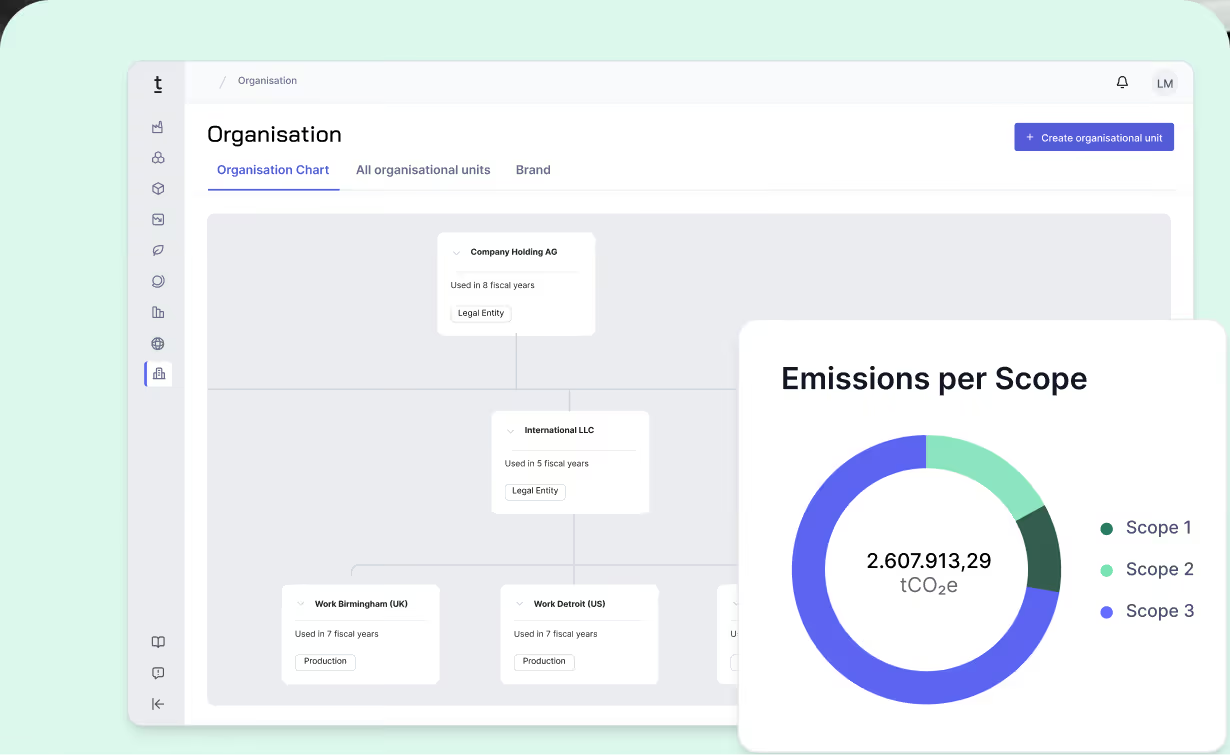
By introducing Tanso, Pankl was able to further professionalize its processes for CO₂ accounting and CSRD reporting. Traceable data captured decentrally across all 12 locations, along with company-wide shareable dashboards, have improved data integrity and strengthened collaboration between teams. In addition, emission factors can be maintained and versioned in a structured way per supplier, making updates significantly easier and more traceable.

Corporate Carbon Footprint (CCF)

  • Time savings of 33% on the CCF, and up to 50% when combined with the CSRD module: Already in the first year, the report was completed more than a month earlier than the previous year, when the deadline had only just been met. In the second year, processing time was reduced significantly further thanks to the routine gained from using the tool.
  • Quality and efficiency: A significant improvement thanks to methodical, expert support and extensive analysis capabilities.
  • Optimized error correction: Thanks to clear and traceable data capture, errors are identified quickly, resolved, and communicated directly within the tool, with significantly fewer follow-up questions.
  • Standardized process: A standardized data collection process, broken down into clear steps, replaces the previously fragmented tool landscape.

CSRD

  • Audit-proof CSRD report: Full traceability of all captured data thanks to the integrated audit trail function.
  • Single source of truth: for all sustainability data, including analytics and active reduction management.
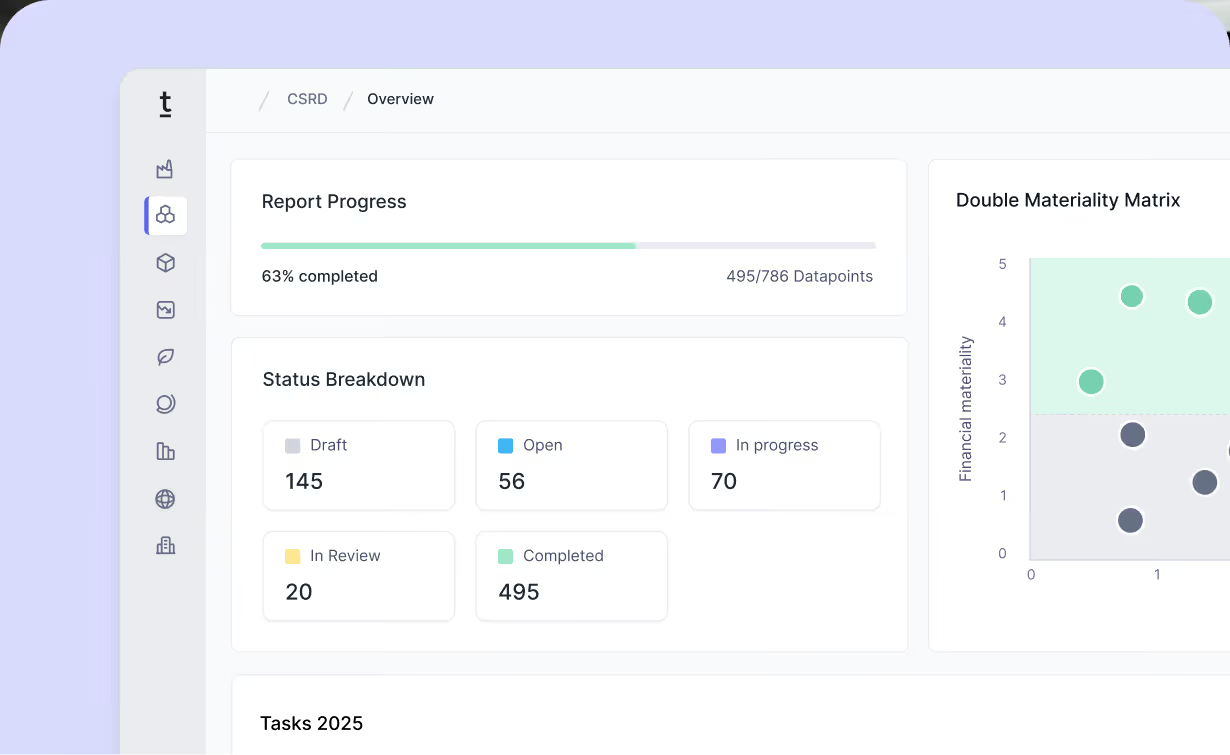
  • Automatic linking of CCF and CSRD reporting: The automatic synchronization of CCF data with CSRD reporting creates a consistent and traceable data foundation. Around 38 data points are populated automatically, supporting efficient and audit-proof reporting.
  • Regulatory currency: Changes are continuously incorporated directly into the app.
“The traceable data structures, along with the documentation of methodological assumptions and audit trails in Tanso, helped us build our CSRD reporting in a structured and audit-proof way. In particular, auditing our entire CSRD reporting process became significantly easier as a result. Our auditor especially highlighted the transparent provision of relevant information and evidence.”
Anja Brauneder
Anja Brauneder
Sustainability Manager

Outlook

Pankl aims to reduce Scope 1 and 2 emissions by up to 80% by 2030 and achieve CO₂ neutrality by 2040. By further developing its Corporate Carbon Footprint (CCF), emission drivers and reduction potential, particularly in Scope 3 and the supply chain, will become even more transparent. The focus is on higher data quality, automated processes, and more precise management of decarbonization measures. By expanding its use of Tanso to ESG management and ISO 14001 reporting, Pankl is laying the foundation for integrated sustainability management with clear goals and reliable decision-making.


To the overview

Audit-proof CSRD reporting through transparent data and clear evidence

Intro

Pankl Racing Systems, a leading global company, has been working with Tanso since 2023 to create an audit-compliant CO₂ balance sheet and CSRD report quickly and efficiently. Compared to its previous tool provider, Tanso's sustainability software delivers real value by offering the necessary transparency around emission factors, alongside task distribution across departments and locations.

In this case study, you'll learn how Pankl Racing Systems:

  • Achieved a 33% time savings compared to its previous tool provider
  • Increased data quality and efficiency
  • Can quickly identify and correct errors thanks to clear, traceable data capture
  • Created an audit-proof CSRD report

About Pankl Racing Systems

Pankl Racing Systems develops, manufactures, and sells high-precision mechanical components and complete systems in high-tech fields across various markets: motorsport, luxury automotive, aerospace, two-wheelers, and industrial applications. As an internationally leading manufacturer with around 2,100 employees and locations worldwide, along with its Racing, High Performance, and Aerospace divisions, Pankl stands for quality and diversity. As part of a comprehensive sustainability strategy, the executive board initiated the future measurement of a Corporate Carbon Footprint in 2019. The process was then set in motion, and it quickly became clear that effective implementation would require collaboration with an external partner with specialized expertise in this field.

"With Tanso, we found a clear and user-friendly tool that enhances our collaboration, provides transparency around emission factors, and ensures audit readiness."
Robert Gugganig
Robert Gugganig
Head of Sustainability

Initial situation

Emissions tracking initially began at the Austrian locations. Over the years, data quality continuously improved, and all global locations were gradually included. The original focus was on Scope 1 and 2, supplemented by easily accessible data included in Scope 3. Data capture was then progressively expanded to include additional Scope 3 categories.

However, sustainability measures were initially limited and primarily focused on energy savings to reduce costs, without significantly reducing the CO₂ footprint or pursuing a more sustainable way of doing business.

With 12 entities, some with multiple locations, within a complex corporate structure and an initially fragmented tool landscape, Pankl lacked a central data foundation for a long time, making analysis and comparison between locations difficult. With CSRD reporting obligations for fiscal years 2024 and 2025, building standardized, traceable data collection processes became even more urgent.

Challenges

  • Data availability and quality: Using Excel as the main tool led to errors and transparency issues. Especially within Scope 3, data from global locations often came in non-standardized units, causing time-consuming conversions and uncertainty.
  • Enablement and responsibilities: A lack of training and unclear responsibilities led to a high number of follow-up questions and reduced team motivation.
  • Establishing standard processes: There were no unified processes for cross-location data collection, which made collaboration difficult.
  • Using the collected data: Due to a lack of structure and quality, the collected data could only be used to a limited extent for decision-making and reporting.
  • Storing supporting documents: Without a dedicated tool, it was difficult to file the right supporting documents for the audit in a folder structure and prove where they belonged. In the tool, the matching supporting document for every figure across global locations is instantly at hand. Read access allows auditors to audit these directly in Tanso, eliminating the need to send numerous emails.

Why Tanso

The emissions data initially determined using Excel, and later with a tool from a previous provider, wasn't sufficient. Auditors criticized the traceability of the CO₂ emission factors as well as the lack of corresponding source references. In addition, the tool being used lacked an audit trail. Faced with these difficulties, the company was compelled to look for a new partner.

Ultimately, the choice fell on Tanso, since the software offers not only simple, cross-location task distribution but also the necessary transparency around emission factors, making it an efficient and reliable solution. Tanso also meets the audit security requirements that are critical for traceability and compliance.

“Thanks to the Tanso software, we were able to complete our carbon footprint on time and save up to one month compared to our previous provider.”
Anja Brauneder
Anja Brauneder
Sustainability Manager

Key achievements

By introducing Tanso, Pankl was able to further professionalize its processes for CO₂ accounting and CSRD reporting. Traceable data captured decentrally across all 12 locations, along with company-wide shareable dashboards, have improved data integrity and strengthened collaboration between teams. In addition, emission factors can be maintained and versioned in a structured way per supplier, making updates significantly easier and more traceable.

Corporate Carbon Footprint (CCF)

  • Time savings of 33% on the CCF, and up to 50% when combined with the CSRD module: Already in the first year, the report was completed more than a month earlier than the previous year, when the deadline had only just been met. In the second year, processing time was reduced significantly further thanks to the routine gained from using the tool.
  • Quality and efficiency: A significant improvement thanks to methodical, expert support and extensive analysis capabilities.
  • Optimized error correction: Thanks to clear and traceable data capture, errors are identified quickly, resolved, and communicated directly within the tool, with significantly fewer follow-up questions.
  • Standardized process: A standardized data collection process, broken down into clear steps, replaces the previously fragmented tool landscape.

CSRD

  • Audit-proof CSRD report: Full traceability of all captured data thanks to the integrated audit trail function.
  • Single source of truth: for all sustainability data, including analytics and active reduction management.
  • Automatic linking of CCF and CSRD reporting: The automatic synchronization of CCF data with CSRD reporting creates a consistent and traceable data foundation. Around 38 data points are populated automatically, supporting efficient and audit-proof reporting.
  • Regulatory currency: Changes are continuously incorporated directly into the app.
“The traceable data structures, along with the documentation of methodological assumptions and audit trails in Tanso, helped us build our CSRD reporting in a structured and audit-proof way. In particular, auditing our entire CSRD reporting process became significantly easier as a result. Our auditor especially highlighted the transparent provision of relevant information and evidence.”
Anja Brauneder
Anja Brauneder
Sustainability Manager

Outlook

Pankl aims to reduce Scope 1 and 2 emissions by up to 80% by 2030 and achieve CO₂ neutrality by 2040. By further developing its Corporate Carbon Footprint (CCF), emission drivers and reduction potential, particularly in Scope 3 and the supply chain, will become even more transparent. The focus is on higher data quality, automated processes, and more precise management of decarbonization measures. By expanding its use of Tanso to ESG management and ISO 14001 reporting, Pankl is laying the foundation for integrated sustainability management with clear goals and reliable decision-making.

"With Tanso, we have found a clear and user-friendly tool that promotes our collaboration, offers transparency in the emission factors and guarantees audit security."
Robert Gugganig
Head of Sustainability

Discover Tanso -
Your all-in-one solution for sustainability

Other articles that may be of interest to you

Stay up-to-date with news from Tanso.