


VSME FAQ: Questions and answers on the voluntary reporting standard for SMEs


With the VSME, the European Commission introduces a voluntary sustainability reporting standard.
Its aim is to provide a comparable framework for companies that are not (yet) subject to the CSRD – but are still facing increasing information demands along the value chain.
Tanso sustainability expert Tabea Hosak explained the VSME in our recent webinar and put it into context. Watch the webinar here.
In this article, we answer the most frequently asked questions about the voluntary standard – from the concept of the value-chain cap to recommendations on when companies should get started.
1. What is the VSME and how does it work as a value-chain cap?
The VSME (Voluntary Standard for Small- and Medium-sized Enterprises) is the voluntary EU sustainability reporting standard for non-capital market-oriented SMEs.
In the context of the CSRD – and especially as part of the Omnibus proposal – the VSME takes on a new role: it is intended to function as a value-chain cap. This means that companies applying the full VSME are not required to disclose additional sustainability information beyond the standard when responding to requests from business partners along the value chain.
This protection applies only when the entire standard is applied, including both the basic module and the comprehensive module. The basic module alone is not sufficient.
2. Can companies choose which topics from the comprehensive module to report on?
Yes, companies are free to decide which reporting requirements from the comprehensive module they want to apply. If certain data points are not reported, the VSME assumes that they do not apply to the company.
3. Which companies are required to report under Omnibus I?
With the EU Sustainability Omnibus I now finally adopted, new thresholds apply for CSRD reporting obligations: the directive applies to EU companies with more than 1,000 employees and more than €450 million in revenue. Wave 1 companies that have been subject to reporting requirements since 1 January 2024 — in particular capital market-oriented companies with more than 500 employees — continue to report as planned under the European Sustainability Reporting Standards (ESRS). Wave 2 companies are required to report from financial year 2027.
4. What does “VSME+” mean?
VSME+ refers to an approach in which companies apply both modules of the VSME standard and extend them with additional company-specific indicators or disclosures. The “+” stands for data points that go beyond the standard's formal requirements – for example, to meet specific stakeholder expectations or to reflect industry-specific characteristics.
5. What does the term “policies” mean in the context of the VSME?
In this context, “policies” refer to the strategies and internal guidelines a company follows regarding environmental, social, and governance (ESG) topics. This is translated as “Konzepte” in the German version of the ESRS and VSME.
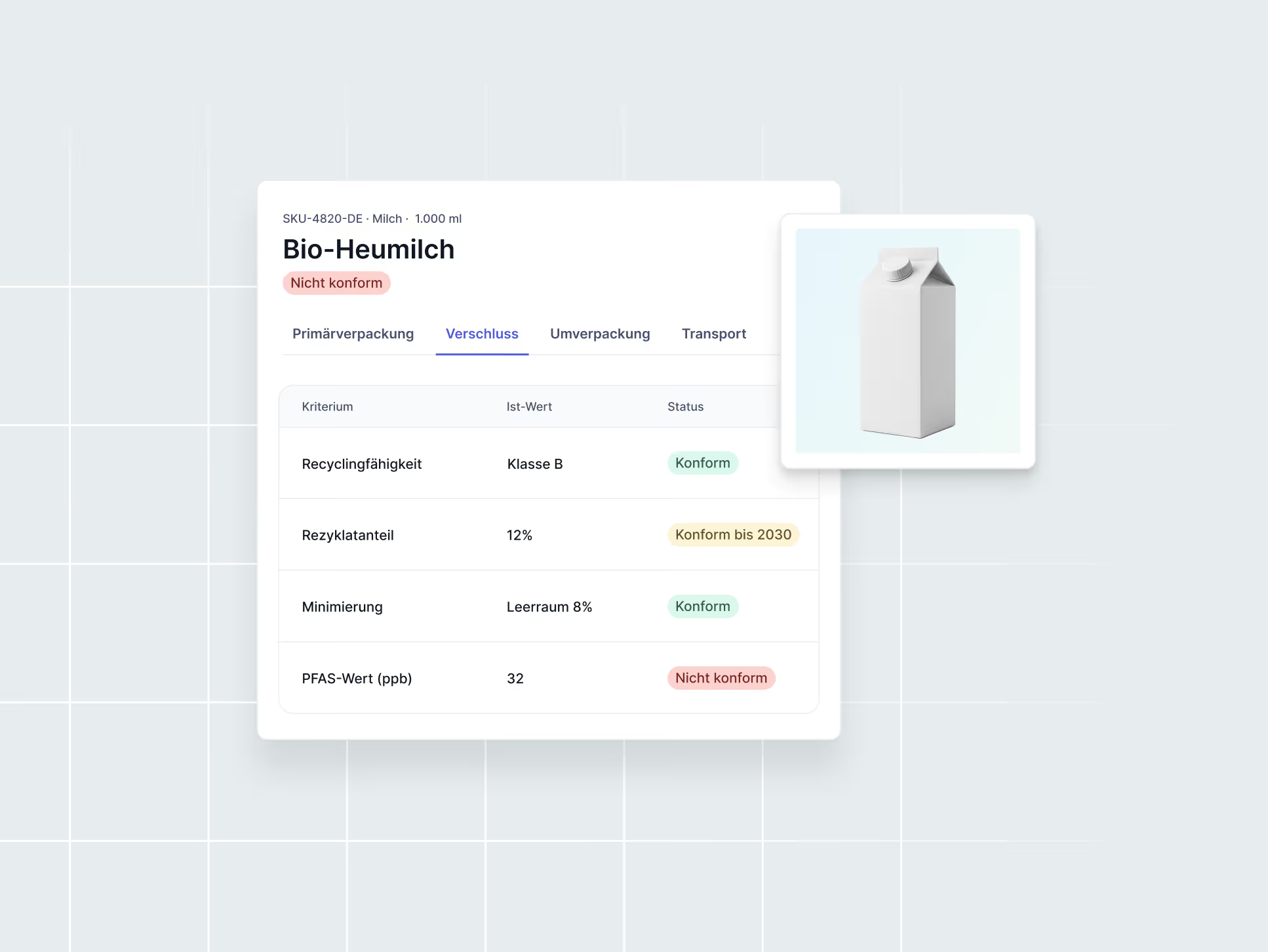
In the environmental context, such a policy could be a design strategy that ensures products are durable, repairable, reusable, and recyclable – for example, a company-wide recycling policy.
These policies should be distinguished from thematic sustainability topics such as climate, pollution, or biodiversity.
6. Are there guidelines for calculating indicators like employee turnover?
Yes, the VSME Guidance (Section 183) provides the following calculation:
Turnover rate (%) = (Number of employees who left the company / average total number of employees during the year) × 100
This includes employees who leave voluntarily, as well as due to dismissal, retirement, or death.
7. Do VSME reports need to be verified by a third party?
No. The VSME is a voluntary standard and is not subject to an audit requirement. However, external assurance may be useful as a quality and differentiation factor.
8. Should companies already start using the VSME – even though it may be revised?
- Building processes for data collection, documentation, and internal coordination takes time – regardless of minor adjustments to the standard. Starting early creates planning certainty and avoids time pressure once the new voluntary standard is published.
- The basic logic and structure of the VSME should be retained. Adjustments are expected to be mainly content-related additions, not changes to the systematics.
- The VSME was deliberately designed to cover many of the requirements of larger companies and has been finalized in its current form - intended for non-listed SMEs with up to 250 employees. Companies working with the VSME now are well prepared for future data requests along the supply chain – independent of the new voluntary standard (VS), which is set to replace the VSME for the expanded scope (also covering listed companies and companies with up to 1,000 employees)
9. Will the VSME remain as it is, or will there be further revisions?
The VSME itself is final, but will be replaced from the 2027 financial year onward by a new voluntary standard (VS) that builds on the VSME while addressing the expanded scope introduced by Omnibus I (companies with up to 1,000 employees that fall outside the CSRD's scope – including listed companies). The goal is for the VS to serve as a reference for permissible information requests along the value chain.
On 6 May 2026, the European Commission published a draft of the VS, and the final version followed on 3 July 2026 alongside the revised ESRS. The Council and Parliament now have two months to raise a possible veto; final publication in the Official Journal of the EU is expected in September 2026.
10. How does the VSME compare to the GRI Standards?
The Global Reporting Initiative (GRI) is more comprehensive than the VSME and more comparable in scope to the ESRS. For example, GRI includes indicators on topics such as parental leave, discrimination, or local economic impacts – none of which are covered in the VSME.
While the VSME can serve as a content foundation for companies interested in GRI, it cannot fully replace GRI reporting. The VSME was intentionally developed as a simplified, voluntary framework, especially for companies not required to report under GRI.
11. Why might companies choose ESRS over VSME?
The ESRS – the mandatory standards under the CSRD – are regarded by many stakeholders as a robust and reliable foundation for sustainability reporting. This is largely due to their structured format and comparability.
While it’s possible that some stakeholder requests may not be fully addressed in a company’s initial ESRS-focused report, the framework still offers flexibility. Additional data points can be added selectively to respond to specific stakeholder needs.
Another key benefit is strategic control. Companies using the ESRS can set their own priorities – ideally aligned with stakeholder expectations. This leads to reports that combine comparability with individual relevance. Even if not all topics are covered, an ESRS-based approach provides more clarity, consistency, and credibility than unsystematic or absent reporting – especially when stakeholders explicitly expect ESRS alignment.
12. Is the VSME worth it?
Yes – adopting the VSME now provides structure, transparency, and a clear signal: We take sustainability seriously and are ready for evolving expectations along the value chain.
The VSME is compact, adaptable, and well-aligned with broader reporting frameworks. That makes it a valuable step for SMEs looking to build up ESG reporting capacity – without the complexity of full ESRS compliance.
How Tanso supports companies
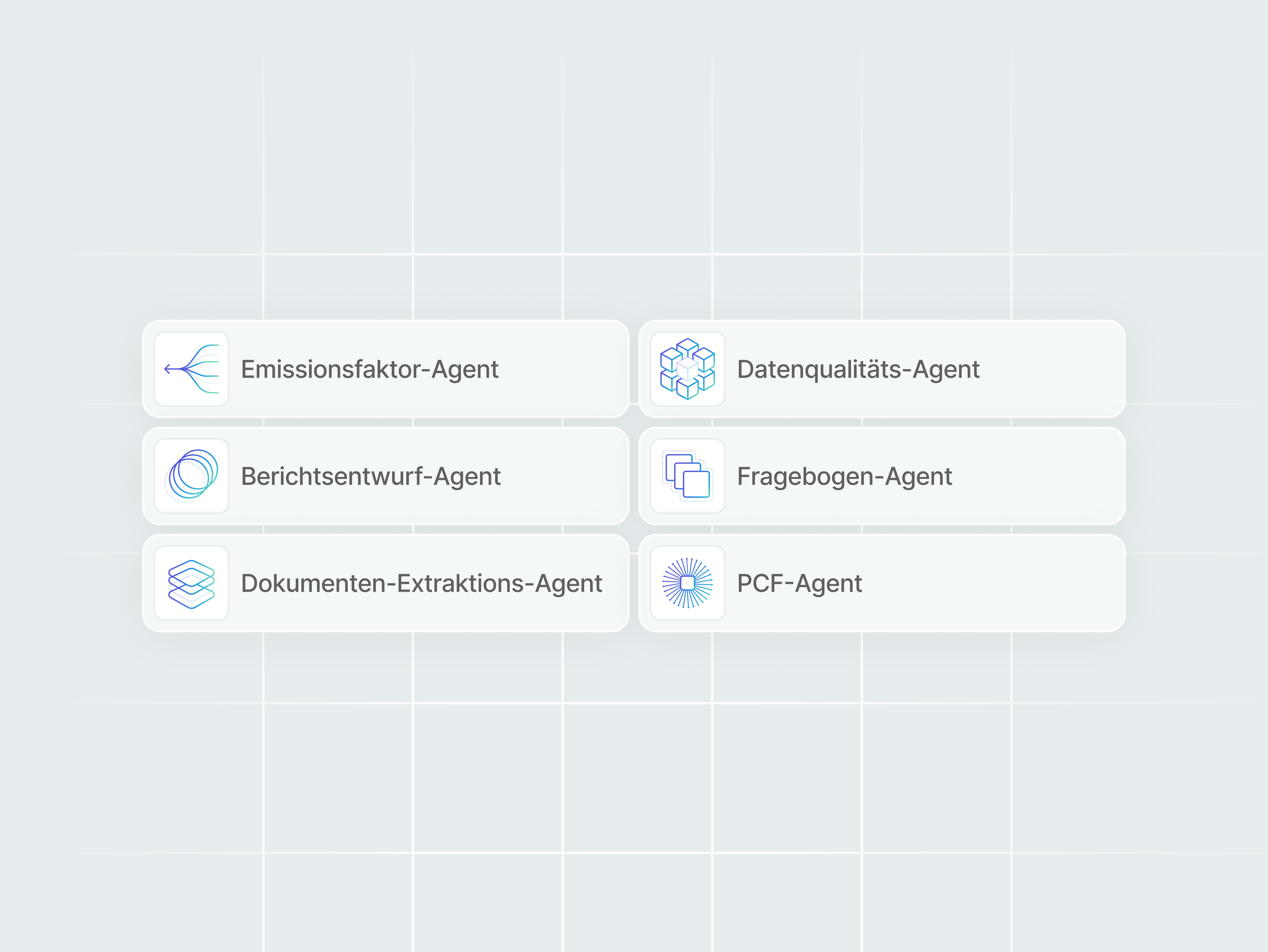
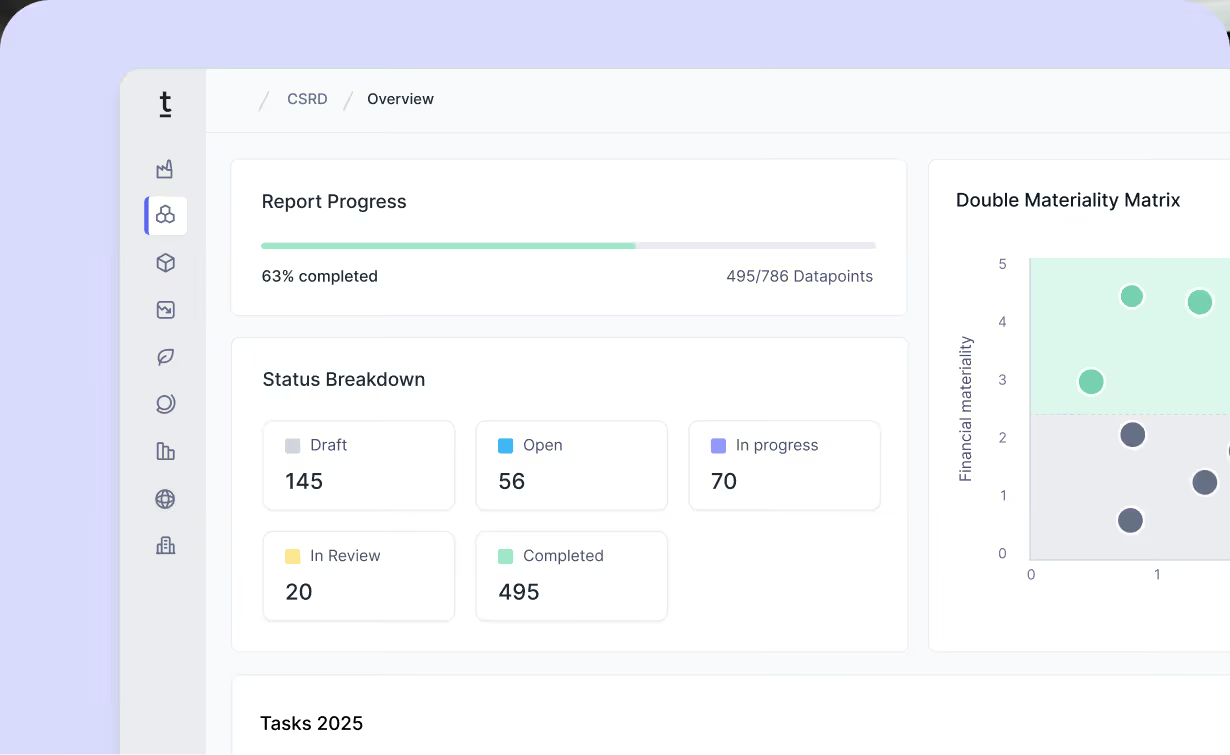
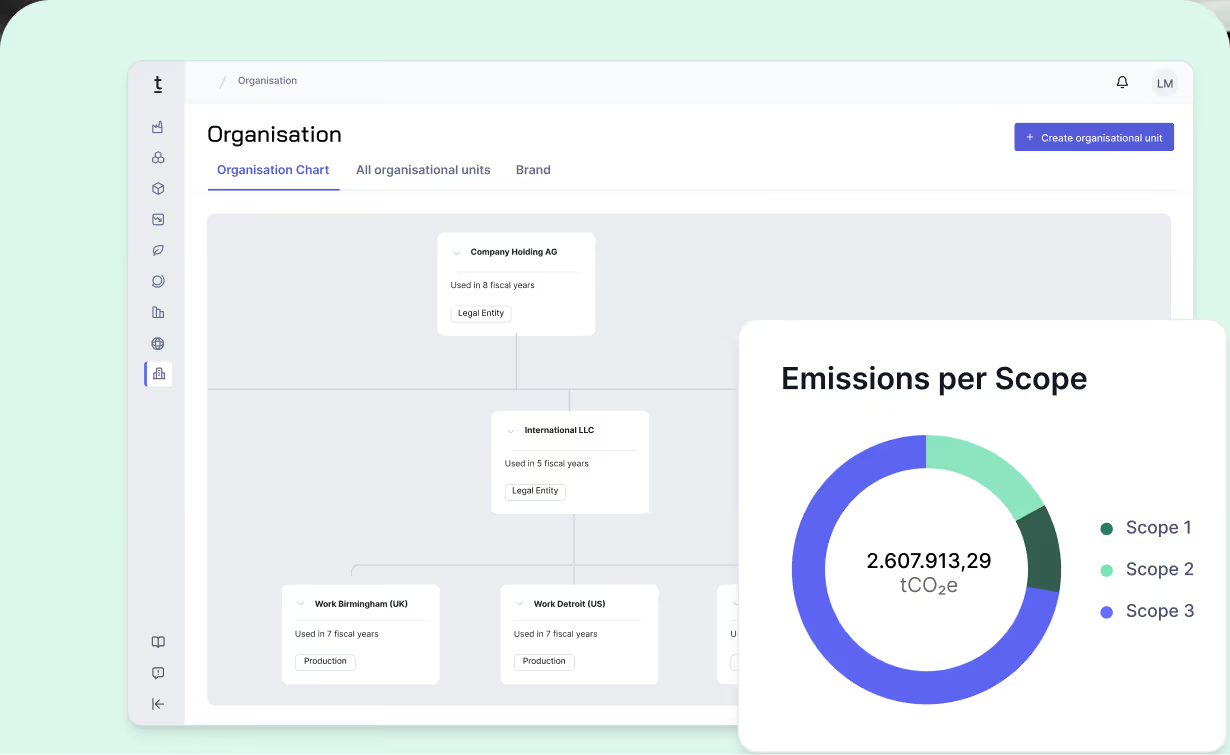
Tanso continuously adapts its platform to regulatory developments around the CSRD, ESRS, and EU Taxonomy – quickly, flexibly, and with foresight.
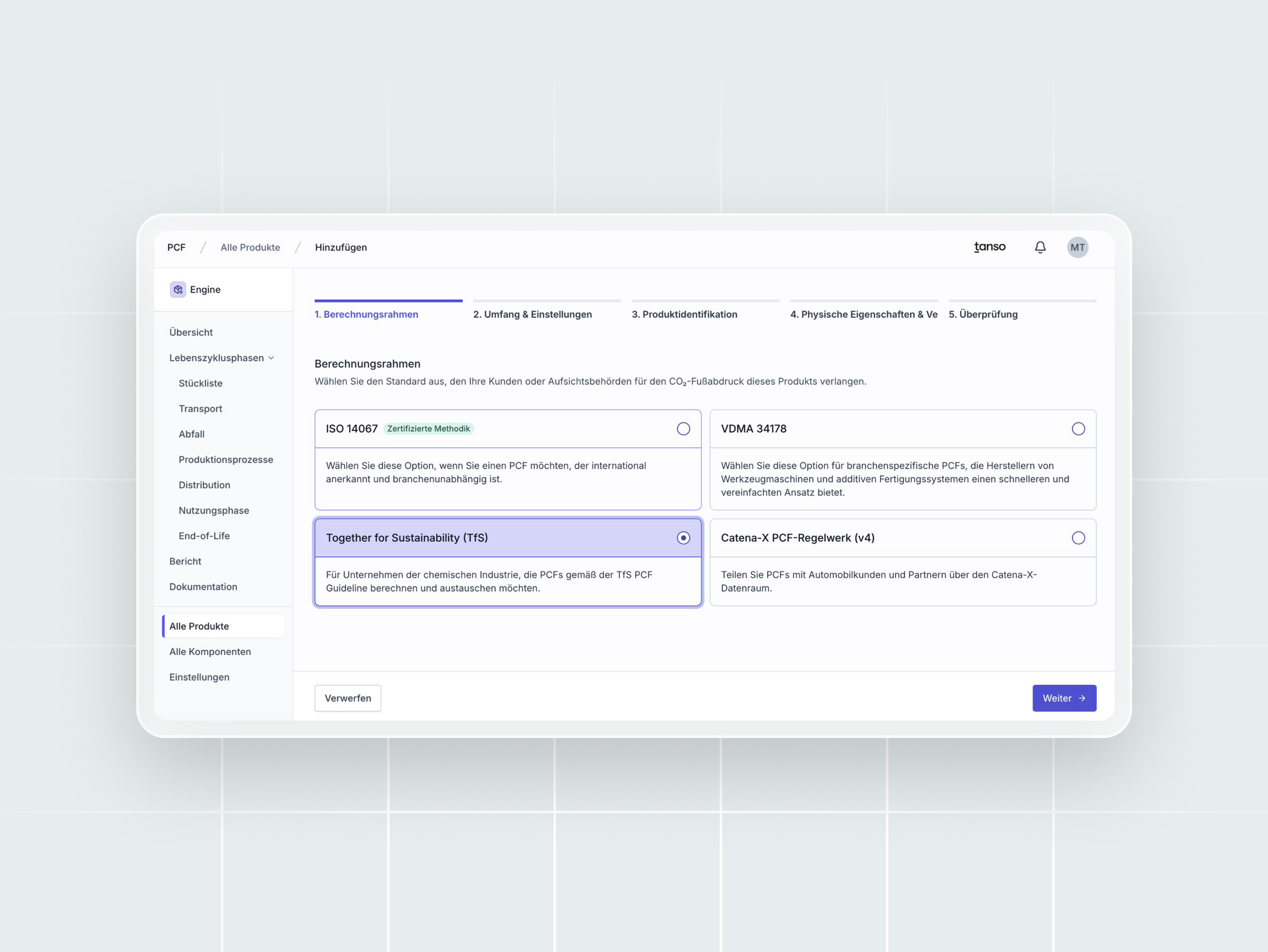
Companies can use Tanso to report under both the VSME and the CSRD. Core functionalities like data point tagging and compatibility with standards such as GRI are already integrated and being further developed.







































































.avif)





.avif)
.jpg)


