


ESG software vs ERP: The right architecture for sustainability management


Many companies start their ESG data management within systems they already use. The logic is understandable: if data on production, procurement, or logistics already exists in the ERP system, why not manage sustainability there as well?
In fact, several ERP providers now offer their own sustainability or carbon reporting modules. However, as requirements around CSRD, Scope 3 transparency, and Product Carbon Footprints (PCFs) increase, many companies face a new question: Should ESG live inside the ERP system - or does it require a dedicated ESG platform connected to it?
The answer usually lies in understanding where the strengths of each system are.
ERP systems manage processes. ESG systems manage methodology.
ERP systems are designed to manage operational business processes. They track transactions, material flows, production data, and financial information. In short, they form the operational backbone of a company. As a result, they are an important source of ESG data.
But sustainability management requires more than operational information.
It also involves:
- Carbon accounting methodologies
- Emission factor databases
- Regulatory reporting frameworks
- Audit trails and documentation
- Lifecycle models and scenario analysis
- Collecting information from suppliers and other stakeholders
These elements form the methodological foundation of sustainability management - and differ fundamentally from traditional ERP functionalities and the development focus of ERP vendors.
For this reason, many companies combine the strengths of both systems: the ERP provides the data, while ESG software handles calculations, analysis, and reporting.
The limits of ESG modules in ERP systems
ERP sustainability modules can be useful for capturing initial emissions data within existing operational processes. However, as ESG management matures, several structural limitations often emerge.
First, ESG methodologies evolve quickly. Standards such as CSRD, ESRS, ISO 14067, and the GHG Protocol are continuously updated. To remain compliant, calculation methods and reporting logic must be adjusted regularly. ERP systems, on the other hand, typically evolve on much longer release cycles.
Second, carbon accounting requires specialized data models - particularly for Scope 3 calculations and Product Carbon Footprints - which often go far beyond traditional ERP data structures.
Third, the reality of many organizations is far more complex than a single ERP system. Many companies operate with multiple ERP systems, varying data quality, or fragmented master data landscapes - often due to historically grown IT environments or corporate acquisitions.
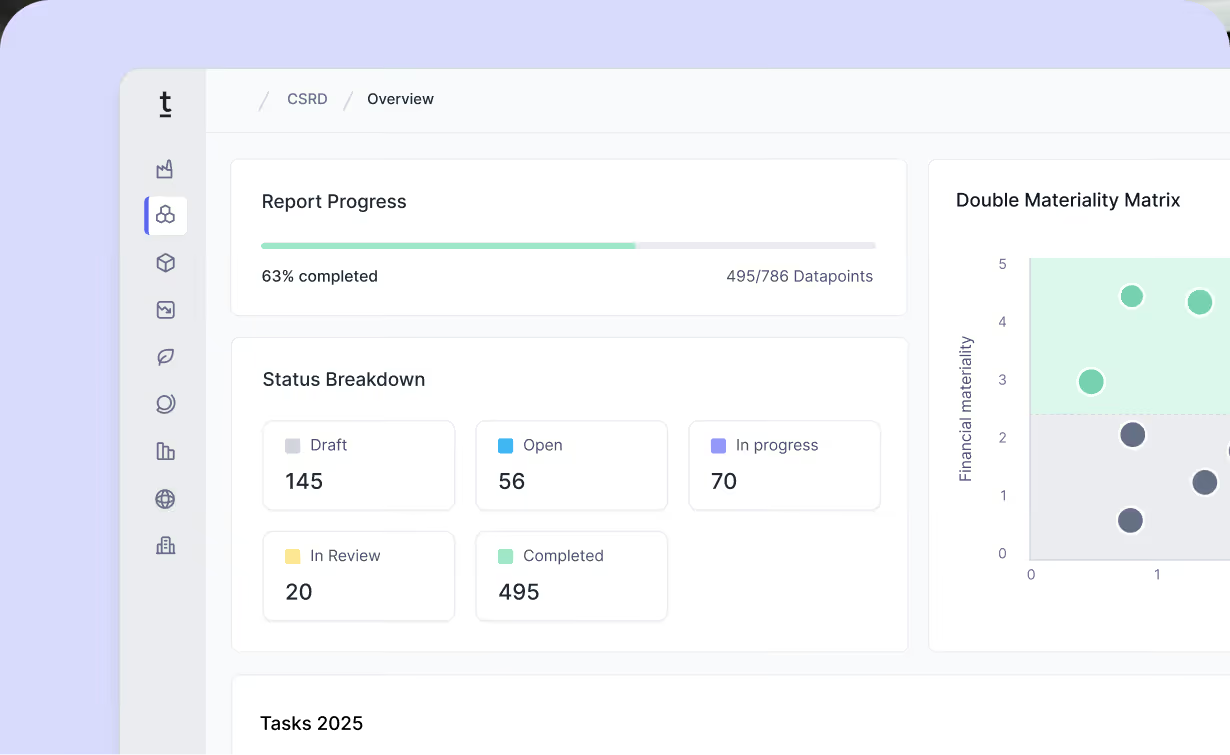
ESG software can help manage this complexity. Platforms like Tanso enable companies to integrate different data sources, organizational units, and IT systems methodologically and improve them step by step over time.
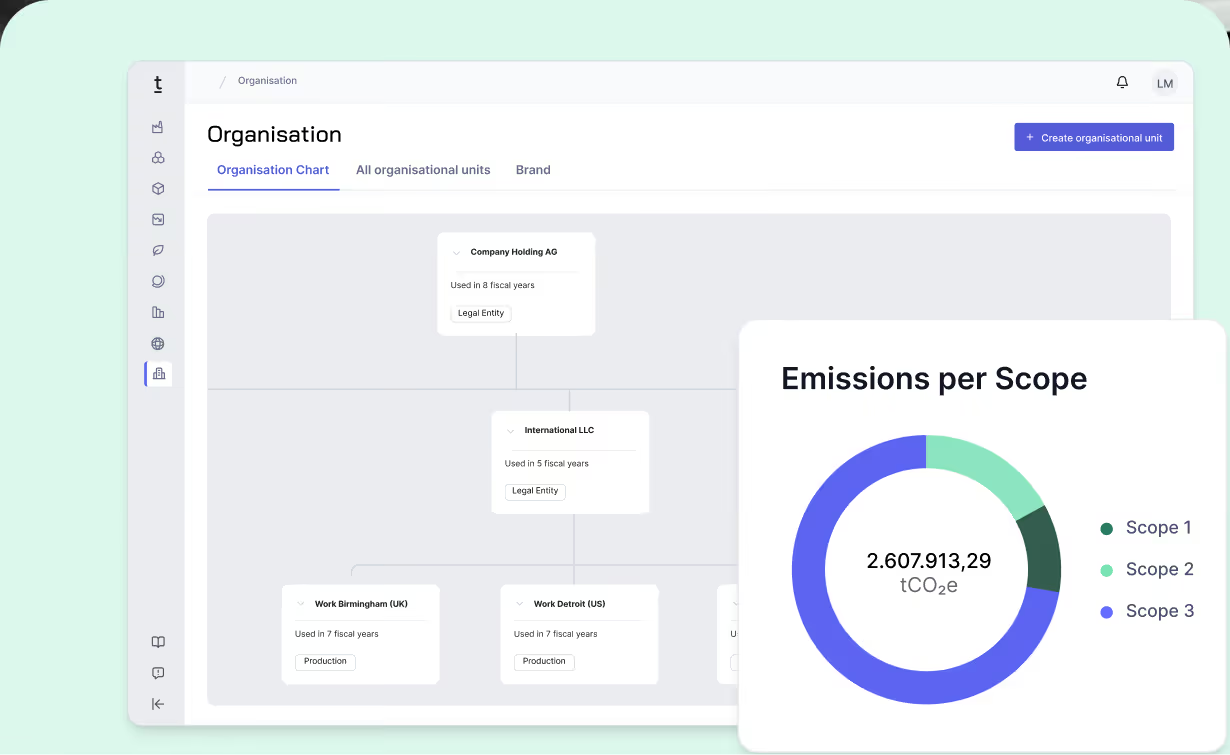
In the context of ESRS reporting, it is particularly important to transparently document for each reporting year which organizational units, locations, systems, and datasets are included in the inventory - so-called system boundaries. Sustainability software helps represent this structure clearly, even when companies operate multiple ERP systems or lack fully consolidated data environments.
As a result, many organizations treat the ERP system as a data source, while ESG software becomes the calculation and reporting platform.
Connecting ERP data with ESG intelligence
The most effective ESG architectures combine ERP systems with specialized sustainability platforms. Operational data - such as production volumes, material usage, or supplier information - flows from the ERP into ESG software. ERP systems are therefore one of the most important sources for sustainability data. They contain information about which materials are used, which products are manufactured, and how much energy is consumed.
According to Christoph Herr, Advisor for Enterprise Software and Platform Economics at the VDMA, up to 42% of relevant sustainability data can be found in ERP systems.
At the same time, this data foundation is often not sufficient to create a complete sustainability report. Many data points do not exist in the format required for sustainability methodologies. Examples include missing weights in procurement data, incomplete transport information for internal logistics processes, or qualitative ESG metrics collected outside ERP systems.
Other critical data points - such as supplier information, climate risk assessments, or social policy documentation - are often captured through additional systems or dedicated data collection processes.
ERP systems are therefore a central data source - but rarely sufficient for a complete ESG inventory. ESG software complements ERP data by connecting it with additional data sources, supply chain information, and methodological calculation models.
How Norder Band uses ERP data for automated PCF calculations
Norder Band illustrates how this architecture works in practice. The company operates one of Europe’s most advanced stainless steel service centers and has been pursuing a clear sustainability strategy for years.
As part of Glave Gruppe, Norder Band had already calculated its Corporate Carbon Footprint (CCF), creating a solid foundation for analyzing emissions. At the same time, demand for Product Carbon Footprints (PCFs) increased significantly, as customers wanted transparency about the emissions associated with delivered components.
Calculating these values manually was time-consuming. Relevant data was spread across different systems, methodological questions remained unresolved, and calculating a single PCF required around 1.5 hours.
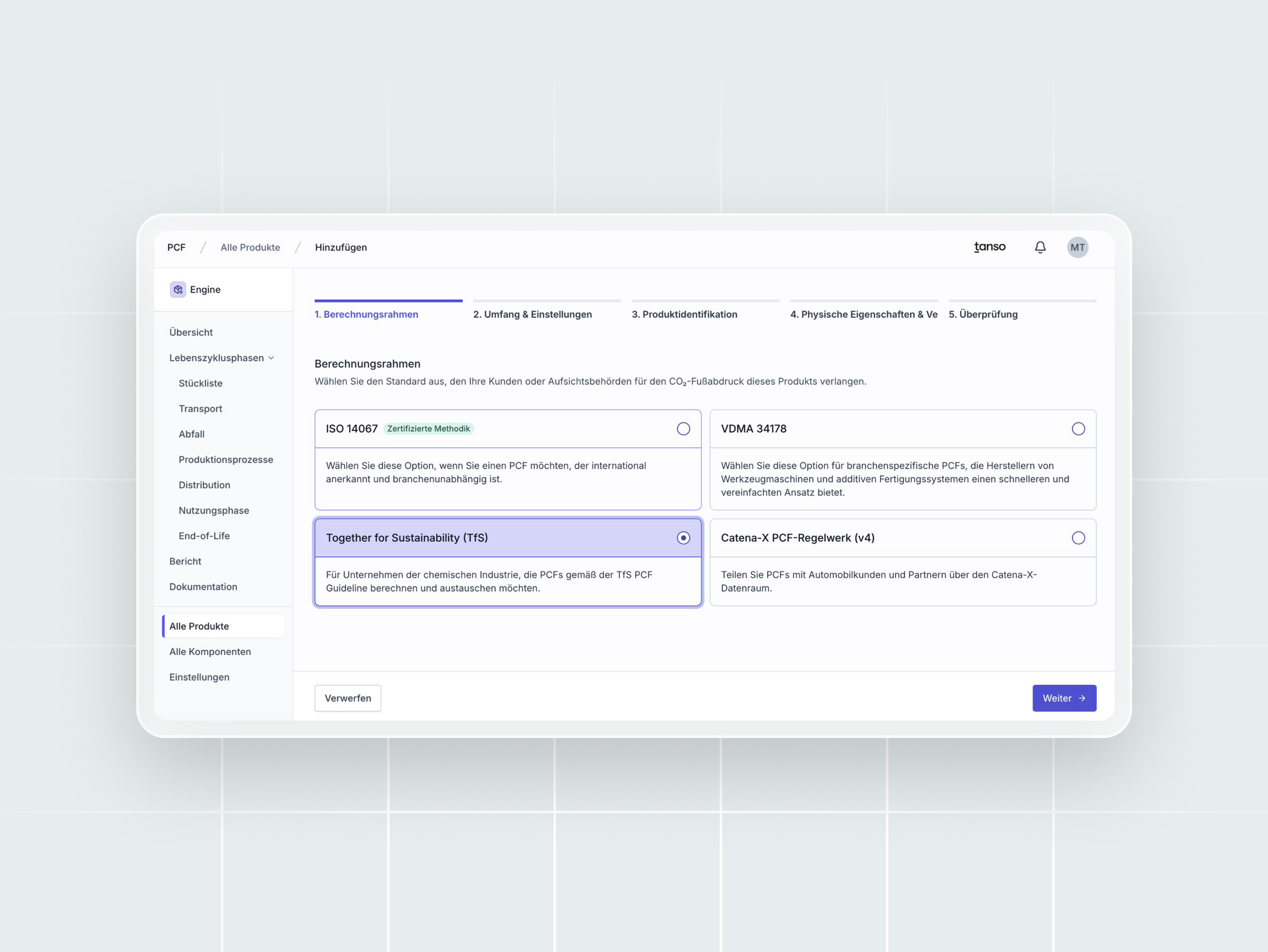
To scale this process, Norder Band integrated its ERP system with the Tanso platform. The ERP now automatically provides the relevant order data, while ESG software calculates the PCFs based on a certified methodology. The result is a fully automated process.
Thomas Stoelting, Head of Sales, explains:
“With Tanso, we reduced the effort required for PCF calculations from 1.5 hours to a single click while increasing transparency and data quality. Our customers benefit immediately - and we are now able to manage sustainability in a measurable, efficient, and future-ready way.”
Instead of calculating each footprint manually, Norder Band can now generate up to 5,000 product carbon footprints per day, saving roughly 360 hours of work per year. Customers receive emissions data directly with their orders and can integrate it into their own carbon accounting.
ERP and ESG software: A complementary architecture
Rather than competing with each other, ERP systems and ESG platforms often complement one another.
The ERP remains the central source of operational company data.
ESG software builds on this foundation and enables:
- Carbon accounting according to recognized standards
- Automated PCF and CCF calculations
- Regulatory ESG reporting
- Lifecycle analyses and emissions assessments
This architecture allows companies to maintain stable operational systems while remaining flexible in responding to new sustainability requirements.
The next step: From ESG data to carbon intelligence
As sustainability management matures, the focus of many companies shifts. It is no longer only about collecting ESG data - it is about understanding it and using it to drive improvement.
Companies want to answer questions such as:
- Which products have the highest emissions intensity?
- Where are the greatest decarbonization opportunities?
- How will regulatory changes affect reporting?
- How can emissions data support strategic decisions?
These questions require analytical capabilities that go beyond traditional ERP functions. This is where specialized ESG software platforms with integrated analytics and AI capabilities play an increasingly important role. They help companies analyze large sustainability datasets, identify emission hotspots, and prioritize actions based on data.
Conclusion: ERP runs the business. ESG software runs sustainability.
ERP systems are essential for operational business processes. A large share of sustainability data originates there - such as materials usage, production activities, or energy consumption.
At the same time, ERP data alone is rarely sufficient to fully represent sustainability performance.
Many relevant data points exist outside traditional ERP systems, including:
- Primary supplier data from the supply chain
- Internal logistics and transport data
- Product weight data in procurement
- Qualitative ESG metrics such as social policies
- Climate risk or transition assessments
Sustainability software therefore often fulfills several functions simultaneously:
1. Data layer
Collecting, integrating, enriching, and combining ESG data from ERP systems, supply chains, and additional sources.
2. Governance layer
Managing methodologies, approval processes, documentation, and audit trails required for regulatory compliance.
3. Analytics & reporting layer
Analyzing ESG data, running scenarios, and generating sustainability reports.
Which of these functions companies need depends heavily on their existing IT landscape.
Some organizations rely on ESG software for data collection because no centralized tooling exists. Others already use specialized systems for certain data domains - such as HR metrics - but still require a platform for methodology management, governance, and reporting.
In practice, this results in an architecture where both systems work together: ERP provides operational data. ESG software integrates, analyzes, and structures sustainability information.
Or simply put: ERP runs the business. ESG software runs sustainability.











































































.avif)





.avif)
.jpg)


