


Impacts, challenges and opportunities of CSRD for German SMEs


Climate neutrality by 2050: The EU's goals and the Green Deal
With the Green Deal, the European Union aims to become climate-neutral by 2050. This ambitious plan aims to sustainably transform the European economy while remaining competitive. However, the ecological transformation requires significant investments, with particular emphasis on mobilizing private financial flows.
Importance of sustainability information for investments
Detailed information about the sustainability of companies is essential to secure the necessary investments from stakeholders. The demand for such information is constantly increasing as investors and other stakeholders place increasing value on sustainable business.
Introduction of the Corporate Sustainability Reporting Directive (CSRD)
Launched in 2022 Corporate Sustainability Reporting Directive (CSRD) represents a significant reform of sustainability reporting. It significantly expands the number of companies subject to reporting requirements and standardizes reporting. Medium-sized companies in particular are now required to collect and publish comprehensive sustainability information.
These measures are crucial to create transparency and lay the necessary basis for sustainable investments. With CSRD, the European Union is taking an important step towards a climate-neutral and sustainable economy.
Scope of application
With the final adoption of the Omnibus I package by the Council of the European Union on 24 February 2026, the scope of the CSRD has been significantly reduced. The originally planned stepwise extension to mid-sized companies and listed SMEs is therefore largely no longer applicable.
The directive now applies to:
- Wave 1 (already subject to reporting obligations): EU companies with more than 1,000 employees and over €450 million in turnover.
- Wave 2 (from financial year 2027): Further EU companies with more than 1,000 employees and over €450 million in turnover.
- Non-EU companies (from financial year 2028): Subject to reporting obligations if they generate more than €450 million in turnover within the EU and have an EU subsidiary or EU branch with more than €200 million in turnover.
- Voluntary reporting for companies outside the scope: Companies below the new thresholds can choose to report voluntarily under the VSME standard.
- Opt-out option for Member States: Member States have the option to exempt Wave 1 companies below the new thresholds from reporting obligations for the financial years 2025 and 2026. The current CSRD draft legislation in Germany provides for such a provision; in Germany, the NFRD continues to apply as the predecessor regulation for the time being.
Impacts, challenges and opportunities of CSRD in SMEs
Even though the scope of the CSRD has been significantly reduced following Omnibus I, mid-sized companies remain affected through two main channels: indirectly, via reporting-obligated business partners within their value chain, and through the growing expectations of banks, investors, and rating agencies, who increasingly request reliable sustainability data regardless of the formal reporting obligation.
Early impact and increasing need for information
The relevance of CSRD for medium-sized companies is particularly reflected in the early impact of its stakeholders, including suppliers and financial partners, who may already fall under the CSRD themselves and therefore demand increased and seamless reporting requirements from their business partners along the entire value chain. These requirements lead to increased pressure on medium-sized companies to implement sustainable reporting at an early stage.
For these companies, addressing the requirements of the CSRD is particularly relevant, since their suppliers and financial partners fall under the CSRD and therefore request detailed sustainability information from their business partners. This makes transparent reporting along the value chain indispensable. Mid-sized companies must consequently be able to provide reliable sustainability data — both to meet stakeholder expectations and to avoid losing ground in the market to better-prepared competitors.

Challenges
Complexity of sustainability reporting
- Collection of a wide range of new information: Companies must collect a comprehensive amount of data that goes beyond their previous reporting requirements
- The necessary structures and processes do not yet exist internally: Many companies do not yet have the necessary structures, experience and routines for effective sustainability reporting
- High effort and excessive costs: The associated bureaucratic effort can be considerable and many companies lack the resources to do so. According to one VDMA study Bureaucracy costs are 1 to 3 percent of turnover.
Information needs of business partners
- Reportable customers, suppliers and financial partners: Companies are facing increasing demands from customers, suppliers and financial partners who are themselves reportable and require detailed sustainability information
- Increasing indirect concern: Even medium-sized companies, which initially do not fall directly under the reporting obligation, are affected by the information needs of their business partners
Competitive effects of increasing transparency
- Bargaining power of stakeholders vis-à-vis their suppliers: The increased transparency through comprehensive reporting increases the negotiating power of stakeholders vis-à-vis their suppliers when they are unable to provide the necessary information.
- Complexity of sustainability reporting: the list published by EFRAG (European Financial Reporting Advisory Group) alone amounts to 1178 data points, but it is not grouped according to the topics of the ESRS materiality analysis, which is why an additional categorization of reporting requirements is necessary
possibilities
Your own use of information
- Identify savings potential and innovations: Through detailed data collection, companies can discover savings potential and develop innovative solutions
- Identify ESG risks internally: Companies can identify environmental, social and governance risks at an early stage and address them in a targeted manner
- Preventing liability: Comprehensive reporting helps to minimize potential liability risks
- Long-term development of the business model: Sustainability reports support the long-term adjustment and development of the business model towards greater sustainability
Using reports as a communication tool
- Use sustainability reports as a strategic communication tool & marketing tool: Reports can be used specifically as a means of communicating sustainability efforts in order to strengthen the corporate image
- Increasing attractiveness as an employer: Transparency on sustainability issues makes the company more attractive to potential employees
- Stronger stakeholder engagement: Transparent reporting promotes stakeholder trust and loyalty and fulfills their own efforts for sustainability-related reporting.
- Allows access to promotional loans: Good sustainability reporting can facilitate access to government funding and loans
Structured coverage of the information needs of various stakeholders
- Reduces information asymmetry between buyers and sellers: Reports reduce information gaps regarding the sustainability of the business model
- Meeting regulatory information needs and relevance for reducing bureaucracy: Sustainability reports meet regulatory requirements and contribute to reducing bureaucratic effort
How can Tanso help
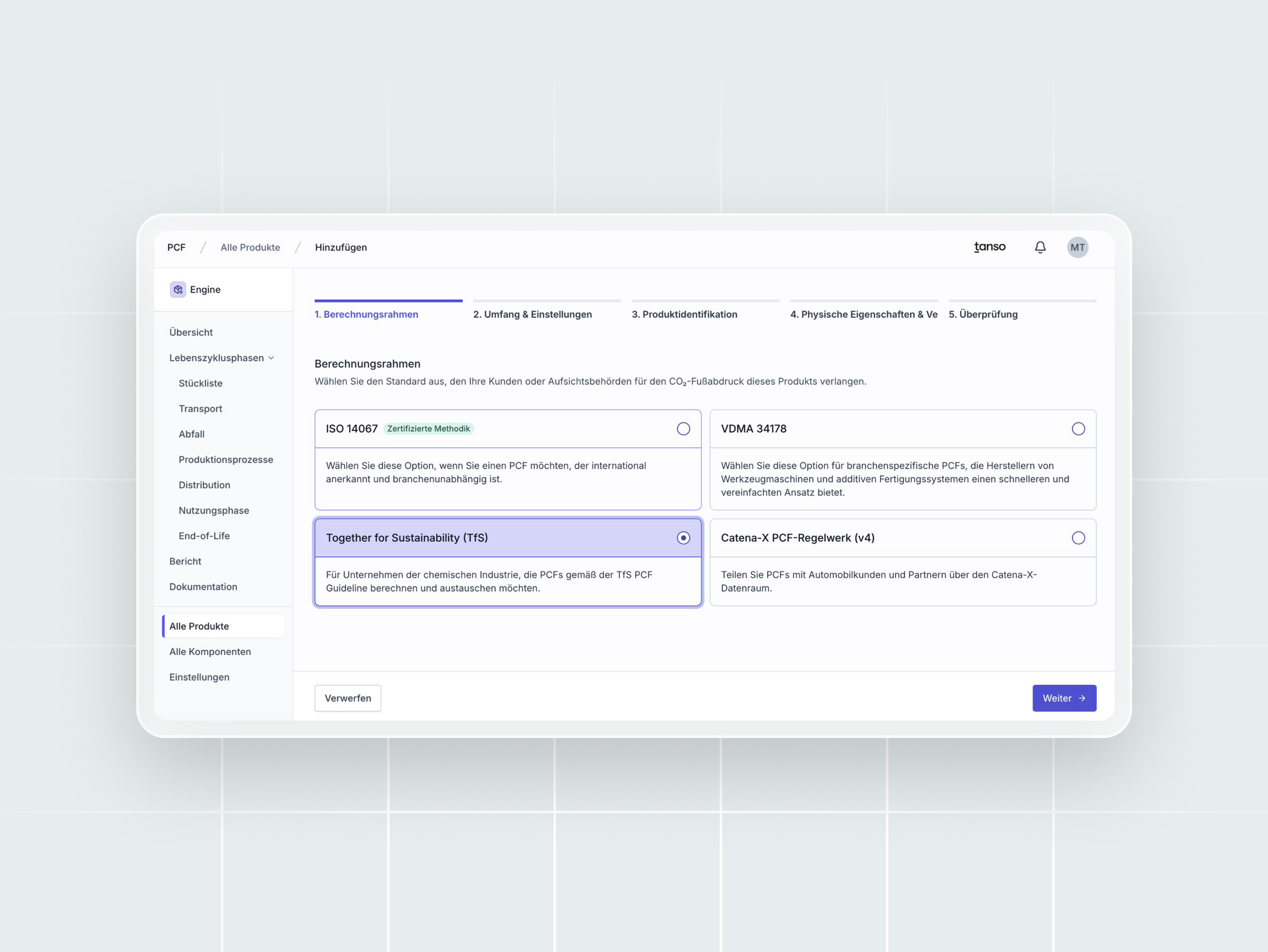
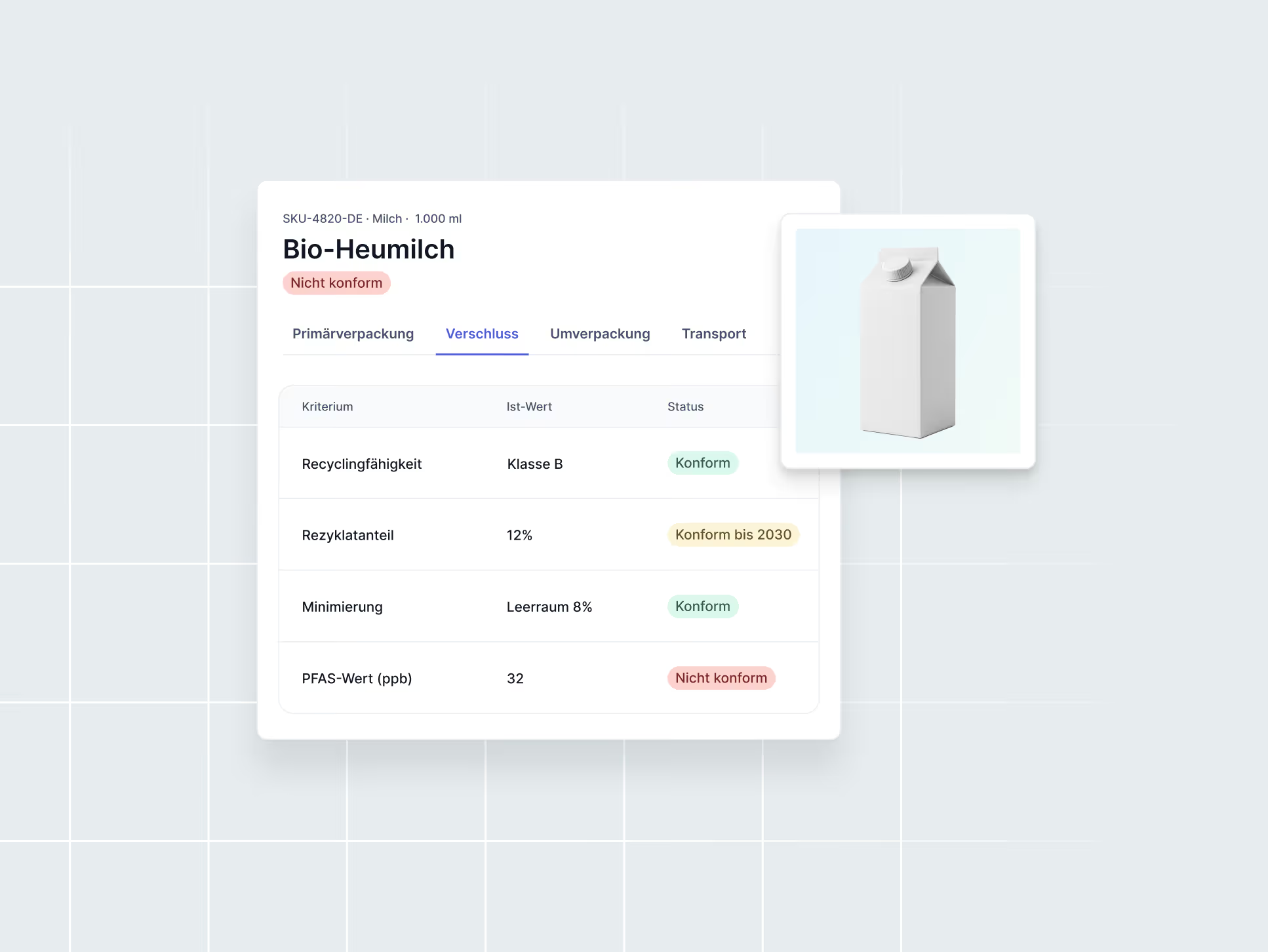
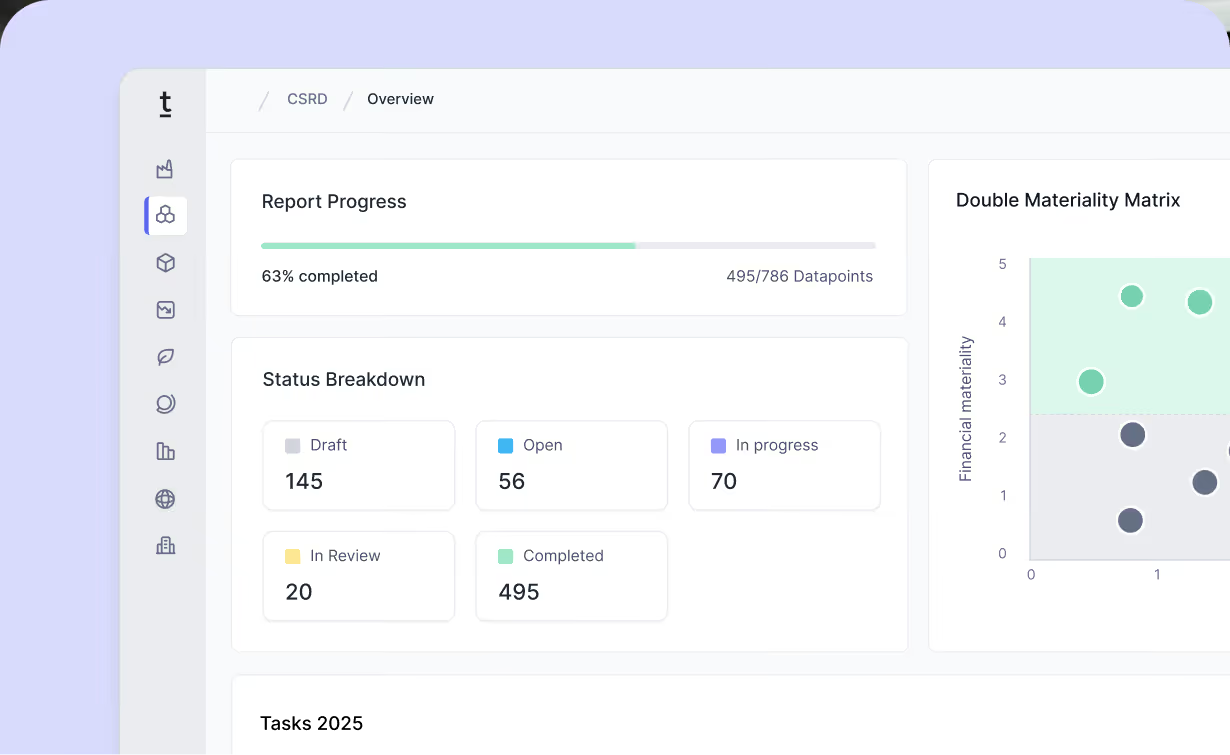
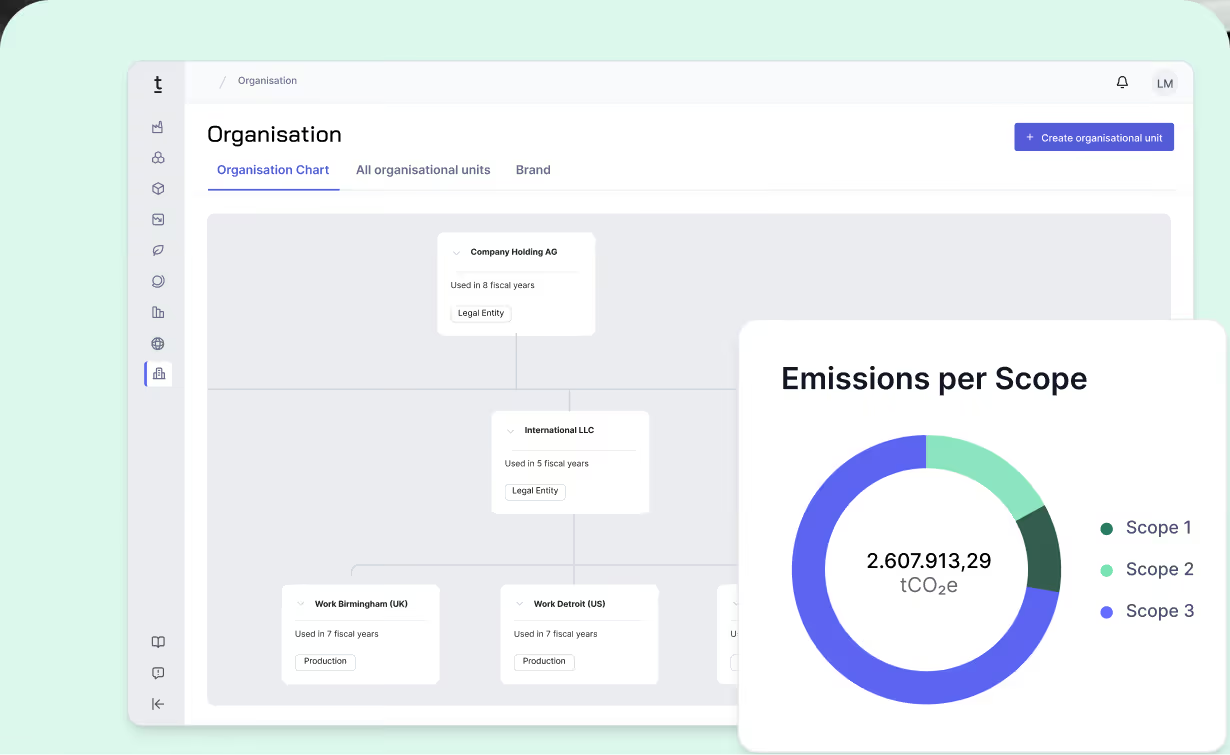
Tanso helps medium-sized companies to meet CSRD requirements and achieve their sustainability goals through audit-oriented and integrated ESRS reporting in accordance with the highest standards. With our focus on data-intensive categories, such as the corporate carbon footprint, Tanso not only enables standard-compliant reporting, but also active management and optimization of ESG performance.
































































.avif)





.avif)
.jpg)


