Heller Hintergrund mit grünem, punktförmigem Farbverlauf in der unteren rechten Ecke und subtilem Radialverlauf nach innen
CBAM software

Calculate and report import emissions automatically

From supplier requests and emissions calculation to the annual CBAM declaration.
Produktkarten mit Emissionswerten und Status neben einer Fertigungslinie mit Autokarosserien

What our customers say

EMAG
"Thanks in part to the Tanso tool, EMAG was able to work through the extensive and complex challenges of CSRD and related topics like environmental accounting and CBAM quickly, even with a very small project team, and keep the project moving. The platform and the knowledgeable Tanso team provide clear, easy-to-follow guidance on many topics, for example on legal requirements and detailed questions around DWA and data collection."
Julia Eisert
Julia Eisert
Governance, Compliance & Sustainability Officer at EMAG
Pankl Racing Systems
"We use Tanso's CBAM tool to make it easier to meet the EU's complex requirements."
Anja Brauneder
Anja Brauneder
Sustainability Manager at Pankl Racing Systems

Everything you need for CBAM compliance

SUPPLIER INTEGRATION

Integrate supplier data in a structured way
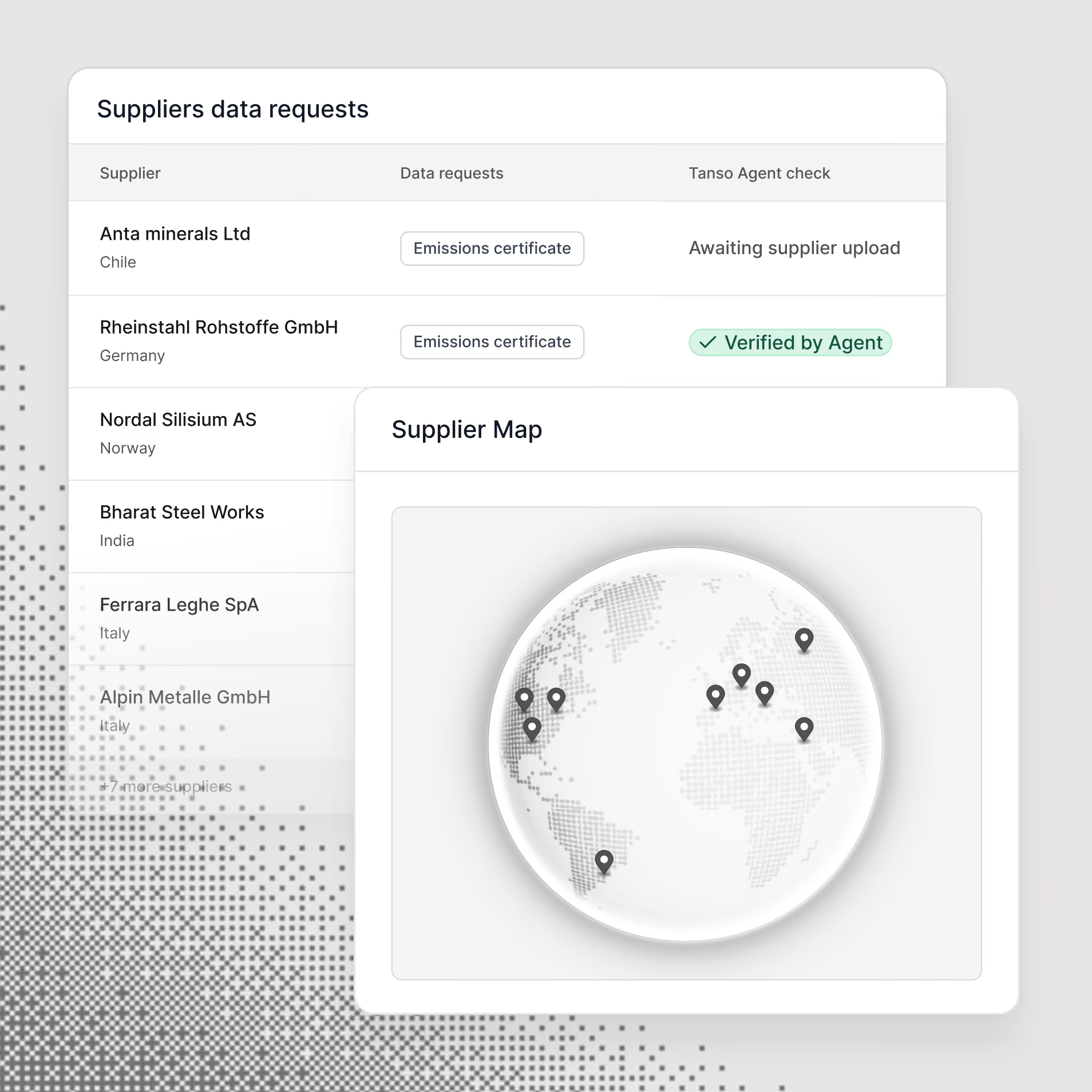
Direct integration of primary data, with no registration required for suppliers
Built-in calculation support for CBAM values
Supplier data available across all areas in Tanso
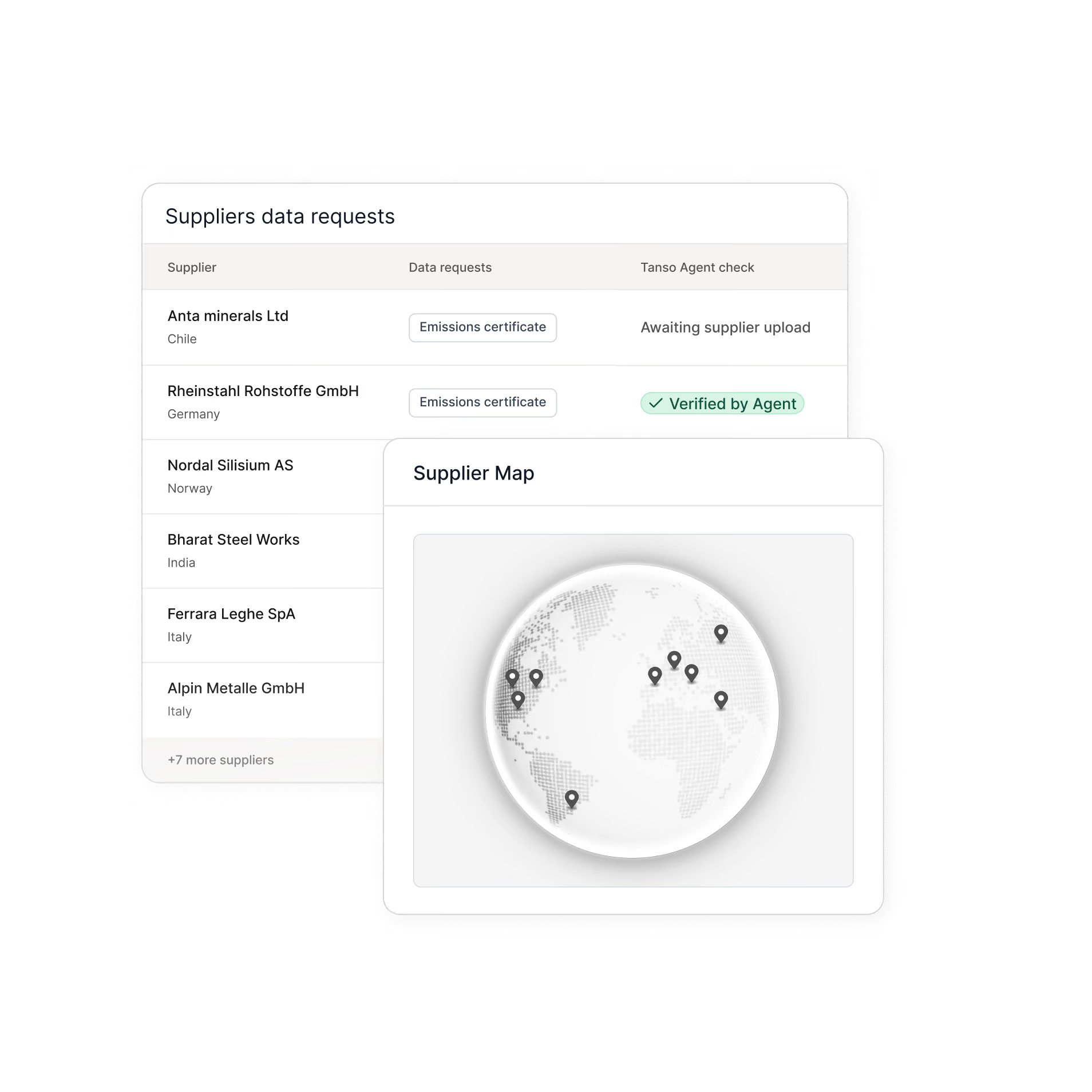
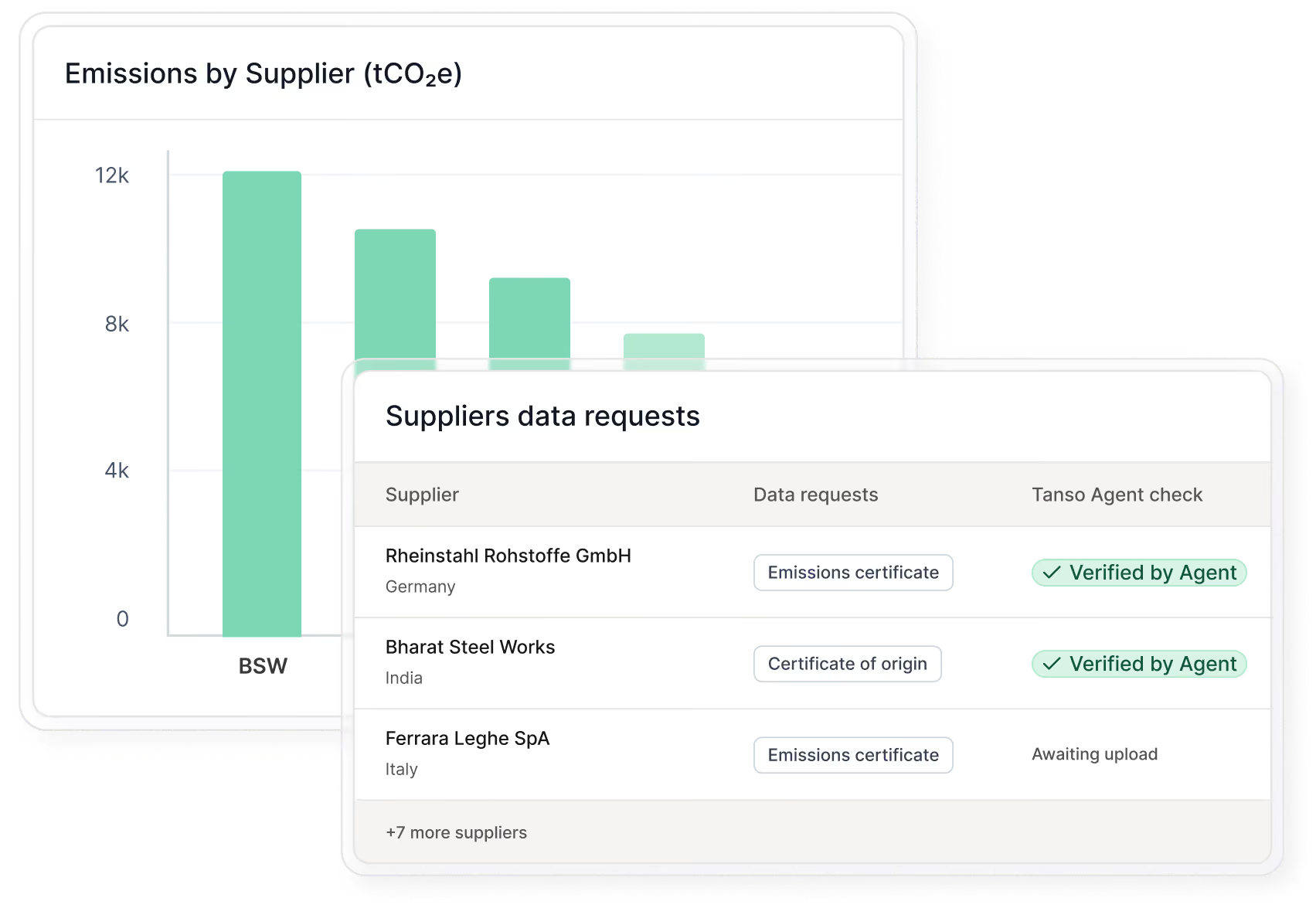
Tabelle mit Lieferantendatenanforderungen zeigt verschiedene Unternehmen aus Chile, Deutschland, Norwegen, Indien und Italien mit Status ihres Emissionszertifikats und Tanso Agent-Prüfung, darunter "Ausstehender Upload" und "Vom Agenten verifiziert". Daneben eine Weltkarte mit Markierungen, die die geografischen Standorte der Lieferanten visualisieren.
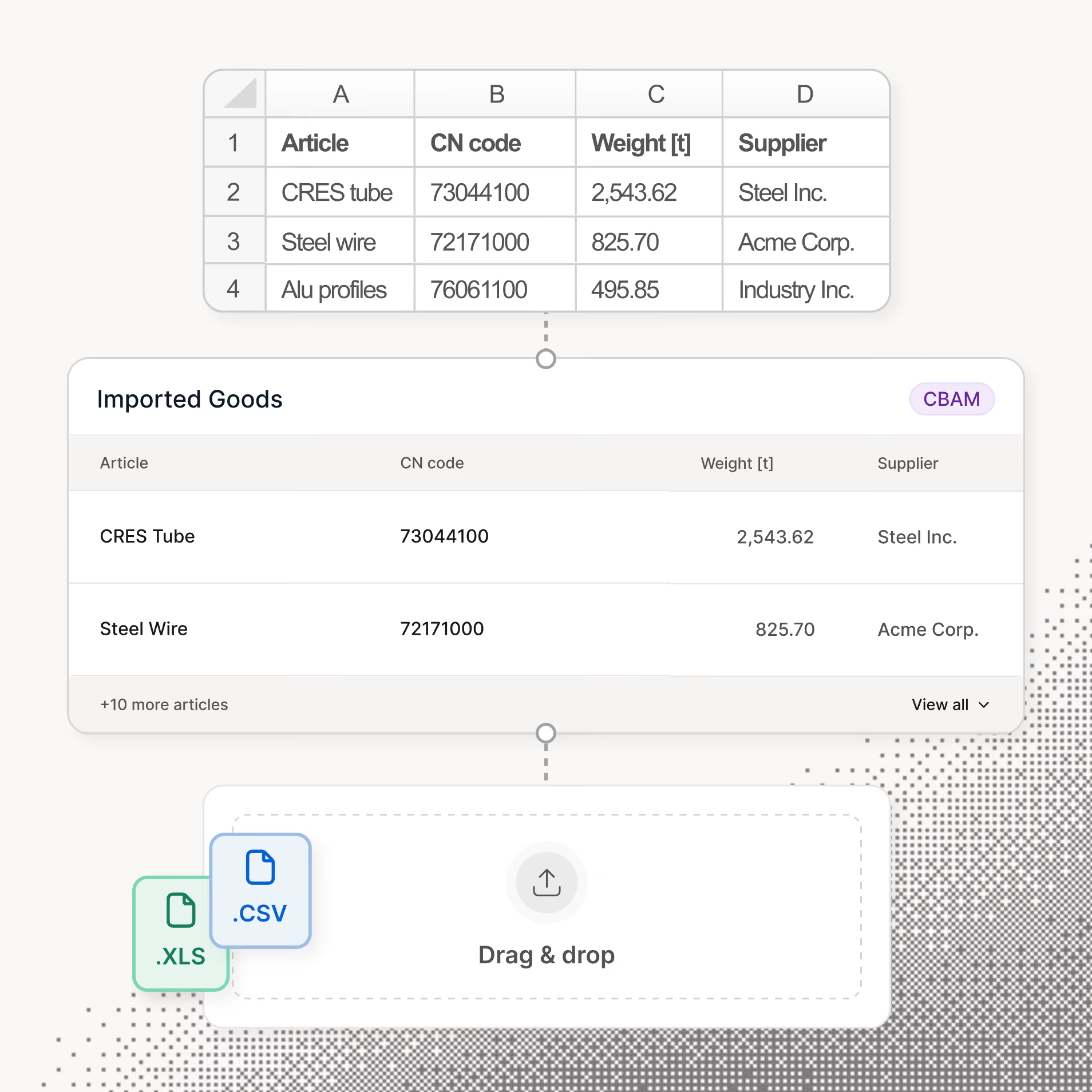
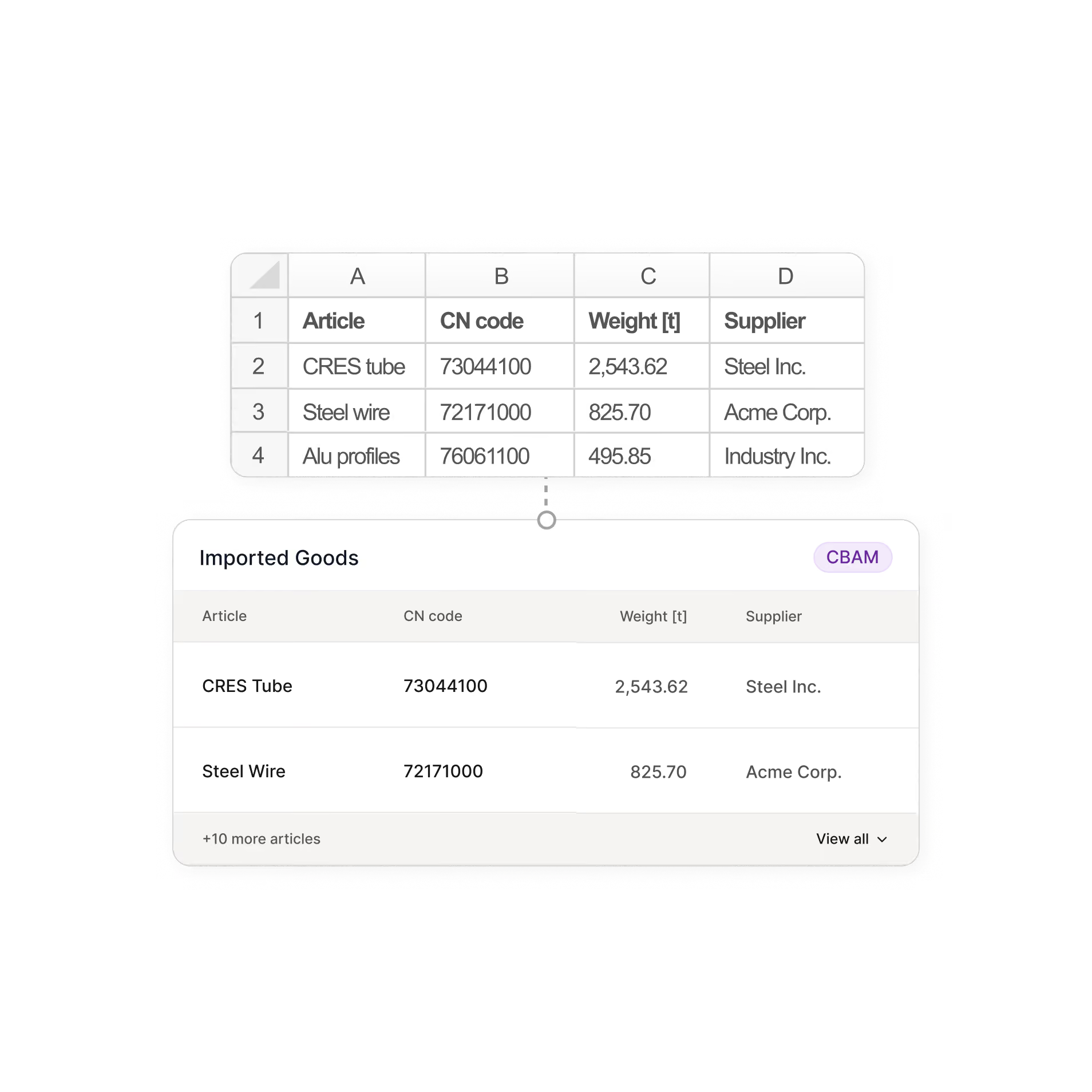
Screenshot showing a workflow for importing goods data from spreadsheet formats .XLS and .CSV by drag and drop, displaying tables with columns for Article, CN code, Weight in tons, and Supplier, listing items like CRES tube, Steel wire, and Alu profiles.
EMISSIONS CALCULATION

Calculate import emissions automatically

Raw data upload from ERP and custom systems
Automatic identification and classification of CBAM goods and countries of origin
EMISSIONS ANALYSIS

Understand your emissions in detail

Built-in database with global CBAM emission values
Separation of direct and indirect emissions
Breakdown by supplier, country, or customs tariff number
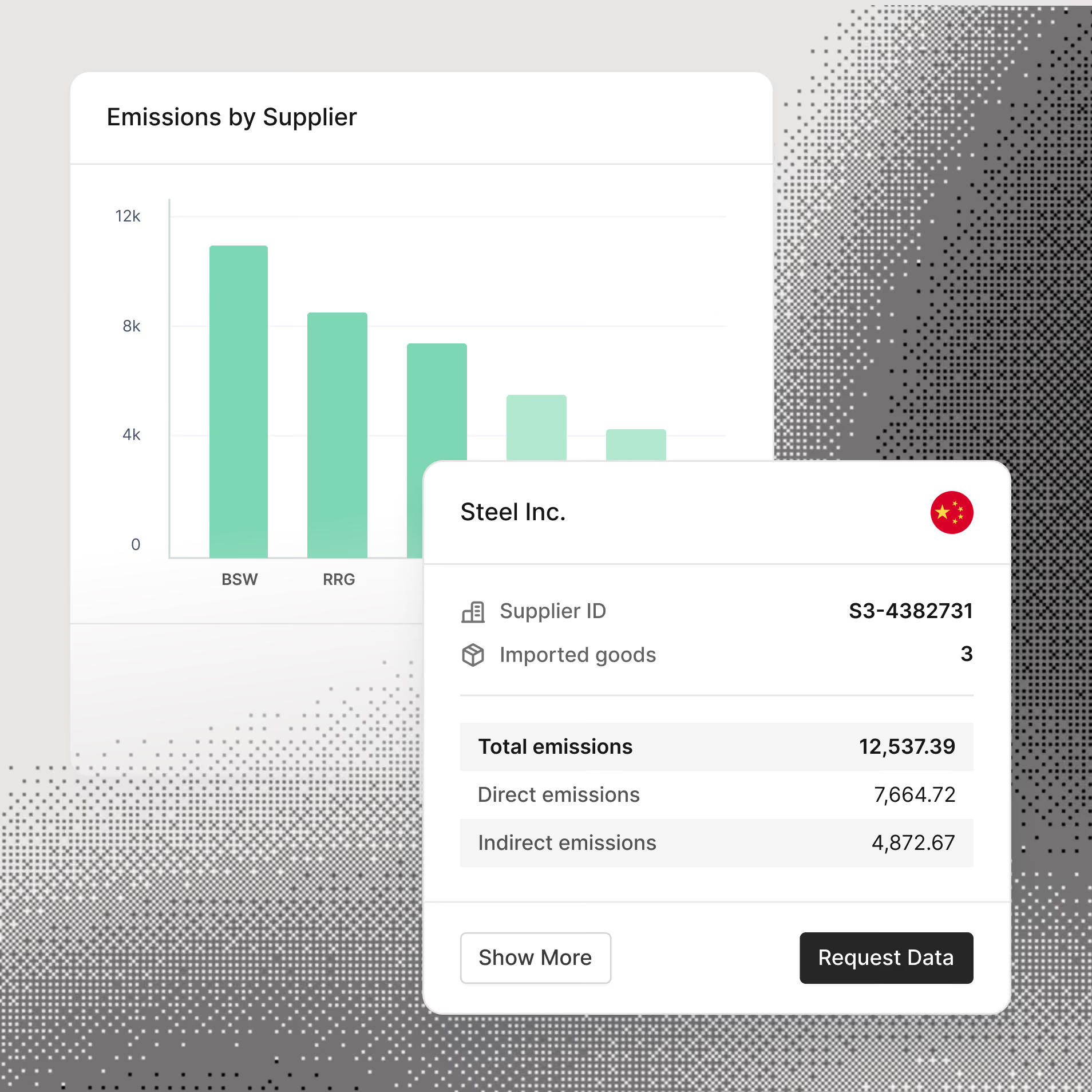
Balkendiagramm mit Emissionen nach Lieferant, bei dem BSW die höchsten Emissionen zeigt, gefolgt von RRG, mit einem Informationsfeld zu Steel Inc. aus China mit Lieferanten-ID S3-4382731, 3 importierten Gütern, Gesamtemissionen von 12.537,39, direkten Emissionen von 7.664,72 und indirekten Emissionen von 4.872,67, mit Schaltflächen für 'Mehr anzeigen' und 'Daten anfordern'.
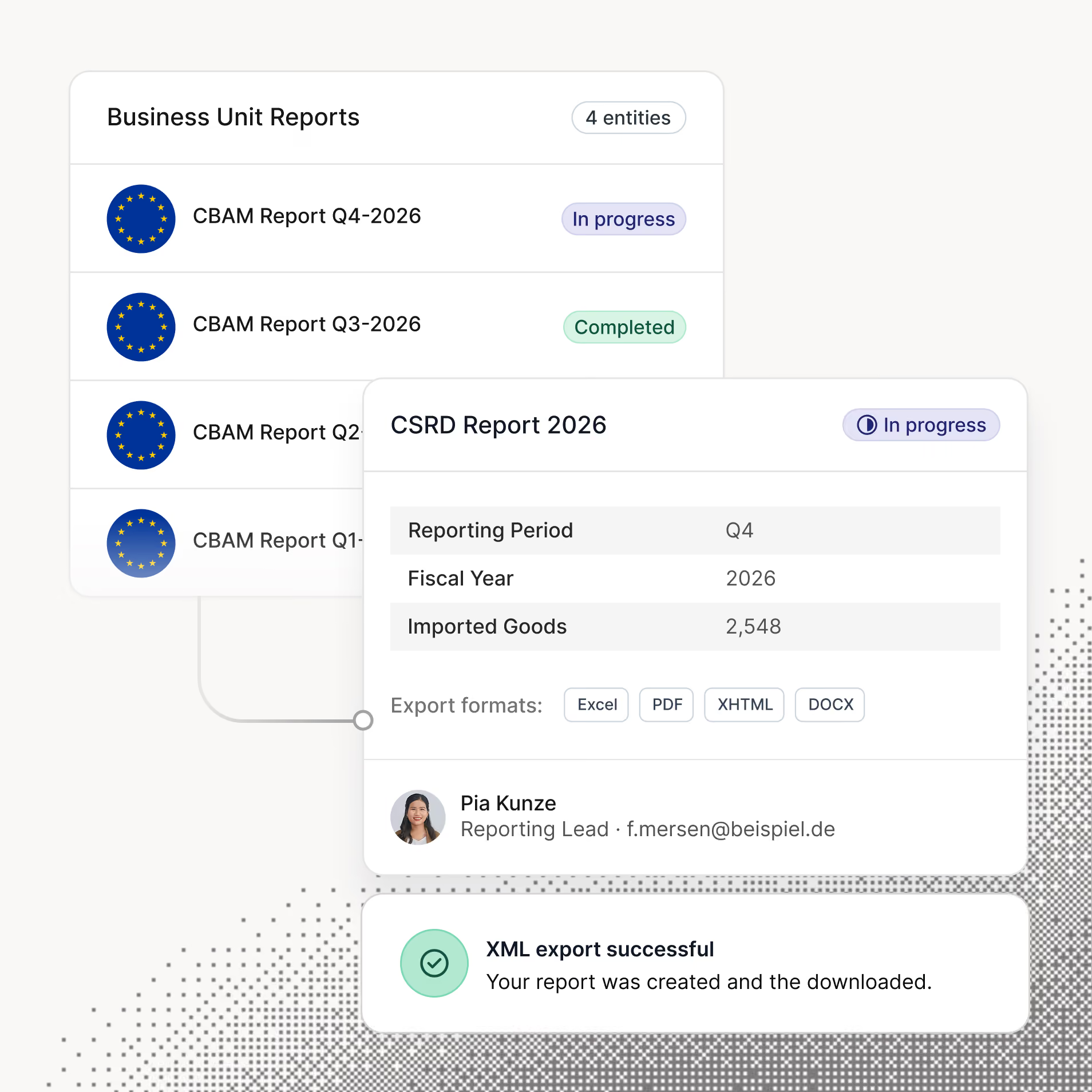
Geschäftseinheitenberichte zeigen vier CBAM-Berichte für Q4-2026 bis Q1-2026 mit Statusangaben 'In Bearbeitung' und 'Abgeschlossen'. CSRD-Bericht 2026 ist im Bearbeitungsstatus, mit Details: Berichtszeitraum Q4, Geschäftsjahr 2026, importierte Waren 2.548. Exportformate verfügbar sind Excel, PDF, XHTML und DOCX. Pia Kunze ist Berichtsstelle mit Kontakt f.mersen@beispiel.de. Eine Benachrichtigung bestätigt erfolgreichen XML-Export und erstellten Bericht mit Download.
REPORTING

Submit your CBAM declaration on time

Export of embedded emissions of imported goods in various formats
Report-ready data for submission to the CBAM Registry
Central, traceable data storage for verification
COST MANAGEMENT

Manage CBAM costs strategically

Early identification of cost drivers in the supply chain
Simulation of cost scenarios for changing import volumes or supplier countries
Identification of optimization potential to reduce CBAM charges
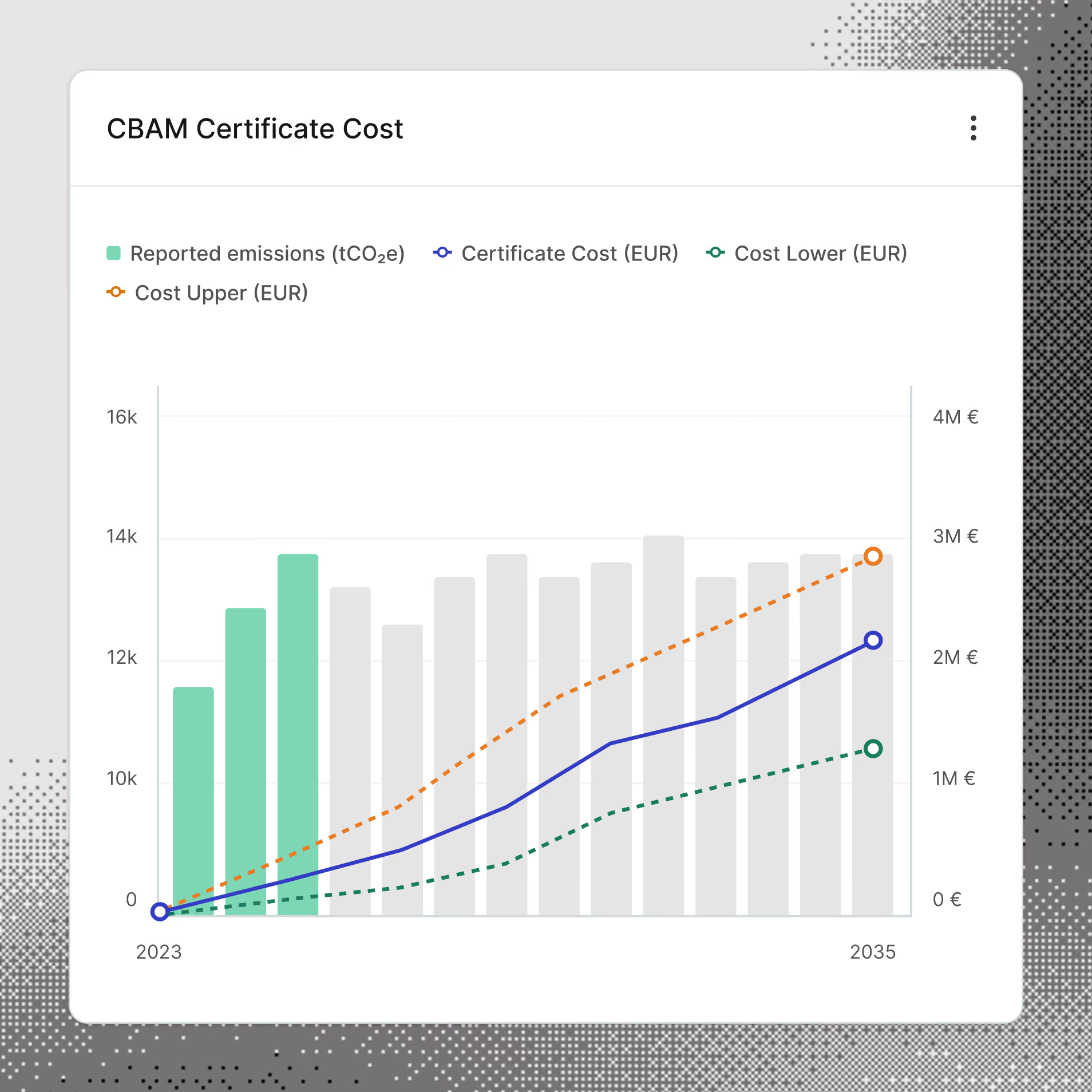
Diagramm zeigt die Kosten und gemeldeten Emissionen des CBAM-Zertifikats von 2023 bis 2035: Balken stellen gemeldete Emissionen in tCO2e dar, eine blaue Linie zeigt die Zertifikatskosten in Euro, eine grüne gestrichelte Linie die unteren Kosten und eine orange gestrichelte Linie die oberen Kosten, wobei alle Kosten von 0 Euro im Jahr 2023 auf bis zu 3 Millionen Euro bis 2035 ansteigen.

Your annual CBAM declaration in four steps

01

Collect supplier data

Primary data requested and received directly via the Tanso supplier portal, with no registration required for suppliers
Additional raw data uploaded from ERP systems
Eine Benutzeroberfläche zeigt Anfragedaten von Lieferanten mit Spalten für Lieferant, Datenanforderungen und Agentenprüfung. Gezeigte Lieferanten kommen aus Chile, Deutschland, Norwegen, Indien und Italien. Ein Lieferantenkarte mit Pins markiert verschiedene Standorte global.
02

Calculate import emissions

Automatic classification of goods and countries of origin, with direct and indirect emissions separated
Calculation with the global CBAM database or primary data
Zwei Tabellen mit importierten Waren, die Spalten Artikel, CN-Code, Gewicht in Tonnen und Lieferant zeigen; die obere Tabelle listet CRES-Rohr, Stahldraht und Aluprofile auf, die untere zeigt CRES-Rohr und Stahldraht mit mehr Artikeln optionale Ansicht.
03

Understand emissions and manage costs
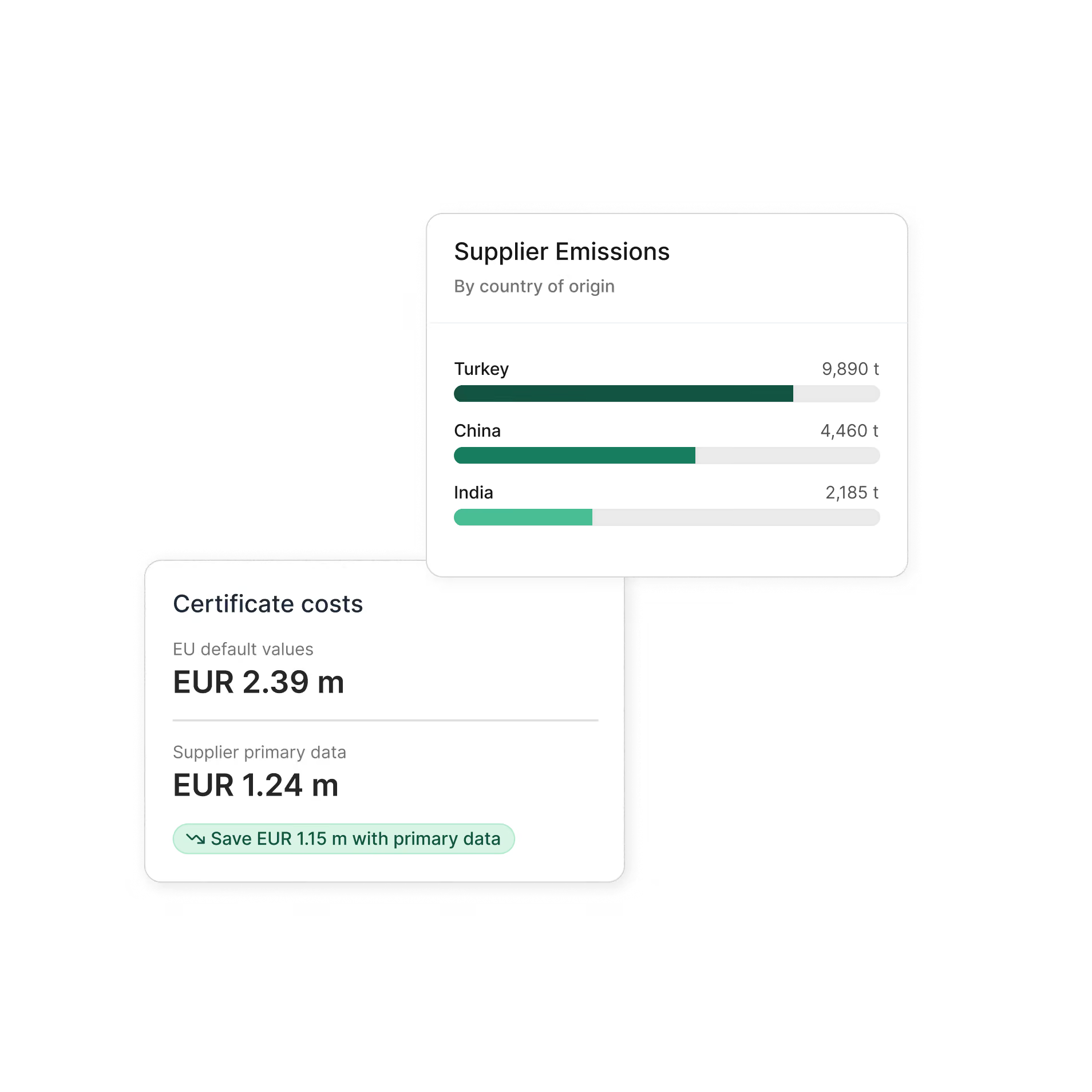
Emissions broken down by supplier, country, or customs tariff number
Cost scenarios simulated for changing import volumes or supplier countries
Diagramm zeigt Lieferantenemissionen nach Herkunftsländern: Türkei 9.890 Tonnen, China 4.460 Tonnen, Indien 2.185 Tonnen. Kosten für Zertifikate: EU-Standardwerte 2,39 Millionen Euro, Lieferantendaten 1,24 Millionen Euro, mit Einsparung von 1,15 Millionen Euro durch Primärdaten.
04

Submit your annual declaration

Export of report-ready data
Data prepared for verification and submission to the CBAM Registry
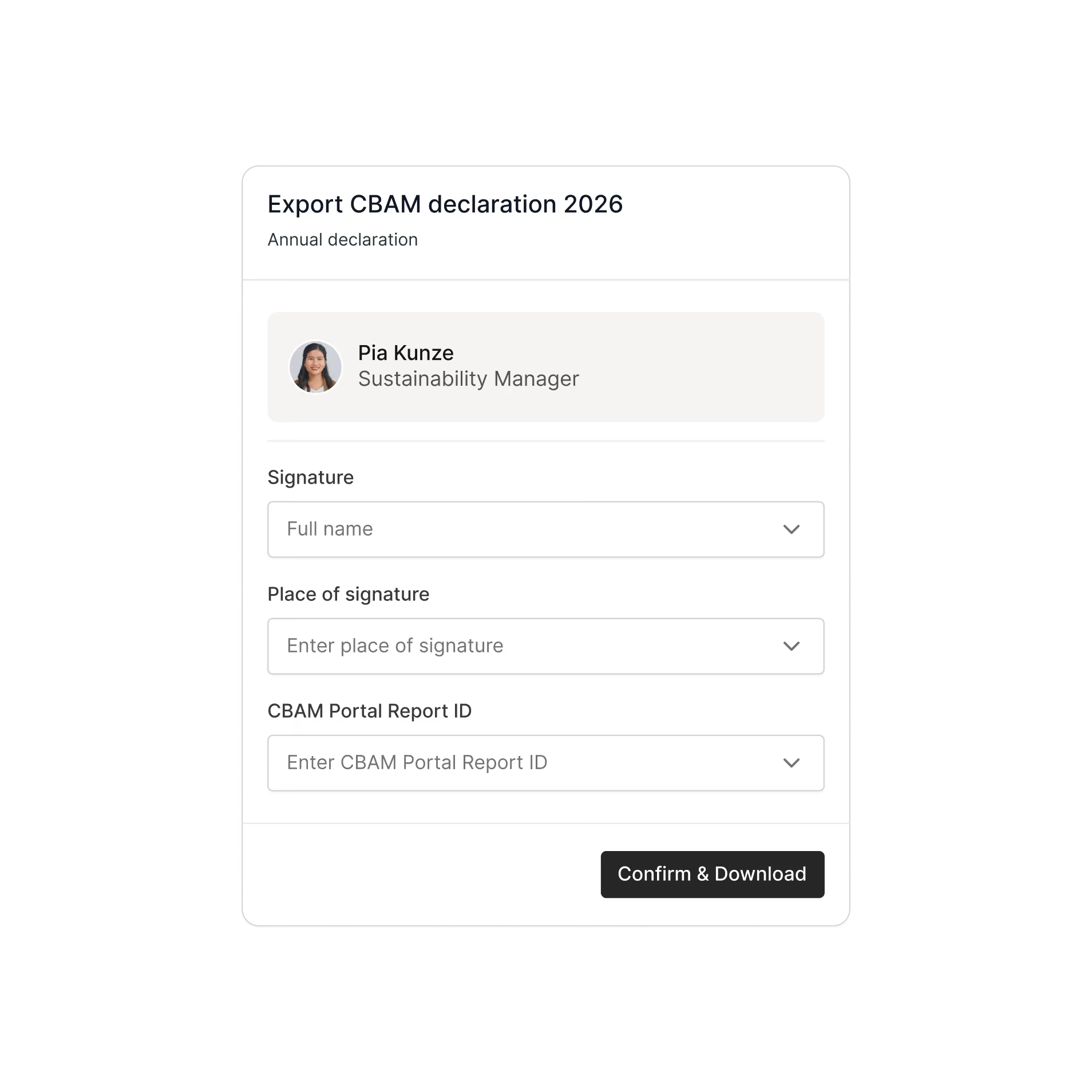
Form for Export CBAM declaration 2026 annual report showing user Pia Kunze, Sustainability Manager, with fields to enter full name as signature, place of signature, and CBAM Portal Report ID, and a black button labeled ‚Bestätigen & Herunterladen‘.

Talk to our CBAM experts.

During the meeting, we'll show you:
Your specific use cases: supplier integration, emissions calculation, or cost management
A live demo of the platform with examples from your industry
How Tanso fits into your existing IT landscape (SAP, ERP)
Blaues Quadrat mit weißem ISO-Logo: stilisierte Weltkugel und ISO-Schriftzug oben rechts
ISO/IEC 27001
Runde EU-Flagge mit gelbem Sternenkranz auf blauem Grund
GDPR compliant
Abstraktes, zweifarbiges Icon: oben roter, unten goldgelber horizontaler Halbkreis, klare Kanten, flache Darstellung
Developed & hosted in Germany
Request a consultation
Türkisfarbene, gepunktete Farbschicht verläuft diagonal über dunklen Hintergrund, wirkt wie digitaler Farbschleier

Frequently asked questions

Which phase is CBAM currently in and which deadlines apply?

The transitional phase with quarterly reporting ended on December 31, 2025. Since January 1, 2026, the definitive phase with an annual declaration and certificate obligation has applied. Under the Omnibus amendment, the annual CBAM declaration must be submitted by September 30 of the following year, for the first time on September 30, 2027, for imports from 2026.

When do CBAM certificates have to be purchased?

Sales of CBAM certificates via the central EU platform start on February 1, 2027. Importers can then purchase certificates retroactively for imports from 2026. Certificate prices are based on the EU ETS price, initially as a quarterly average for 2026 and as a weekly average from 2027.

What is CBAM?

The Carbon Border Adjustment Mechanism (CBAM) is an EU climate policy instrument designed to prevent carbon leakage, meaning the relocation of emission-intensive production to countries with less stringent climate rules. Importers must report the emissions embedded in their goods and offset them by purchasing CBAM certificates.

What are the legal consequences of violations?

Violations of CBAM reporting obligations can lead to tiered financial penalties. If reports remain incomplete or incorrect despite a request to correct them, penalties are imposed per tonne of unreported emissions, with increases for repeated violations or significant delays.

Which companies and products are affected?

EU importers of goods from the iron, steel, aluminum, hydrogen, fertilizer, electricity and cement sectors are affected. A mandatory de minimis threshold exempts companies with less than 50 tonnes of CBAM-relevant imports per year from the reporting obligations.

How does Tanso fit into our existing IT landscape?

Reduction uses the same data foundation as the CCF module and requires no additional IT integration. If your CCF module is already connected to SAP, other ERP systems or a data warehouse, reduction scenarios and reporting work with it automatically.

How are embedded emissions calculated?

Emissions are preferably calculated using primary data from suppliers. If no primary data is available, country- and product-specific EU default values apply, in certain cases with markups for a conservative estimate. In the definitive phase, the reported emissions must be verified by accredited verification bodies.

weißes Logo mit dem Schriftzug tanso auf schwarzem Hintergrund, abgerundete Kleinbuchstaben, modernes Logo.

Tanso is the ESG and carbon accounting software trusted by industrial companies across the DACH region to stay competitive and compliant.

700+ industrial companies trust Tanso
Stay in the loop

ESG and carbon updates from industrial practice, straight to your inbox.