

Reliable taxonomy KPIs and audit-ready reporting
From eligibility assessment and alignment check to the consolidated sustainability statement.





What our customers say
The Family Butchers
Companies that manufacture need software that structures and processes data reliably. It’s hard to be more efficient than Tanso’s modular setup.


Everything you need for your EU Taxonomy process
Assess taxonomy eligibility in a structured way

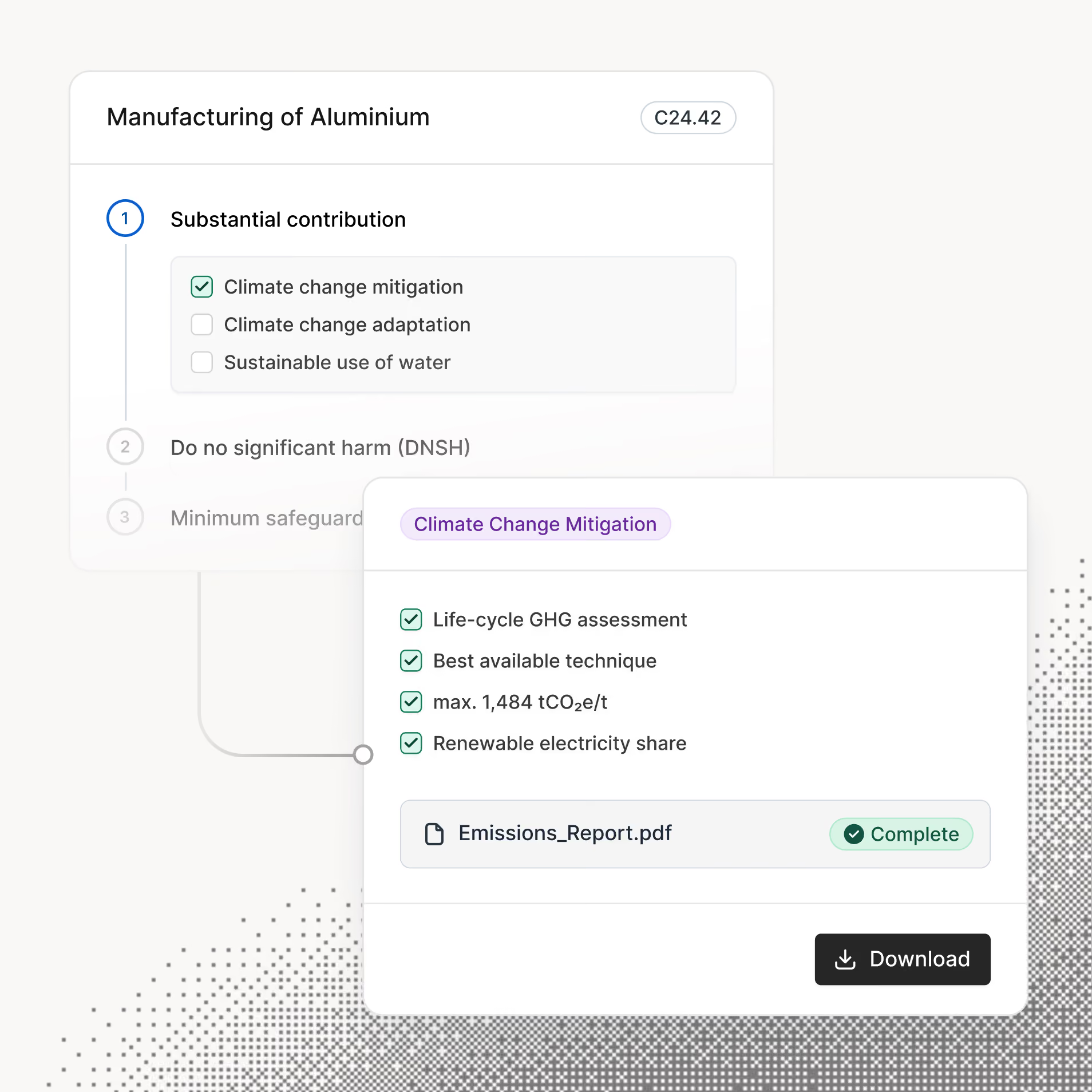
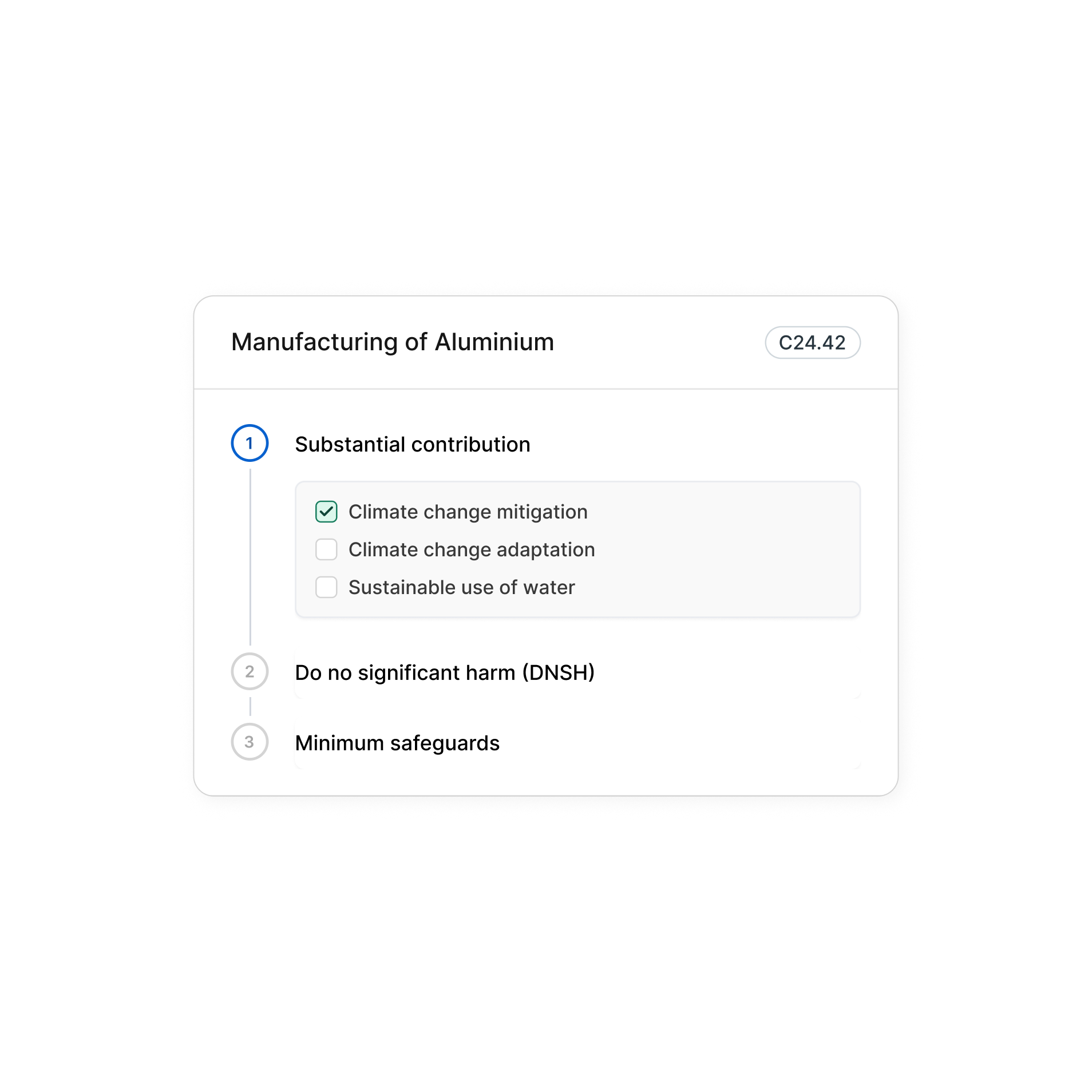
Check alignment with DNSH and minimum safeguards
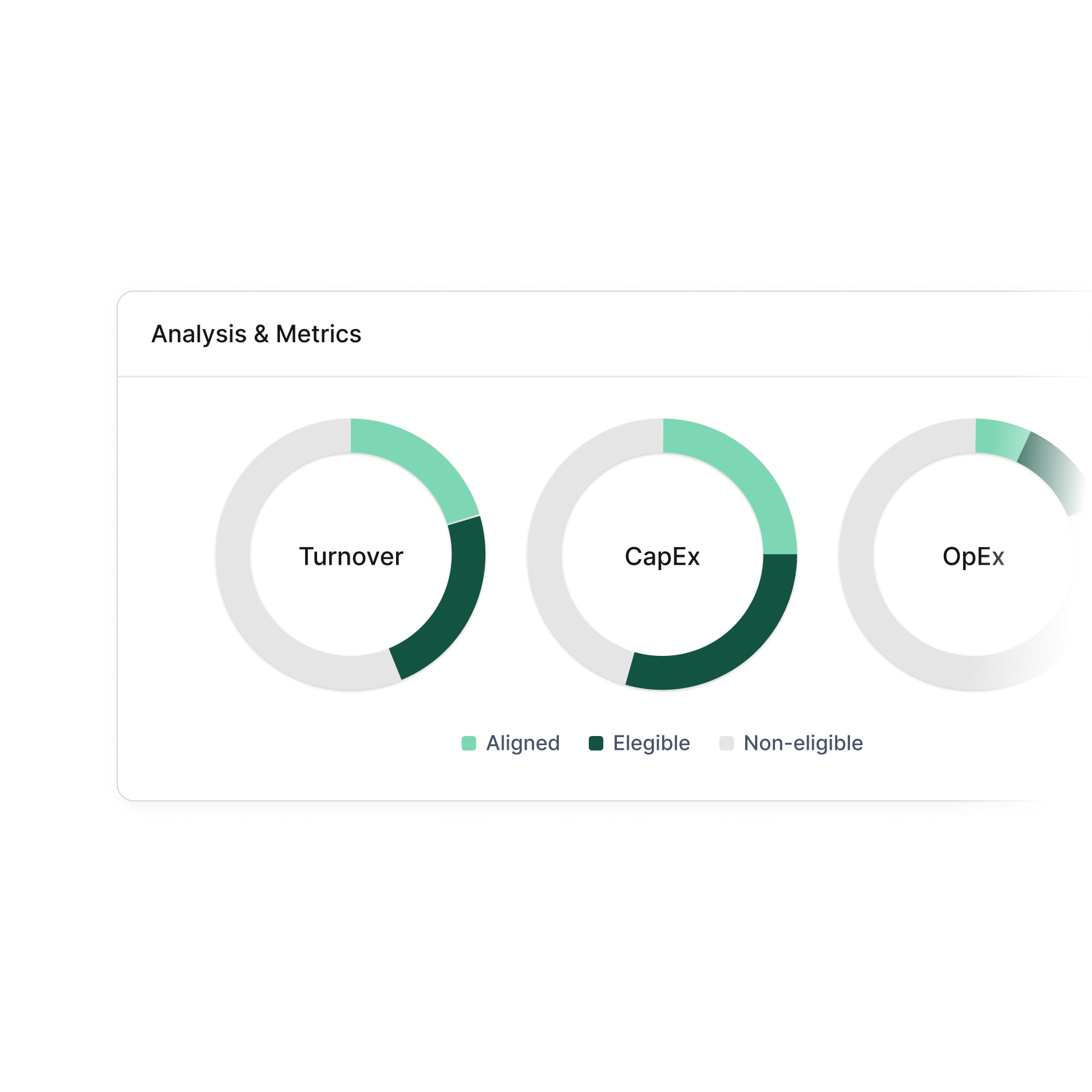
Quantify taxonomy KPIs and analyze their impact
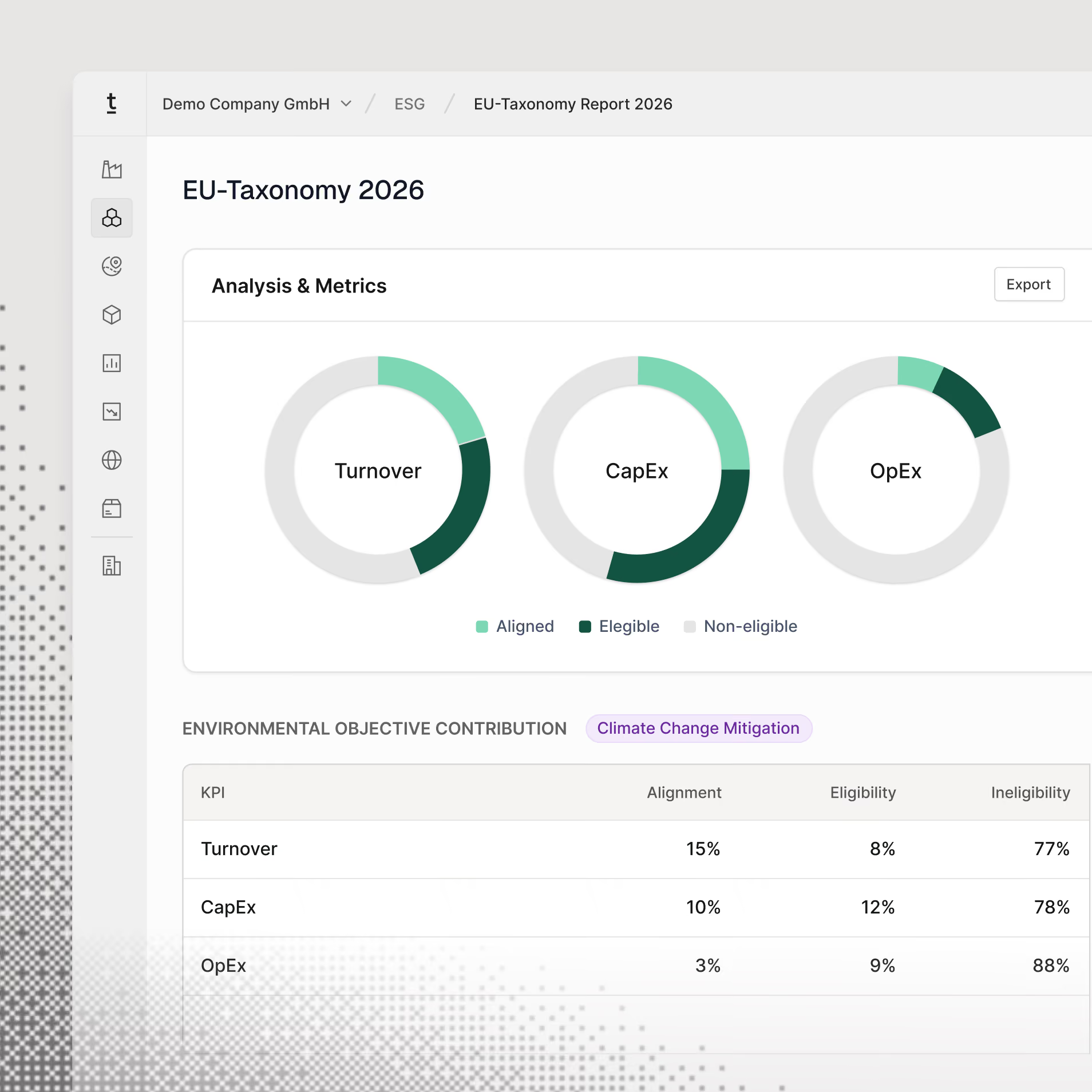
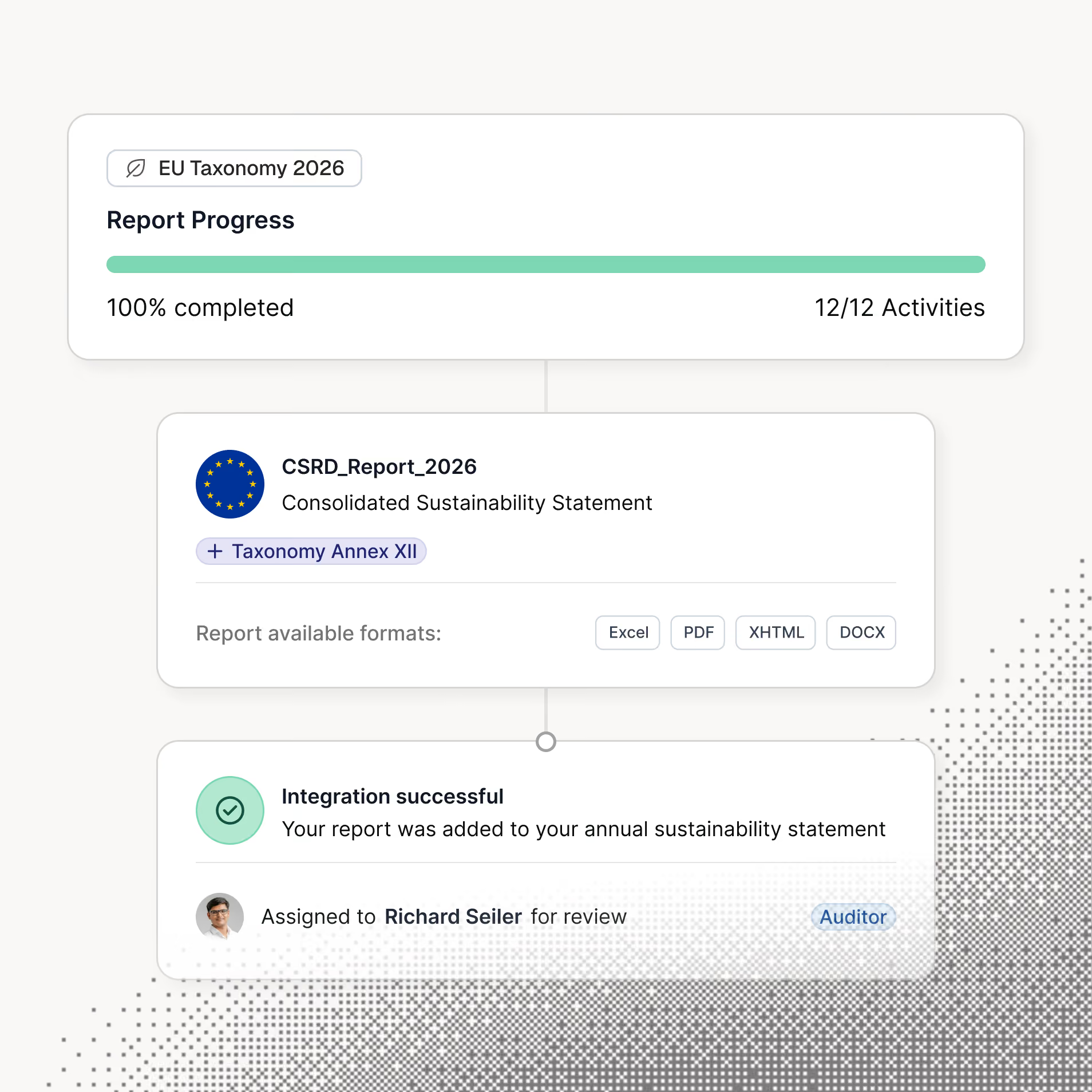
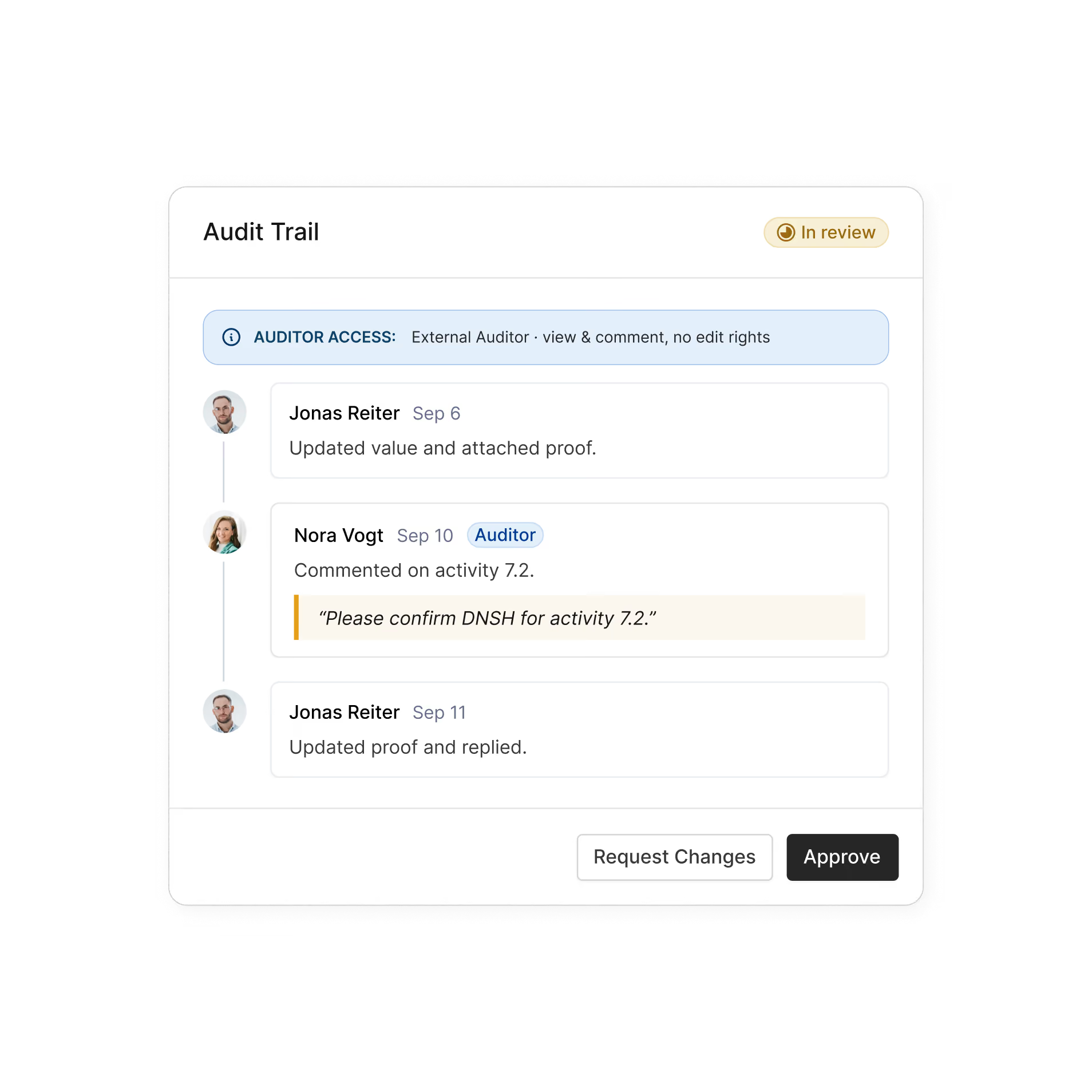
Report audit-ready and involve auditors efficiently
EU Taxonomy reporting in four steps
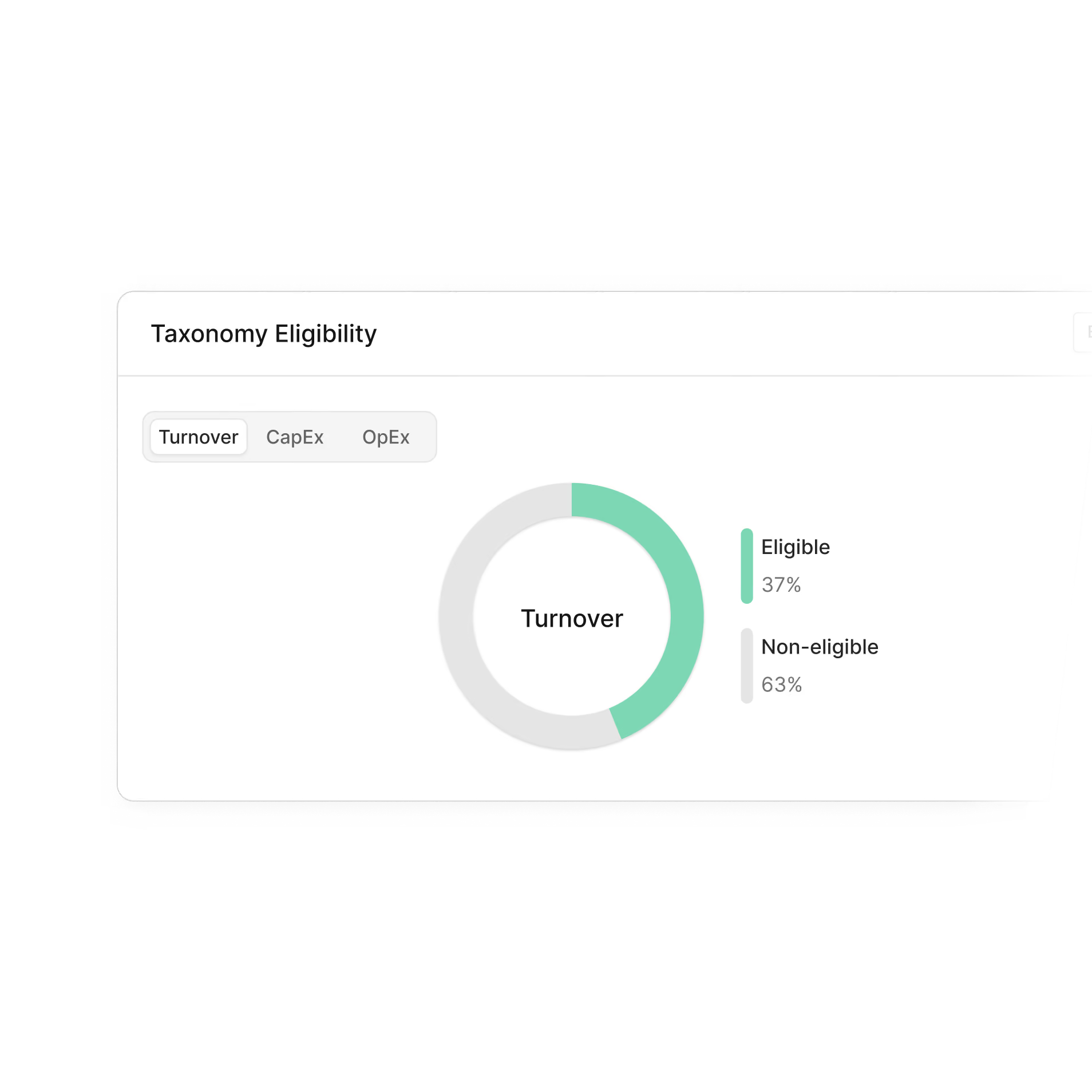
Assess taxonomy eligibility
Check alignment
Analyze results
Publish audit-ready reports






Talk to our EU Taxonomy experts.


Frequently asked questions
Why is there a distinction between CapEx and OpEx?
This distinction makes it easier to assess how much a company is investing in the green transition (CapEx) and to what extent it embeds sustainable practices in its day-to-day operations (OpEx). This way, the Taxonomy supports investors in their decision-making and directs capital to companies that align with sustainability in the short and long term.
What does Taxonomy-eligible mean?
Taxonomy-eligible means that an economic activity generally falls within the categories of the EU Taxonomy and can be assigned to one of the defined environmental objectives. The activity is therefore relevant to the Taxonomy. Whether it meets the requirements has not yet been assessed at this point.
What does Taxonomy-aligned mean?
Taxonomy-aligned means that an activity is not only Taxonomy-eligible but also meets all required criteria: it contributes substantially to at least one environmental objective, does no significant harm to the other objectives (DNSH), complies with minimum safeguards and meets the applicable technical screening criteria.
What is the EU Taxonomy?
The EU Taxonomy is a transparency instrument based on a clearly defined classification system. It translates the EU's climate and environmental objectives into concrete criteria for economic activities and thus serves as a guide for private investment in sustainable projects.
Who has to report on the EU Taxonomy?
Companies that fall under the Corporate Sustainability Reporting Directive (CSRD) are required to report. They disclose their Taxonomy ratio as part of the sustainability statement in the management report. Many companies that are not required to report also do so voluntarily, because banks, investors and strategic customers ask for Taxonomy-related KPIs.
How does Tanso fit into our existing IT landscape?
Reduction uses the same data foundation as the CCF module and requires no additional IT integration. If your CCF module is already connected to SAP, other ERP systems or a data warehouse, reduction scenarios and reporting work with it automatically.
How are the EU Taxonomy and the CSRD connected?
The two are closely linked: companies required to report under the CSRD must also report on the EU Taxonomy. Both disclosures are part of the sustainability statement in the management report. In Tanso, you create both in one environment on a shared data foundation.