


Drivers beyond regulation: why companies need to act now


Drivers beyond regulation: why companies need to act now
Until recently, the discussion around ESG topics was dominated by regulatory requirements such as CSRD, EU Taxonomy, or international reporting standards. However, the real pressure to act is increasingly coming from outside regulation, driven by market mechanisms, capital flows, and operational risks.
In the B2B context, large buyer companies increasingly require ESG-compliant supply chains. Companies that fail to meet these requirements risk exclusion from tenders or long-term supplier relationships. At the same time, end customer sensitivity to sustainable products is rising in the B2C space, with a direct impact on brand perception and sales.
Access to capital markets is changing too. Investors, banks, and rating agencies are systematically integrating ESG criteria into their decision-making processes. Companies with weak ESG performance face rising financing costs or restricted access to capital. The same applies to insurers, who are increasingly pricing ESG risks into their policies and premiums.
Beyond these external drivers, clear strategic opportunities are emerging. Companies that integrate ESG early strengthen their market position by positioning themselves as reliable, future-ready partners. At the same time, new fields of innovation are opening up, for example through sustainable product lines, circular business models, or resource-efficient processes.
Another key factor is the war for talent. Qualified professionals, particularly younger generations, prefer employers with credible sustainability strategies. ESG is therefore becoming a decisive lever for attracting and retaining employees.
ESG also plays a central role in risk management and resilience. Companies are increasingly confronted with risks that are difficult to manage without a sustainable transformation:
- Sanctions and restricted market access when ESG requirements are not met
- Supply chain disruptions caused by climate risks or geopolitical developments
- Dependence on scarce or unsustainable raw materials
- Risk of stranded assets due to regulatory or technological change, as well as the direct effects of climate change
- Rising costs due to carbon pricing and resource scarcity
- Operational overload from future reporting obligations due to insufficient preparation, understaffing, and incomplete data
The key takeaway: ESG is no longer just a compliance topic. It is an integral part of corporate strategy and value creation.
Status quo: where do companies stand today?
Despite these clear drivers, most companies are still at an early stage of maturity. ESG activities are often fragmented, heavily manual, and not yet fully integrated organizationally.
Typical challenges include:
- Data silos between sustainability, finance, and operational units
- High manual effort in data collection and validation
- Lack of connection between ESG data and financial management
- Limited transparency into ESG risks and opportunities along the value chain
- Insufficient scalability for future reporting requirements
- Incomplete audit trails for external audits, requiring costly rework
In addition, companies still tend to view ESG primarily as a reporting task rather than a management tool. This leaves significant potential untapped, particularly when it comes to integrating ESG into the record-to-report (R2R) process and financial reporting. Ideally, sustainability data is collected, verified, consolidated, and harmonized with financial data before being prepared for reporting. ESG topics therefore need to be translated into KPIs, scenarios, and investment decisions. Only then do they become relevant to management and capable of being monetized. In practice, however, ESG teams often still operate in their own sphere: reporting, sustainability targets, impact measurement. Finance, meanwhile, focuses on liquidity, risk, and capital allocation. The two sides frequently still don't speak the same language.
At the same time, pressure is growing. Customers, employees, and investors are paying closer attention to credible performance, and weak ESG performance is turning into a competitive disadvantage faster than before. This means the quality, consistency, and auditability of ESG data need to reach a level that is difficult to achieve with traditional Excel-based approaches.
The added value of digital platforms
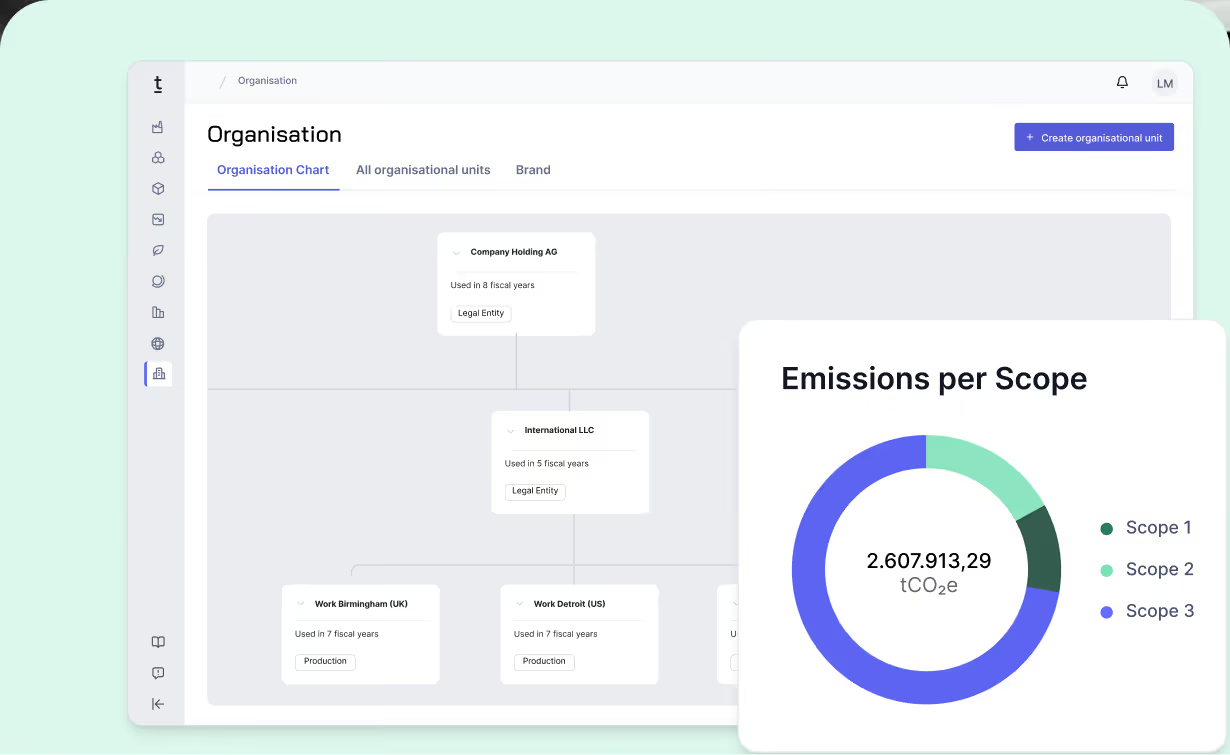
Specialized solutions such as Tanso address exactly these challenges, complementing established finance and ERP systems such as SAP. Their core value lies in integrating ESG into existing finance and reporting processes.
In the context of the R2R process, this creates several concrete advantages:
- End-to-end data integration: ESG data is captured and consolidated directly from operational systems (e.g., ERP, IoT, supplier systems) via digital interfaces. This reduces manual intervention and improves data quality.
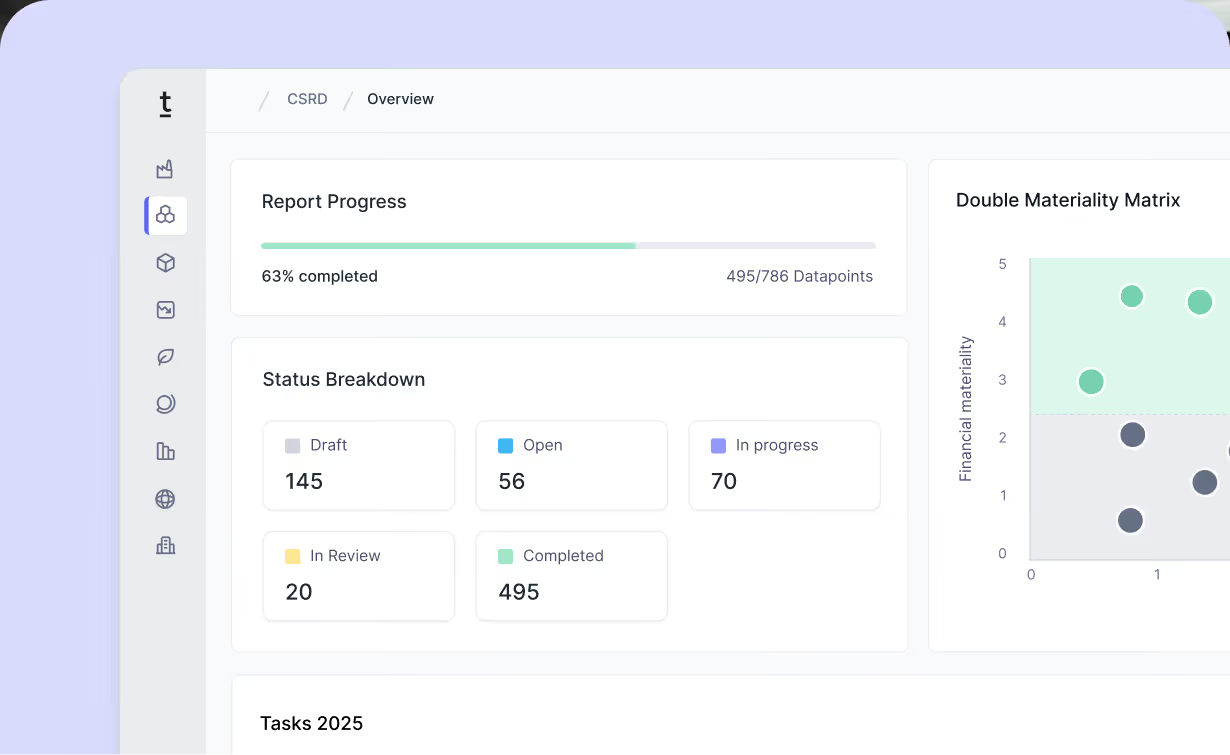
- Single source of truth: A central data foundation ensures that ESG and financial data remain consistent and traceable. This is essential not only for audit readiness but also for coordinated multi-reporting across several standards and certifications.
- Automation and efficiency: Automated workflows, validation rules, and control mechanisms significantly reduce reporting effort and minimize sources of error.
- Linking ESG and finance: Companies can connect ESG metrics directly with financial KPIs, for example through integrated planning and forecasting models.
- Scenario analysis and management: Platforms make it possible to simulate carbon price developments, regulatory changes, or supply chain risks, supporting well-founded management decisions.
- Audit trail and compliance: Complete, automated documentation of all data points and changes makes external audits easier and strengthens governance.
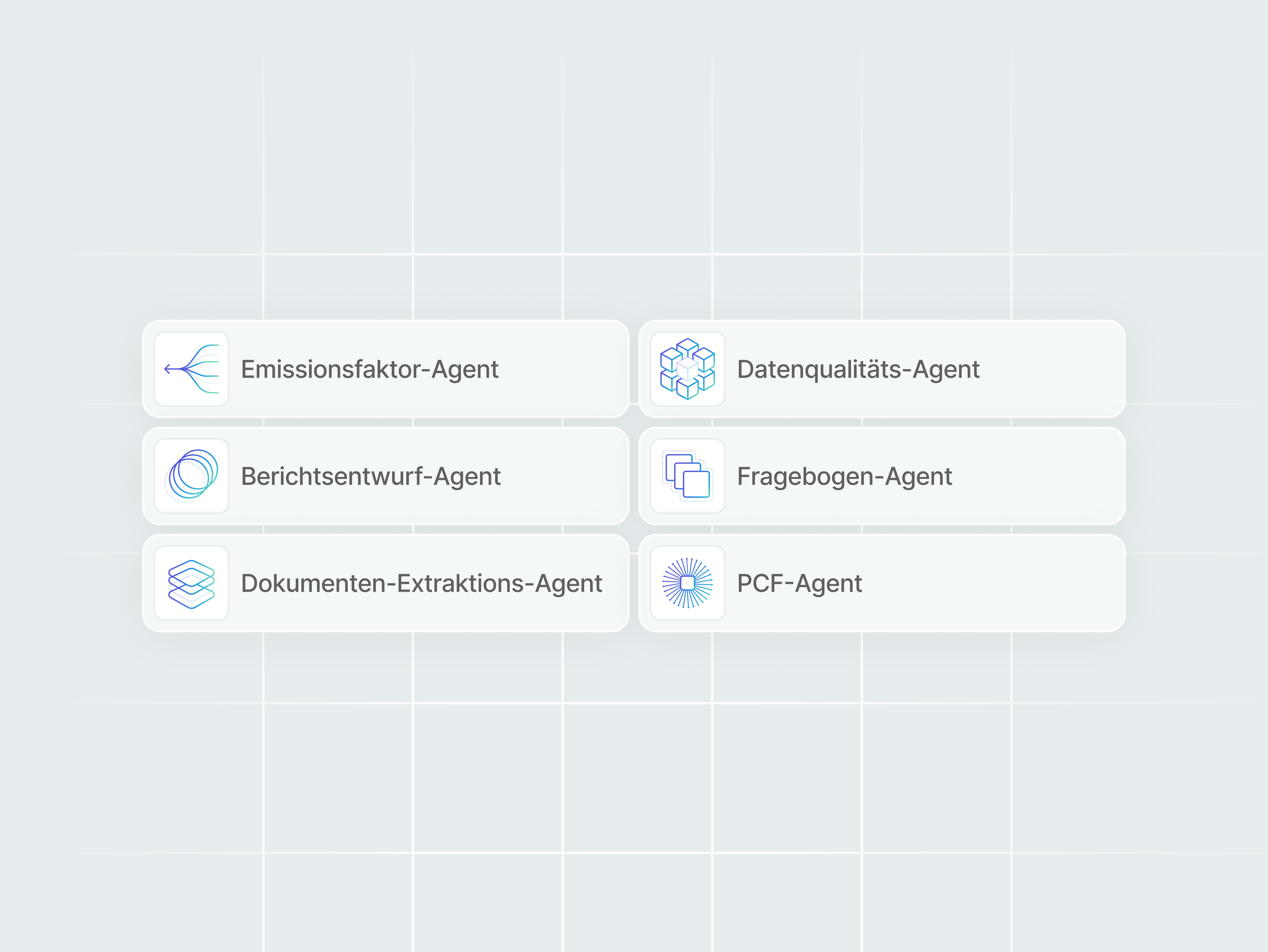
- AI integration: Agents support data collection, plausibility checks, text generation, and the setup of auditable workflows. Their range of functions includes automated emission factor mapping, IRO and disclosure mapping, text assistance, summaries, translations, and digital support for workflows and collaboration.
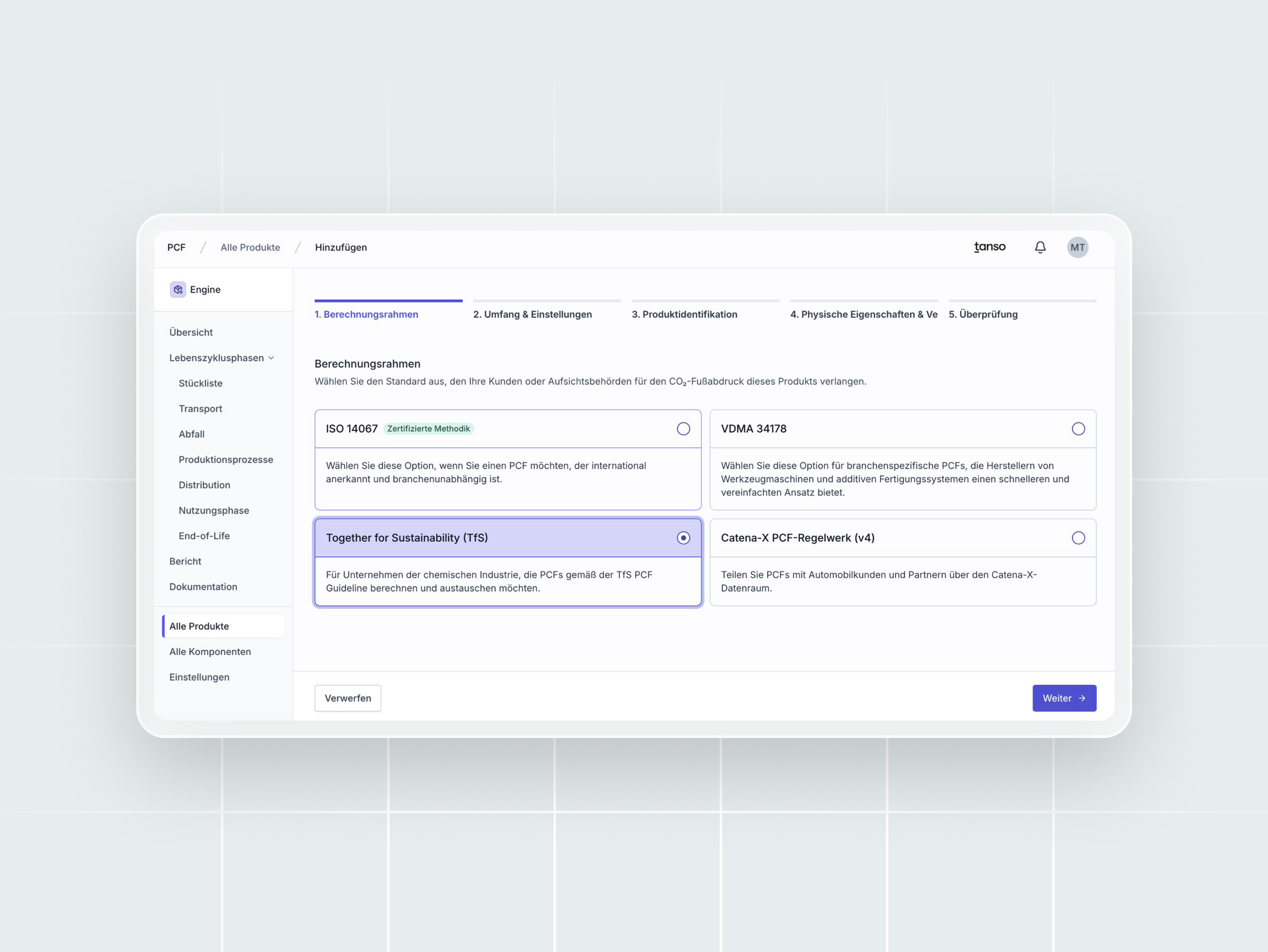
Collecting and accounting for Scope 3 emissions data and identifying profitable decarbonization levers is a particularly resource-intensive task. This is where Tanso Copilot provides targeted relief. AI-supported emission factor mapping, automated document reading (PDF, Excel, system exports), and intelligent outlier detection significantly reduce the manual effort involved in creating Corporate and Product Carbon Footprints. Up to 70% of recurring tasks can be automated this way, freeing up capacity that ESG teams can invest directly in strategic management.
Numerous industrial companies already use the integrated platform to automatically capture energy consumption data from production facilities and feed it directly into financial planning. This allows them not only to report emissions transparently but also to prioritize investments in energy efficiency measures, based on clearly quantified ROI calculations. The key point is that ESG data is not viewed in isolation but as part of the company's overall management logic.
ESG with measurable ROI: examples from practice
The economic benefits of ESG are increasingly quantifiable. Companies that have integrated ESG strategically and technologically report clear financial effects.
Efficiency & scaling
Food manufacturer The Family Butchers had to respond to rising PCF requirements from its major retail customers. Calculating each PCF manually would have taken around one working day, which would not have been scalable across several hundred products. With Tanso, the effort per PCF first dropped to 4 to 6 hours, and after systematic scaling, to just 10 to 15 minutes. The resulting data fed directly into the EcoVadis assessment and CSRD reporting, a single dataset that can be reused for multiple purposes. This allowed the company to reliably meet customer requirements and secure its competitiveness long-term. [Source: Tanso]
Heat and energy savings
A new heat pump compressor at Covestro's TDI plant in Dormagen raises waste heat from production to a usable temperature level, making externally purchased steam unnecessary. With an investment in the low double-digit millions, the system saves a triple-digit GWh volume of energy and more than 40,000 t of CO₂ per year, energy costs that flow directly back into the margin. Group-wide, the company has already reduced its energy consumption by around 40% since 2005 and expects its efficiency program to deliver annual operational savings of €50 to 100 million by 2030. [Source: Covestro launches its largest energy efficiency project to date]
Market position & market access
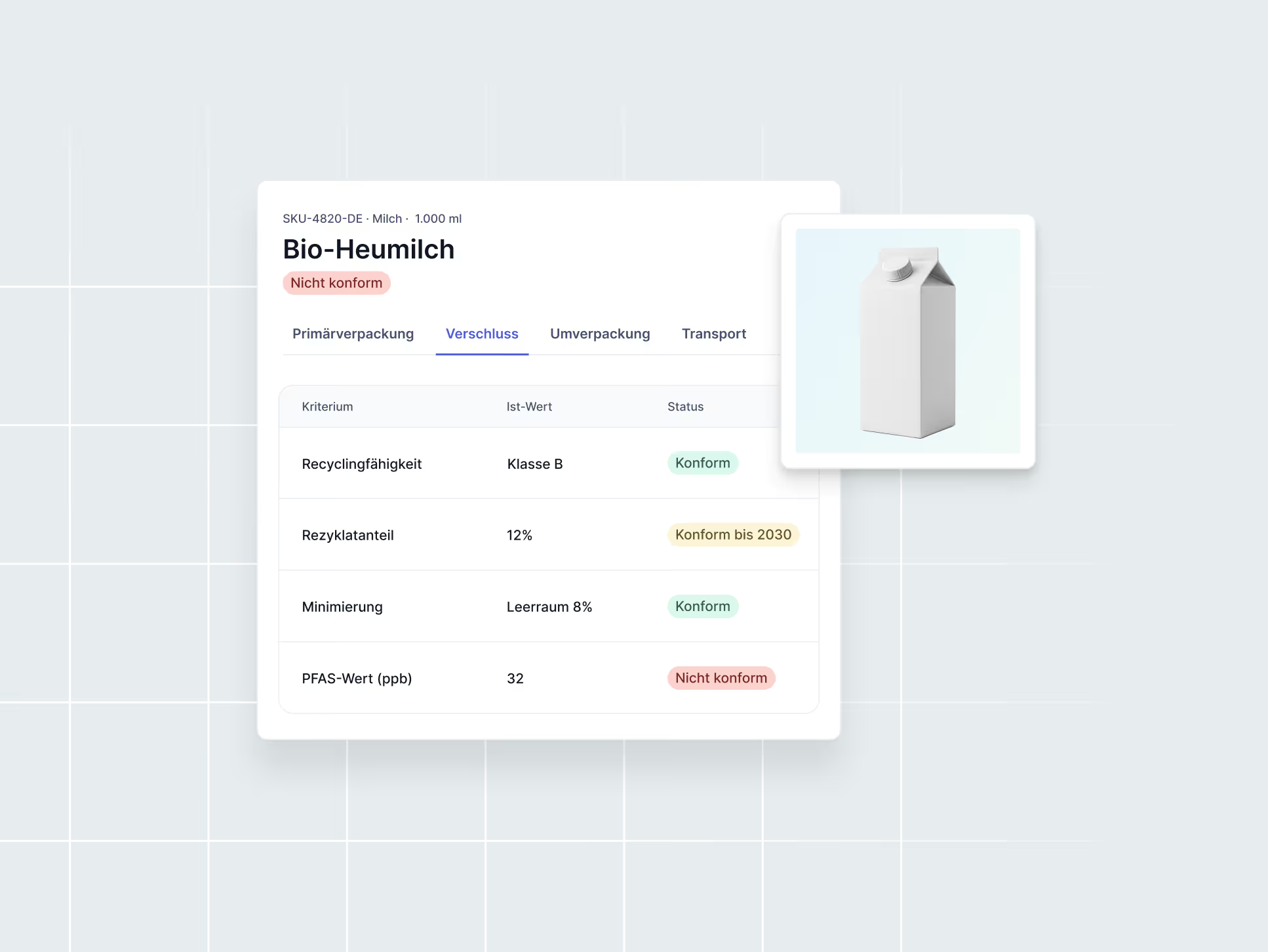
Schneider Electric has turned sustainability into a sales argument. Through its "Green Premium" label and Environmental Data Program, around 80% of product revenue is now backed by verified environmental data (carbon footprint, recycled content, energy efficiency), an increase of 70% within a short period, covering 155,000 product references. This positions Schneider as a certified, leading sustainable supplier in the electrical engineering industry (ranked number 1 twice in the Corporate Knights Global 100, in 2021 and 2025) and is actively used to win tenders with mandatory ESG criteria in the public and B2B sectors. [Source: Environmental Data Program | Schneider Electric Switzerland]
Conclusion
ESG reporting and sustainable transformation are far more than regulatory obligations. They are a central lever for securing competitiveness, strengthening resilience, and unlocking new sources of value.
For decision-makers, this means the question is no longer whether to invest, but how strategically and efficiently these investments are structured. Specialized software solutions such as Tanso play a key role here. They integrate ESG into existing management and reporting logic, automate recurring tasks, and create the data foundation for well-founded, data-driven decisions.
In addition, SIR Business Consulting helps companies strategically align their record-to-report process and ESG reporting, shaping them technically and procedurally, in the spirit of integrated reporting, so they fit seamlessly into existing system and data landscapes.
On the people side, too, companies need combined competencies: financial literacy within ESG teams, sustainability know-how within finance, and regular knowledge transfer. Bringing these functions together is no longer a nice-to-have, and the roles and skill profiles in both departments will inevitably change.















































































.avif)





.avif)
.jpg)


