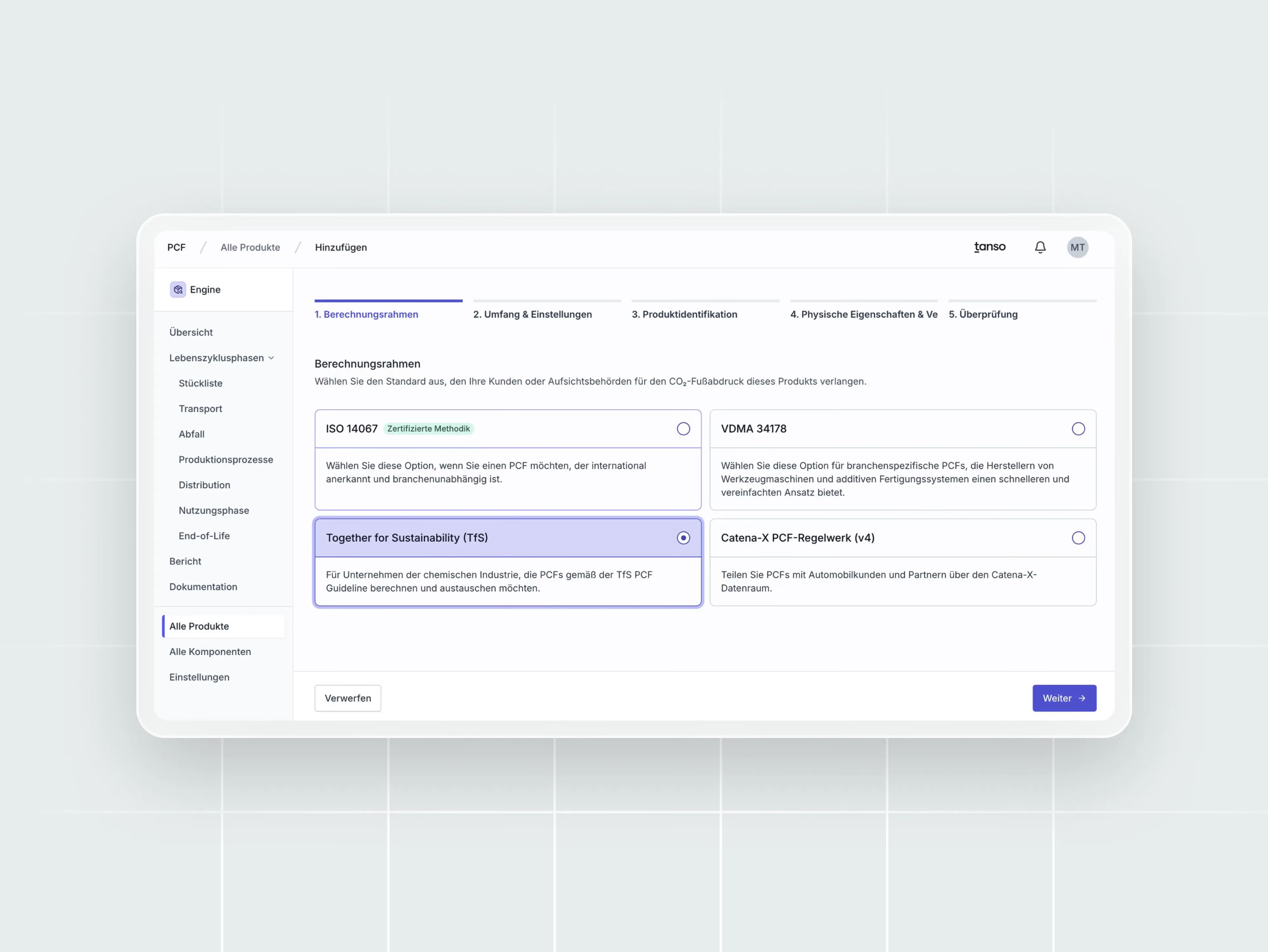

For automotive suppliers, most product emissions don't originate in their own plants. They occur further upstream, through purchased components and raw materials. To report these emissions credibly, a product carbon footprint (PCF) that follows the industry's rules is essential. Tanso's PCF module now supports the Catena-X PCF Rulebook (v4). Suppliers can create PCFs tailored to the automotive industry directly in Tanso and share them with their customers in the Catena-X-compliant exchange format.
What Catena-X means for automotive suppliers
So far, many suppliers have relied on general standards like ISO 14067. These only partially cover the automotive industry's specific expectations. More and more manufacturers are explicitly requiring PCF data according to Catena-X, the industry-wide data standard for exchanging emissions values. This is exactly where Tanso comes in: companies meet the right requirements, deliver complete evaluations, and answer customer inquiries without compiling every figure by hand. At the same time, supply chain emissions become transparent.
How the Catena-X calculation works in Tanso
The new feature is a core part of the PCF module and includes everything the Catena-X PCF standard requires:
The right standard from the first entry
When setting up a product, users define the Catena-X PCF Rulebook (v4) as the basis from the start. All following fields are aligned with it, so the calculation is built on the right framework from day one.
System boundaries and reference year matched to the industry
For Catena-X, a cradle-to-gate system boundary is mandatory, and Tanso reflects that. The fiscal year determines whether a value is set up as a prospective PCF for the current or an upcoming year. If a customer also needs carbon content data, the total, fossil, and biogenic shares can be added optionally.
Quality built into the system
The standard's requirements are already built in. Before a PCF can be finalized, Tanso checks that at least 97% of mass and emissions are captured, and requests the necessary confirmations, such as a completed screening analysis. Each PCF also receives an expiration date, which appears in the product overview and serves as a reminder to renew the calculation in time.
Reports and an export the industry understands
All additional Catena-X data points and metrics appear automatically in the report. For exchanges with customers and data spaces, Tanso also provides results as a Catena-X-compliant JSON export. This means the data is immediately available in the expected format, instead of requiring time-consuming preparation.
All standards on one platform
In Tanso, automotive suppliers calculate according to Catena-X while also seeing their PCFs alongside the corporate carbon footprint (CCF) and ESG reporting, all in one platform. Parallel tools and data maintained in multiple places are a thing of the past.