To overview

From Excel to an audit-ready Carbon Footprint in 90 days
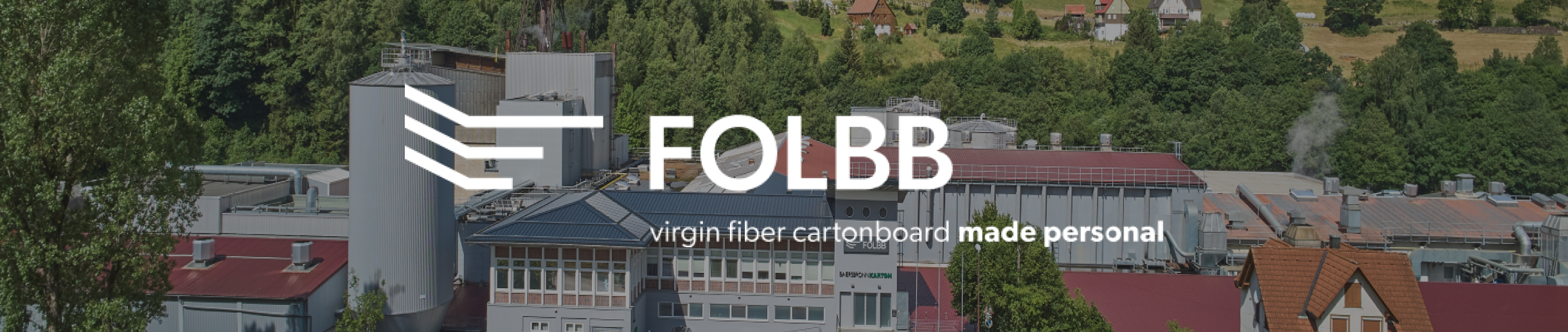
Case Study: FOLBB x Tanso: From Excel to an Audit-Ready Carbon Footprint in 90 Days

About FOLBB

The FOLBB Group is a leading European manufacturer of virgin fiber folding carton board. Across two production sites, the company manufactures cartons for customers in various industries, where the ecological footprint of packaging is becoming an increasingly important competitive factor. Sustainability has deep roots at FOLBB and is continuously being developed further, including efforts toward SBTi target setting and EcoVadis Gold.

Initial situation

Since 2023, FOLBB has regularly compiled Corporate Carbon Footprints (CCFs) using an Excel-based solution. The calculation covered the company's Scope 1 and Scope 2 emissions as well as product-specific CO₂ figures per ton of carton board, following the methods of CEPI and the GHG Protocol.

With the establishment of its own sustainability function at the end of 2025 and the appointment of sustainability coordinator Yasin Deniz, FOLBB decided to take the next step: a complete CCF for 2025 including Scope 3 data collection, alongside the development of a PCF. Under his leadership, existing processes were systematically expanded and professionalized. The goal was to create a reliable data foundation for strategic decisions and to meet the growing demands from customers and other stakeholders for Product Carbon Footprints (PCFs), SBTi-compliant climate data, and sustainability ratings such as EcoVadis.

Challenges

  • Limited coverage of emissions data: The previous CCF calculations covered only Scope 1 and Scope 2 emissions along with a CO₂ value per ton of carton board produced.
  • High data collection effort for Scope 3: Capturing all Scope 3 emissions with primary data for the first time required drawing on numerous data sources and accounted for the largest share of effort in the project.
  • Large volumes of data across many departments: Numerous spreadsheets from procurement, accounting, quality management, production, and energy and water managers had to be consolidated.
  • Detailed transport emissions: Inbound and outbound transport had to be factored into the footprint individually (Scope 3.4 / 3.9).
  • Tight timeline due to the 2025 sustainability report: The new CCF baseline had to be delivered on time, complete, and audit-ready.

"The difference between our previous data foundation and what we capture in Tanso today is enormous. We now work with much more detailed data and significantly higher data quality. This creates greater transparency and a reliable basis for decision making. Direct exchange with our Customer Success Manager was also valuable for us: we could quickly clarify individual questions, while the Tanso handbook provided the methodological foundations."
Theo Müller
Theo Müller
Process and Paper Engineer at FOLBB

Why Tanso

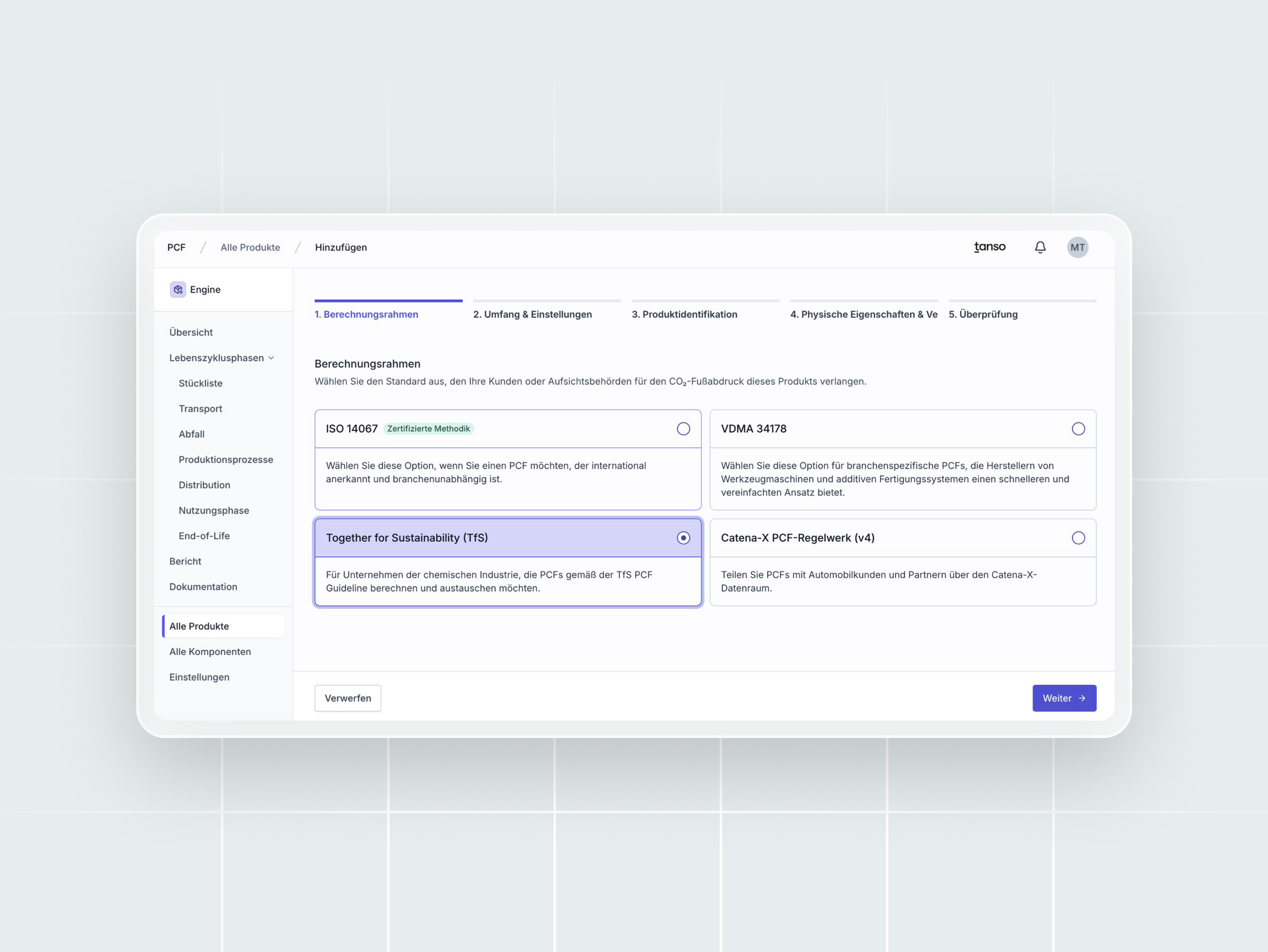
For the transition, FOLBB was looking for a software that combines CO₂ accounting and PCF in one system and methodically supports the first-time Scope 3 assessment. Particularly important were reliable emission factors for materials and products, as well as the efficient calculation of transport emissions along the supply chain.

Complete carbon accounting: Tanso enables the mapping of the Corporate Carbon Footprint, including Scope 3, using a consistent methodology. Scope 1, 2, and 3 can be captured based on primary data, updated consistently, and compared over the years.

PCF as the basis for product-specific analyses: The PCF module allows Product Carbon Footprints to be calculated for individual carton products. This enables FOLBB to use existing CCF data for product-specific analyses and respond to growing customer demands from the packaging industry.

Comprehensive emission factor database for industry-specific requirements: The integrated emission factor database directly covered most of the data relevant to FOLBB. Industry-specific gaps, such as for wood chips, were filled in by the Tanso team, so FOLBB didn't have to carry out extensive research itself.

Automated transport accounting for Scope 3.4 and 3.9: Tanso supports efficient transport emissions tracking through AI-powered distance calculation. Distances between suppliers, sites, and customers are determined automatically, transport modes are considered flexibly, and even large datasets are processed in a single step.

Fast project start through close collaboration: The combination of personal support from the Customer Success team and the content of the Tanso Academy enabled FOLBB to have a structured onboarding. Technical questions could be clarified quickly, and implementation was supported efficiently.

"Thanks to automated distance calculation, an estimated up to one week of manual research effort was saved across several thousand transport routes."
Yasin Deniz
Yasin Deniz
Sustainability Coordinator at FOLBB

Results

Within 90 days, FOLBB, together with Tanso, made the shift from an Excel-based calculation to an audit-ready, primary-data-based Corporate Carbon Footprint. Under the project leadership of sustainability coordinator Yasin Deniz and in close collaboration with Theo Müller, a consistent and reliable CO₂ footprint was created in time for the 2025 sustainability report. With this, FOLBB achieved the second-fastest project turnaround of all Tanso customers.

"With Tanso, we have significantly improved the quality of our data and noticeably reduced the effort required for CO₂ accounting. This creates the foundation to make our emissions accounting more efficient and reliable year after year."
Theo Müller
Theo Müller
Process and Paper Engineer at FOLBB
Result Detail
Audit-ready CCF in 90 days For the first time, a reliable data foundation is in place, instead of just a single CO2 value per ton as in the old Excel calculation.
Quantity-based Scope 3 accounting Previously, Scope 3 emissions were estimated purely on a financial basis; now, real activity data from the company is factored in.
Extensive spreadsheets with several thousand records consolidated Consumption data from various business units now forms a consistent foundation for CO2 accounting.
Data foundation for SBTi & EcoVadis Gold Reliable emissions data enables the next step in the climate strategy, from setting SBTi targets to providing evidence for the EcoVadis upgrade.
One week saved through AI-powered processes Instead of manual calculation, automated distance calculation determines emissions between suppliers, sites, and customers (Scope 3.4 & 3.9).
Growing PCF requests fulfilled More and more customers are requesting product-specific CO2 data. With the new CCF and PCF data foundation, FOLBB has the means to meet these requirements in a structured and traceable way.
"After achieving Silver in our first EcoVadis rating, Gold is our clear goal for the next submission. The data in Tanso is one of the key foundations for this: the complete CCF, including Scope 3, now serves as our central source of evidence for EcoVadis, the sustainability report, and further stakeholder requests."
Yasin Deniz
Yasin Deniz
Sustainability Coordinator at FOLBB

Outlook

In the coming months, FOLBB will focus on three key areas: submitting its reduction targets to the SBTi by the end of 2026, advancing its EcoVadis rating from Silver to Gold, and expanding Product Carbon Footprints (PCFs) for its carton portfolio. In parallel, FOLBB has already implemented the switch to 100% green electricity at its Baiersbronn site. This contributes significantly to reducing Scope 2 emissions and improves the CO₂ footprint of the product portfolio. At the same time, data quality is being continuously developed further to capture CO₂ emissions even more precisely and implement targeted decarbonization measures.


To the overview

From Excel to an audit-ready Carbon Footprint in 90 days

About FOLBB

The FOLBB Group is a leading European manufacturer of virgin fiber folding carton board. Across two production sites, the company manufactures cartons for customers in various industries, where the ecological footprint of packaging is becoming an increasingly important competitive factor. Sustainability has deep roots at FOLBB and is continuously being developed further, including efforts toward SBTi target setting and EcoVadis Gold.

Initial situation

Since 2023, FOLBB has regularly compiled Corporate Carbon Footprints (CCFs) using an Excel-based solution. The calculation covered the company's Scope 1 and Scope 2 emissions as well as product-specific CO₂ figures per ton of carton board, following the methods of CEPI and the GHG Protocol.

With the establishment of its own sustainability function at the end of 2025 and the appointment of sustainability coordinator Yasin Deniz, FOLBB decided to take the next step: a complete CCF for 2025 including Scope 3 data collection, alongside the development of a PCF. Under his leadership, existing processes were systematically expanded and professionalized. The goal was to create a reliable data foundation for strategic decisions and to meet the growing demands from customers and other stakeholders for Product Carbon Footprints (PCFs), SBTi-compliant climate data, and sustainability ratings such as EcoVadis.

Challenges

  • Limited coverage of emissions data: The previous CCF calculations covered only Scope 1 and Scope 2 emissions along with a CO₂ value per ton of carton board produced.
  • High data collection effort for Scope 3: Capturing all Scope 3 emissions with primary data for the first time required drawing on numerous data sources and accounted for the largest share of effort in the project.
  • Large volumes of data across many departments: Numerous spreadsheets from procurement, accounting, quality management, production, and energy and water managers had to be consolidated.
  • Detailed transport emissions: Inbound and outbound transport had to be factored into the footprint individually (Scope 3.4 / 3.9).
  • Tight timeline due to the 2025 sustainability report: The new CCF baseline had to be delivered on time, complete, and audit-ready.
"The difference between our previous data foundation and what we capture in Tanso today is enormous. We now work with much more detailed data and significantly higher data quality. This creates greater transparency and a reliable basis for decision making. Direct exchange with our Customer Success Manager was also valuable for us: we could quickly clarify individual questions, while the Tanso handbook provided the methodological foundations."
Theo Müller
Theo Müller
Process and Paper Engineer at FOLBB

Why Tanso

For the transition, FOLBB was looking for a software that combines CO₂ accounting and PCF in one system and methodically supports the first-time Scope 3 assessment. Particularly important were reliable emission factors for materials and products, as well as the efficient calculation of transport emissions along the supply chain.

Complete carbon accounting: Tanso enables the mapping of the Corporate Carbon Footprint, including Scope 3, using a consistent methodology. Scope 1, 2, and 3 can be captured based on primary data, updated consistently, and compared over the years.

PCF as the basis for product-specific analyses: The PCF module allows Product Carbon Footprints to be calculated for individual carton products. This enables FOLBB to use existing CCF data for product-specific analyses and respond to growing customer demands from the packaging industry.

Comprehensive emission factor database for industry-specific requirements: The integrated emission factor database directly covered most of the data relevant to FOLBB. Industry-specific gaps, such as for wood chips, were filled in by the Tanso team, so FOLBB didn't have to carry out extensive research itself.

Automated transport accounting for Scope 3.4 and 3.9: Tanso supports efficient transport emissions tracking through AI-powered distance calculation. Distances between suppliers, sites, and customers are determined automatically, transport modes are considered flexibly, and even large datasets are processed in a single step.

Fast project start through close collaboration: The combination of personal support from the Customer Success team and the content of the Tanso Academy enabled FOLBB to have a structured onboarding. Technical questions could be clarified quickly, and implementation was supported efficiently.

"Thanks to automated distance calculation, an estimated up to one week of manual research effort was saved across several thousand transport routes."
Yasin Deniz
Yasin Deniz
Sustainability Coordinator at FOLBB

Results

Within 90 days, FOLBB, together with Tanso, made the shift from an Excel-based calculation to an audit-ready, primary-data-based Corporate Carbon Footprint. Under the project leadership of sustainability coordinator Yasin Deniz and in close collaboration with Theo Müller, a consistent and reliable CO₂ footprint was created in time for the 2025 sustainability report. With this, FOLBB achieved the second-fastest project turnaround of all Tanso customers.

"With Tanso, we have significantly improved the quality of our data and noticeably reduced the effort required for CO₂ accounting. This creates the foundation to make our emissions accounting more efficient and reliable year after year."
Theo Müller
Theo Müller
Process and Paper Engineer at FOLBB
Result Detail
Audit-ready CCF in 90 days For the first time, a reliable data foundation is in place, instead of just a single CO2 value per ton as in the old Excel calculation.
Quantity-based Scope 3 accounting Previously, Scope 3 emissions were estimated purely on a financial basis; now, real activity data from the company is factored in.
Extensive spreadsheets with several thousand records consolidated Consumption data from various business units now forms a consistent foundation for CO2 accounting.
Data foundation for SBTi & EcoVadis Gold Reliable emissions data enables the next step in the climate strategy, from setting SBTi targets to providing evidence for the EcoVadis upgrade.
One week saved through AI-powered processes Instead of manual calculation, automated distance calculation determines emissions between suppliers, sites, and customers (Scope 3.4 & 3.9).
Growing PCF requests fulfilled More and more customers are requesting product-specific CO2 data. With the new CCF and PCF data foundation, FOLBB has the means to meet these requirements in a structured and traceable way.
"After achieving Silver in our first EcoVadis rating, Gold is our clear goal for the next submission. The data in Tanso is one of the key foundations for this: the complete CCF, including Scope 3, now serves as our central source of evidence for EcoVadis, the sustainability report, and further stakeholder requests."
Yasin Deniz
Yasin Deniz
Sustainability Coordinator at FOLBB

Outlook

In the coming months, FOLBB will focus on three key areas: submitting its reduction targets to the SBTi by the end of 2026, advancing its EcoVadis rating from Silver to Gold, and expanding Product Carbon Footprints (PCFs) for its carton portfolio. In parallel, FOLBB has already implemented the switch to 100% green electricity at its Baiersbronn site. This contributes significantly to reducing Scope 2 emissions and improves the CO₂ footprint of the product portfolio. At the same time, data quality is being continuously developed further to capture CO₂ emissions even more precisely and implement targeted decarbonization measures.

Discover Tanso -
Your all-in-one solution for sustainability

Other articles that may be of interest to you

Stay up-to-date with news from Tanso.