To overview

BAFA transformation plan (module 5): EUR 25,000 in funding for SWF's decarbonization

Case Study: BAFA transformation plan (Module 5) in Practice: €25,000 in funding for SWF's decarbonization

About SWF

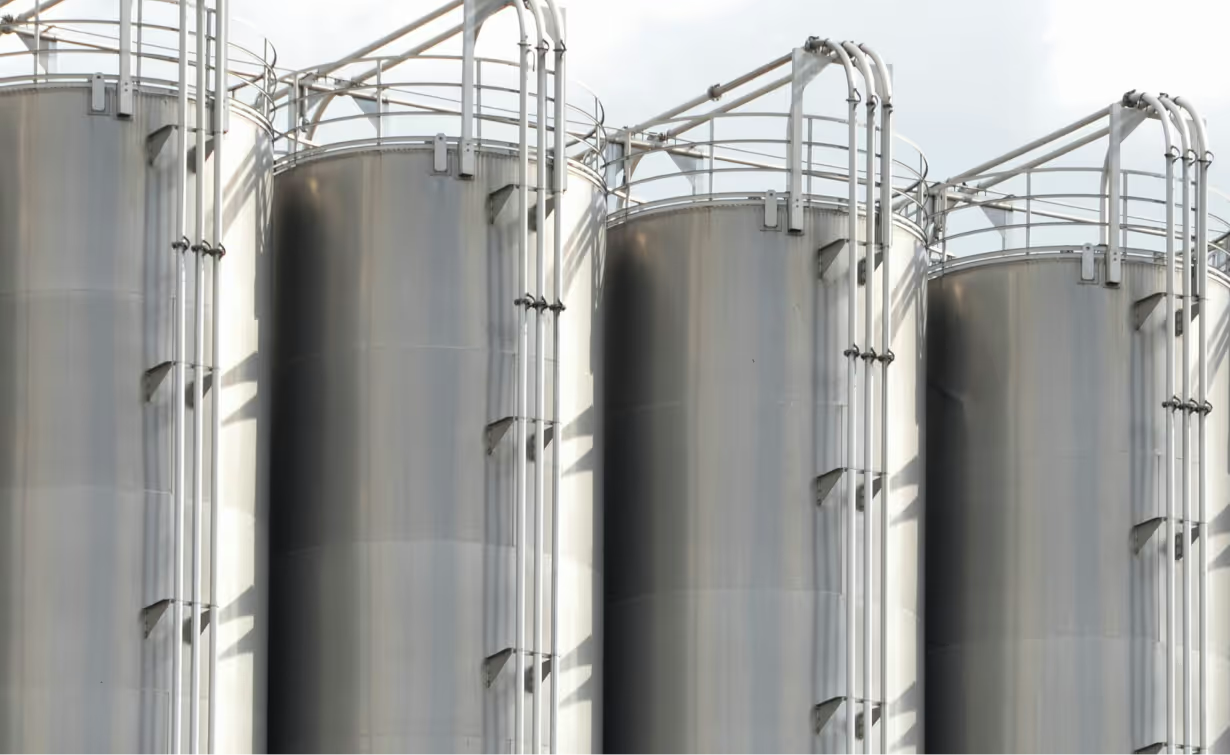
SWF is a mid-sized manufacturer of industrial gases headquartered in Friedrichshafen, with several production sites across Germany. The company produces nitrogen, oxygen, and argon via air separation units and distributes them in tanks, cylinders, and bundles. SWF already offers "green industrial gases" based on 100% renewable energy and is investing in the construction of a 5-megawatt electrolyzer in Baden-Württemberg to produce its own green hydrogen, part of a clear commitment to resource efficiency and the ongoing decarbonization of its processes.

Initial situation

With an annual electricity demand in the three-digit gigawatt-hour range, energy is not just a cost factor for SWF but also its biggest lever for decarbonization. Requirements intensified in 2023: major customers began systematically requesting sustainability data via platforms like CDP, and regulatory requirements rose with the CSRD as well as several German energy laws.

SWF already had structured energy data through its ISO 50001 energy management system and annual audits. However, a complete climate balance sheet, a transformation concept, or reliable Scope 3 data did not yet exist.

Challenges

  • Distributed and partly manual data collection: many energy meters were read by hand, and climate balance sheet data was scattered across Excel lists or not available at all.
  • Scope 3 not systematically recorded: data for purchased goods and services in particular had to be sourced in a structured way for the first time, as the existing ERP system had no CO₂ factors on file.
  • Asset lifecycles of 30+ years: air separation units consume 70–80% of electricity through large compressors with decades-long lifecycles, so measures need to be planned into the investment cycle.
  • Atypical emissions profile: SWF's largest source of emissions is Scope 2 (electricity purchased), which requires an industry-specific set of measures rather than classic production-side approaches.
  • Building internal structures alongside data collection: the newly created sustainability role had to establish processes, involve department heads, and deliver concrete measures, all at the same time.

Why elocompanion

SWF wanted to build know-how within the company for the long term. Instead of an isolated climate balance sheet, it needed a structured roadmap for decarbonization with clear methodology, concrete measures, and economic evaluation. This is exactly what the BAFA-funded transformation plan (Module 5) is designed for.

  • BAFA-funded transformation plan (Module 5): a complete action plan including GHG balance sheet, climate targets, and a technical-economic evaluation of each measure.
  • Knowledge transfer instead of pure service delivery: sustainability manager Joachim Hildebrand was involved from the start, from the second year onward, SWF creates the climate balance sheet independently.
  • Complementary strategic workshops with department heads: beyond the transformation plan, three workshops delivered prioritized savings measures, clear data owners, and a framework for cross-cutting sustainability topics.
  • Ongoing energy consulting: for example, a heat pump concept including a cost-effectiveness calculation for Friedrichshafen.
  • Concrete, tangible investment planning through standardized cost-effectiveness calculations for energy efficiency measures per valERI (DIN EN 17463).

"With elocompanion and Tanso, consulting and software don't just fit together perfectly, both work with us as true partners. It was important to us to embed sustainability in-house for the long term. That's exactly what we achieved: we developed the transformation plan together with elocompanion, and starting in year two, we run the climate balance sheet ourselves in Tanso, with no breaks in methodology and no duplicate work."
Joachim Hildebrand
Dr. Joachim Hildebrand
Head of Sustainability and Energy Management at SWF

Why Tanso

For an audit-proof and scalable climate balance sheet, Excel was no longer sufficient in the long run. SWF therefore chose Tanso as a holistic software solution for CO₂ accounting and ESG management, whose CCF module is also eligible for funding in combination with BAFA Module 5.

  • Seamless transition from consulting to software: the climate balance sheet was built directly in the Tanso CCF module, with no break in methodology between the transformation plan and ongoing operations.
  • Extensive emissions factor database: all factors, including source references, are available directly in Tanso, and are also used for PCF calculations.
  • AI-supported data mapping: Excel exports from the ERP system are semi-automatically matched to emission factors via Tanso's AI.
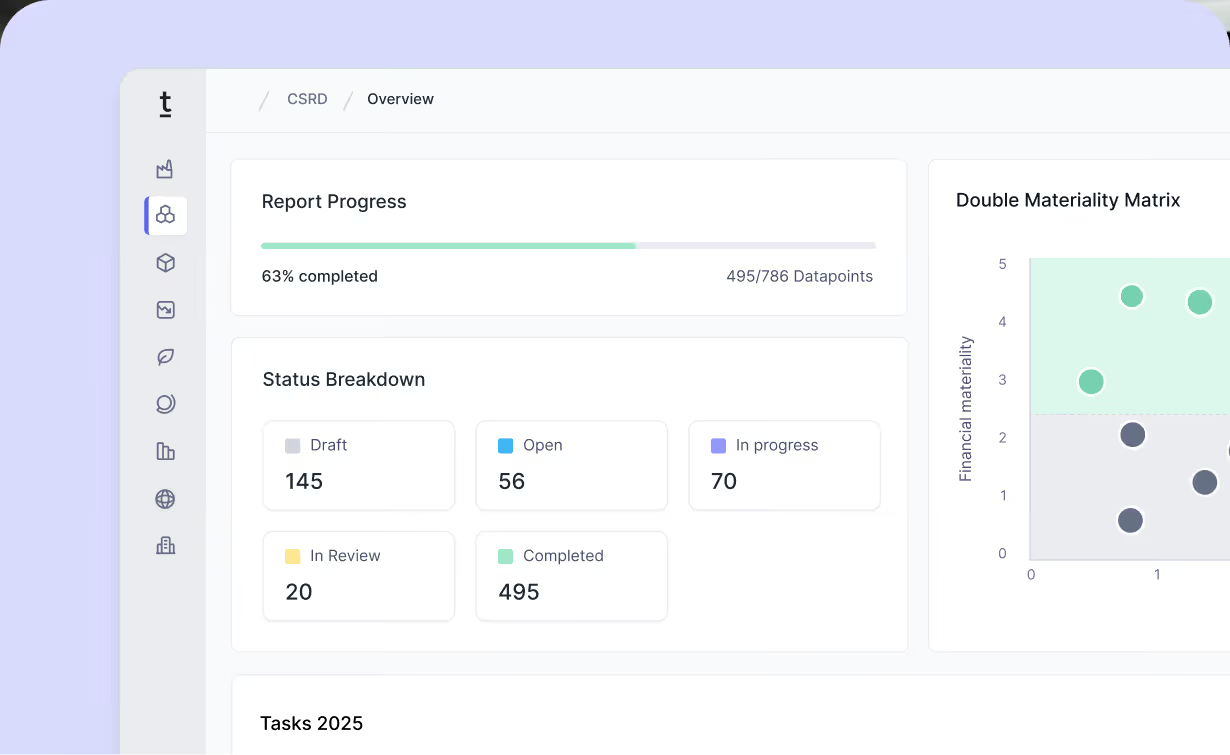
  • From CCF to the reduction module: measures modeled, reduction pathways visualized, and SBTi target-setting prepared. The comparison between base year and reporting year is visible directly in the tool.
  • Audit and customer communication: TÜV Süd certification for the 100% renewable energy product line would be difficult to demonstrate without a structured CO₂ data foundation, and it's a clear advantage in tenders with CO₂ evaluation criteria.
"Tanso covers the entire journey for us: we create the Corporate Carbon Footprint and then use the reduction module to prepare our SBTi target-setting. What's especially helpful is that the emission reduction compared to the 2024 base year is shown directly in the tool."
Joachim Hildebrand
Dr. Joachim Hildebrand
Head of Sustainability and Energy Management at SWF

Results

The combination of consulting and software was the decisive success factor: elocompanion established the methodological foundation for the climate balance sheet and transformation concept together with SWF, Tanso then took over as the operational platform, with no break in methodology or data foundation.

  • BAFA Module 5 transformation plan created, including a complete GHG balance sheet, climate targets, and an evaluated list of measures
  • BAFA funding of approximately €25,000 received
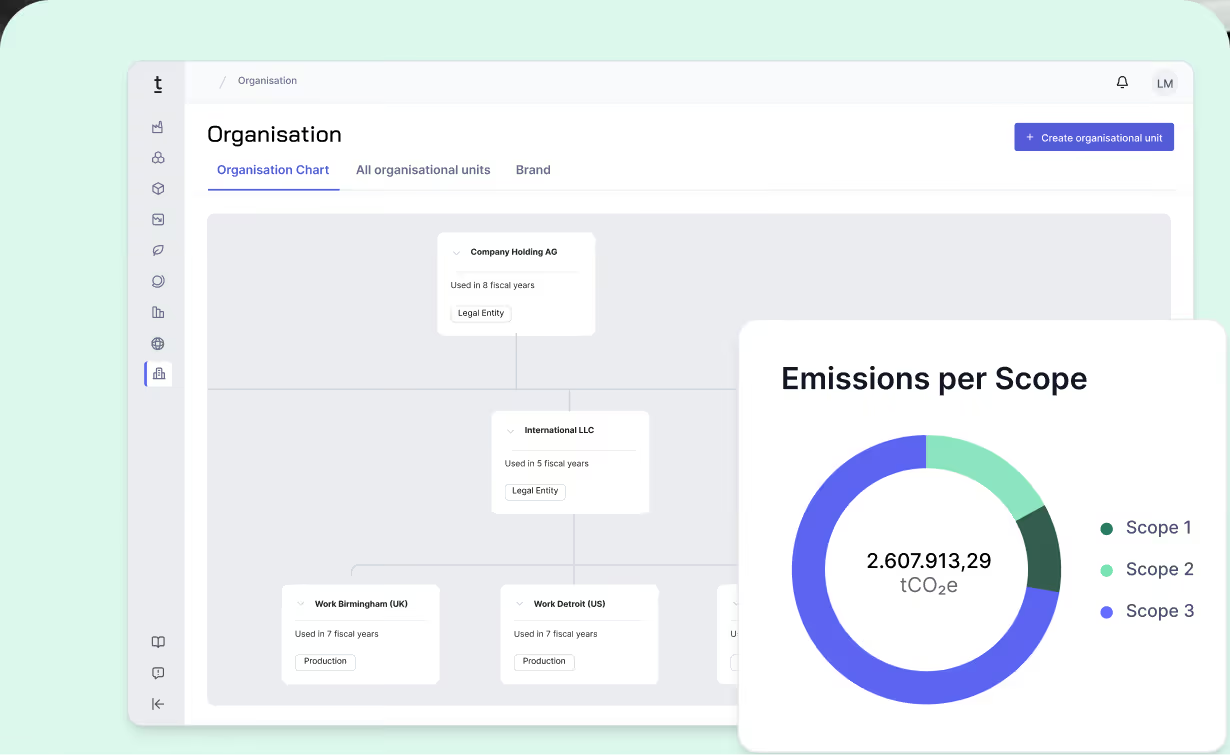
  • CCF built in Tanso for base year 2024 (Scope 1, 2, 3), with combined funding eligibility via BAFA Module 5
  • Established workshop structure with department heads, creating clear points of contact for data and measures
  • Structured data foundation for CDP reporting and the upcoming SBTi target-setting
"Together with elocompanion, we developed the BAFA Module 5 transformation plan hand in hand and received around €25,000 in funding for it, that was a clear lever for us. Being able to build the corresponding CCF directly in the Tanso CCF module, and having this step also funded through BAFA Module 5, turns two building blocks into a fully financeable decarbonization strategy."
Joachim Hildebrand
Dr. Joachim Hildebrand
Head of Sustainability and Energy Management at SWF

Outlook

With the BAFA Module 5 transformation plan delivered by elocompanion and the climate balance sheet built in Tanso, SWF has laid the foundation for the next phase. The SBTi target-setting is due to be submitted by the end of 2026, building on the reduction pathways modeled in Tanso and the reduction measures identified by elocompanion, which will also support the operational implementation of these prioritized measures going forward. Tanso remains the central platform for CCF, CDP reporting, and CSRD reporting, which becomes mandatory from 2027.

To the overview

BAFA transformation plan (module 5): EUR 25,000 in funding for SWF's decarbonization

About SWF

SWF is a mid-sized manufacturer of industrial gases headquartered in Friedrichshafen, with several production sites across Germany. The company produces nitrogen, oxygen, and argon via air separation units and distributes them in tanks, cylinders, and bundles. SWF already offers "green industrial gases" based on 100% renewable energy and is investing in the construction of a 5-megawatt electrolyzer in Baden-Württemberg to produce its own green hydrogen, part of a clear commitment to resource efficiency and the ongoing decarbonization of its processes.

Initial situation

With an annual electricity demand in the three-digit gigawatt-hour range, energy is not just a cost factor for SWF but also its biggest lever for decarbonization. Requirements intensified in 2023: major customers began systematically requesting sustainability data via platforms like CDP, and regulatory requirements rose with the CSRD as well as several German energy laws.

SWF already had structured energy data through its ISO 50001 energy management system and annual audits. However, a complete climate balance sheet, a transformation concept, or reliable Scope 3 data did not yet exist.

Challenges

  • Distributed and partly manual data collection: many energy meters were read by hand, and climate balance sheet data was scattered across Excel lists or not available at all.
  • Scope 3 not systematically recorded: data for purchased goods and services in particular had to be sourced in a structured way for the first time, as the existing ERP system had no CO₂ factors on file.
  • Asset lifecycles of 30+ years: air separation units consume 70–80% of electricity through large compressors with decades-long lifecycles, so measures need to be planned into the investment cycle.
  • Atypical emissions profile: SWF's largest source of emissions is Scope 2 (electricity purchased), which requires an industry-specific set of measures rather than classic production-side approaches.
  • Building internal structures alongside data collection: the newly created sustainability role had to establish processes, involve department heads, and deliver concrete measures, all at the same time.

Why elocompanion

SWF wanted to build know-how within the company for the long term. Instead of an isolated climate balance sheet, it needed a structured roadmap for decarbonization with clear methodology, concrete measures, and economic evaluation. This is exactly what the BAFA-funded transformation plan (Module 5) is designed for.

  • BAFA-funded transformation plan (Module 5): a complete action plan including GHG balance sheet, climate targets, and a technical-economic evaluation of each measure.
  • Knowledge transfer instead of pure service delivery: sustainability manager Joachim Hildebrand was involved from the start, from the second year onward, SWF creates the climate balance sheet independently.
  • Complementary strategic workshops with department heads: beyond the transformation plan, three workshops delivered prioritized savings measures, clear data owners, and a framework for cross-cutting sustainability topics.
  • Ongoing energy consulting: for example, a heat pump concept including a cost-effectiveness calculation for Friedrichshafen.
  • Concrete, tangible investment planning through standardized cost-effectiveness calculations for energy efficiency measures per valERI (DIN EN 17463).
"With elocompanion and Tanso, consulting and software don't just fit together perfectly, both work with us as true partners. It was important to us to embed sustainability in-house for the long term. That's exactly what we achieved: we developed the transformation plan together with elocompanion, and starting in year two, we run the climate balance sheet ourselves in Tanso, with no breaks in methodology and no duplicate work."
Joachim Hildebrand
Dr. Joachim Hildebrand
Head of Sustainability and Energy Management at SWF

Why Tanso

For an audit-proof and scalable climate balance sheet, Excel was no longer sufficient in the long run. SWF therefore chose Tanso as a holistic software solution for CO₂ accounting and ESG management, whose CCF module is also eligible for funding in combination with BAFA Module 5.

  • Seamless transition from consulting to software: the climate balance sheet was built directly in the Tanso CCF module, with no break in methodology between the transformation plan and ongoing operations.
  • Extensive emissions factor database: all factors, including source references, are available directly in Tanso, and are also used for PCF calculations.
  • AI-supported data mapping: Excel exports from the ERP system are semi-automatically matched to emission factors via Tanso's AI.
  • From CCF to the reduction module: measures modeled, reduction pathways visualized, and SBTi target-setting prepared. The comparison between base year and reporting year is visible directly in the tool.
  • Audit and customer communication: TÜV Süd certification for the 100% renewable energy product line would be difficult to demonstrate without a structured CO₂ data foundation, and it's a clear advantage in tenders with CO₂ evaluation criteria.
"Tanso covers the entire journey for us: we create the Corporate Carbon Footprint and then use the reduction module to prepare our SBTi target-setting. What's especially helpful is that the emission reduction compared to the 2024 base year is shown directly in the tool."
Joachim Hildebrand
Dr. Joachim Hildebrand
Head of Sustainability and Energy Management at SWF

Results

The combination of consulting and software was the decisive success factor: elocompanion established the methodological foundation for the climate balance sheet and transformation concept together with SWF, Tanso then took over as the operational platform, with no break in methodology or data foundation.

  • BAFA Module 5 transformation plan created, including a complete GHG balance sheet, climate targets, and an evaluated list of measures
  • BAFA funding of approximately €25,000 received
  • CCF built in Tanso for base year 2024 (Scope 1, 2, 3), with combined funding eligibility via BAFA Module 5
  • Established workshop structure with department heads, creating clear points of contact for data and measures
  • Structured data foundation for CDP reporting and the upcoming SBTi target-setting
"Together with elocompanion, we developed the BAFA Module 5 transformation plan hand in hand and received around €25,000 in funding for it, that was a clear lever for us. Being able to build the corresponding CCF directly in the Tanso CCF module, and having this step also funded through BAFA Module 5, turns two building blocks into a fully financeable decarbonization strategy."
Joachim Hildebrand
Dr. Joachim Hildebrand
Head of Sustainability and Energy Management at SWF

Outlook

With the BAFA Module 5 transformation plan delivered by elocompanion and the climate balance sheet built in Tanso, SWF has laid the foundation for the next phase. The SBTi target-setting is due to be submitted by the end of 2026, building on the reduction pathways modeled in Tanso and the reduction measures identified by elocompanion, which will also support the operational implementation of these prioritized measures going forward. Tanso remains the central platform for CCF, CDP reporting, and CSRD reporting, which becomes mandatory from 2027.

Discover Tanso -
Your all-in-one solution for sustainability

Other articles that may be of interest to you

Stay up-to-date with news from Tanso.