

CBAM explained
The Carbon Border Adjustment Mechanism (CBAM), which was designed to address carbon leakage, has been in force since January 2024. The aim of the CBAM is to impose a carbon price on imported goods based on their embedded carbon emissions in order to ensure fair competition between the various industries.
Scope of Application and Exceptions
The regulations currently apply to products that were manufactured entirely outside the EU and to products for those for which a significant production stage took place in a third country, particularly if the production takes place across borders. Imports that are worth less than 150 euros per delivery are to be exempt from these regulations. During the transition phase of the CBAM, the focus will therefore initially be on industries which emit high levels of carbon emissions and therefore face a high risk of carbon leakage. These include iron & steel, aluminum, electricity, fertilizers, hydrogen and cement.
Reporting obligation in the transition phase (October 2023 - December 2025)
A CBAM report must be submitted quarterly and include the following:
-
 The total quantity of goods imported in the previous quarter
 -
Total direct and indirect embedded emissions
-
The carbon price due in the country of origin for the embedded emissions
-

• CBAM certificates are not required
• Emissions are not reviewed by EU-accredited auditors
Rule on the use of standard values
Q4 2023 to Q2 2024
-
Companies are allowed to use default values for 100% of their reports if no real emissions data is available.
-
The use of default values is restricted. They are only permitted for up to 20% of complex goods.
-
95% of the reports submitted in the first reporting period were based on default values. This figure underlines the current reliance on default values in reporting.
Recommendations for the transition phase from July 2024 to December 2025
-
Utilization of real emission values
As of January 1, 2026, real emission values from suppliers are required for CBAM reports. An early transition from default or estimated emission values to actual emission values is recommended. This improves the accuracy of reporting and effectively supports the implementation phase.
-
Contacting suppliers
Contact your suppliers at an early stage to coordinate the collection of emission data. Developing reliable communication channels with suppliers plays an important role in ensuring accurate and up-to-date data. In addition to the CBAM module, Tanso offers templates and information packages for CBAM to support communication with suppliers.
-
Resources of the EU Commission
In addition to FAQs, the EU Commission also provides resources such as Excel templates to facilitate communication with suppliers. These tools are designed to simplify the process of data collection and reporting.
Penalties in the event of non-compliance
Until July 2024, it is unlikely that penalties will be imposed. From October 2024, however, penalties could be introduced if declarants are required to report real emission values. The focus will be on repeated non-compliance with CBAM rules to decide whether penalties will be imposed.
According to Article 16 of the CBAM Implementing Regulation, the following sanctions are set:
• the submitted report is incomplete or incorrect and is not corrected, even at the request of the competent authority.


• reporting is delayed by more than six months.
CBAM reporting with Tanso
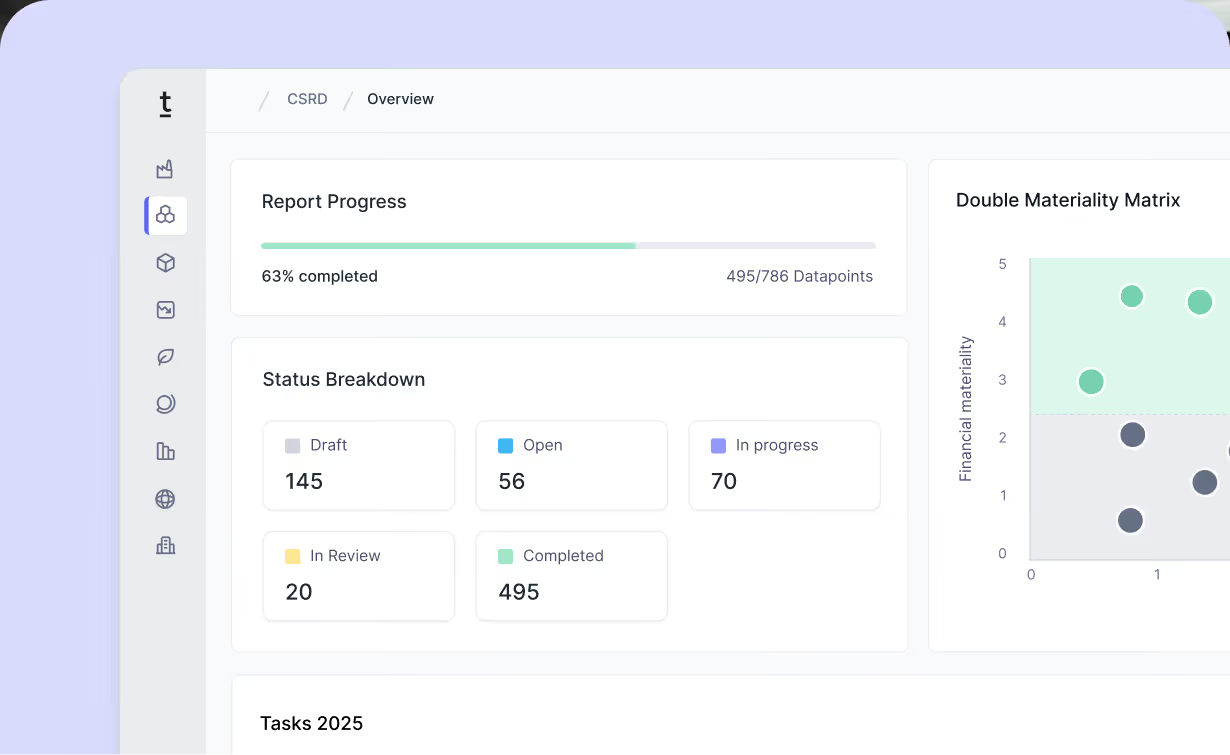
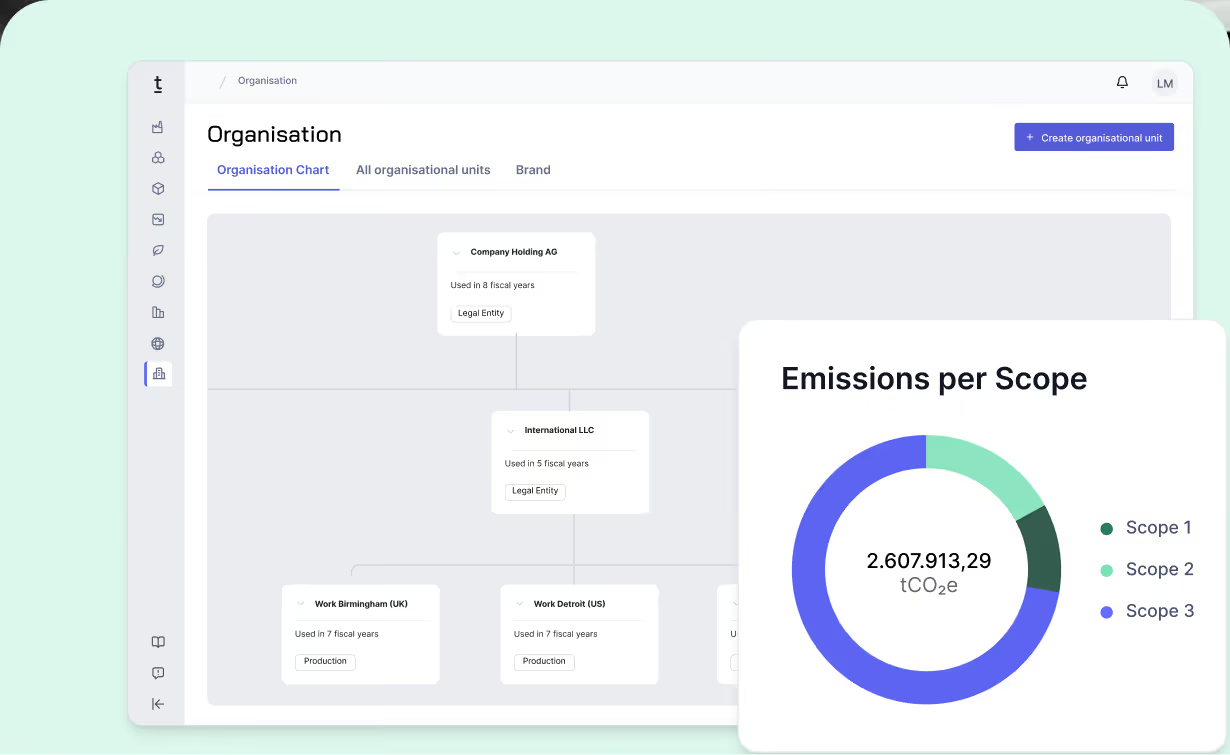
Tanso offers a simple and automated software solution for CBAM compliance. Experience efficient compliance through accurate emissions calculations, seamless data import and simplified report generation. Easily capture required information, match products to CBAM specifications and generate accurate reports that can be uploaded directly to the CBAM portal.
Other articles that may be of interest to you
Stay up-to-date with news from Tanso.







































































.avif)





.avif)
.jpg)


