
Austria adopts CSRD implementation: Sustainability Reporting Act (NaBeG) passed



With the Sustainability Reporting Act (NaBeG), Austria has transposed the Corporate Sustainability Reporting Directive (CSRD) into national law. The National Council (Parliament) passed the act on 21 January 2026. Approval by the Federal Council is expected in early February 2026, and publication in the Federal Law Gazette is anticipated by the end of February 2026.
This will soon replace the existing Sustainability and Diversity Improvement Act (NaDiVeG). In force since 2017, it implements the European Non-Financial Reporting Directive (NFRD, EU Directive 2014/95) and requires large listed companies with more than 500 employees to publish a sustainability report, without prescribing a specific reporting standard.
What changes does the NaBeG introduce in terms of content?
In terms of content, the NaBeG introduces mandatory sustainability reporting in line with the CSRD and the European Sustainability Reporting Standards (ESRS). Sustainability information will therefore become part of regular corporate reporting, be subject to external assurance, and be legally regulated. The NaBeG already includes a number of clarifications and incorporates the relief measures from the EU-level “Omnibus” process. These include in particular:
- The thresholds are set at 1,000 employees and EUR 450 million in revenue
- The Stop-the-clock Directive is implemented, meaning Wave 2 companies (non-listed companies) will only have to report from 2027 onwards
- Information requests to companies with fewer than 1,000 employees in the value chain are limited to the scope of the VSME standard
- Financial statement and sustainability audits may be conducted as a joint audit by multiple auditors
- In case of violations, coercive penalties are set at up to EUR 100,000 for public-interest entities and may be imposed repeatedly
- Audit rules are expanded (including adjustments to professional authorization requirements)
Scope of the NaBeG: Who is required to report?
CSRD Wave 1: large listed companies
Large listed companies with more than 1,000 employees and revenues exceeding EUR 450 million fall under the first CSRD implementation phase. In Austria, this affects around 120 companies.
If the balance sheet date for the 2025 financial year falls before the publication of the NaBeG, there is no obligation to prepare sustainability reporting under the NaBeG for the 2025 financial year. Voluntary application is possible; otherwise, the existing reporting requirements under the NaDiVeG remain applicable.
If the balance sheet date falls after the publication of the NaBeG, sustainability reporting under the NaBeG becomes mandatory, including external assurance. Depending on the financial year and balance sheet date, this may already apply to the 2025 financial year (in particular for non-calendar financial years); for calendar-year financial years, the obligation applies for the first time to the 2026 financial year.
For companies that are required to report already for 2025 due to a non-calendar financial year, the old ESRS still apply. The new ESRS are expected to be adopted in June 2026 and may then be applied voluntarily for 2026 annual reports and will become mandatory from 2027 onwards.
For Wave 1 companies, mandatory EU Taxonomy reporting applies under both the NaDiVeG and the NaBeG. For the 2025 financial year, the simplified provisions can already be used.
CSRD Wave 2: large non-listed companies
For Wave 2 companies, reporting obligations are expected to be introduced at a later stage, once the EU-level “Omnibus” process has been finalized. Large non-listed companies with more than 1,000 employees and revenues exceeding EUR 450 million will likely be required to prepare sustainability reports under the NaBeG starting with the 2027 financial year. This includes an ESRS sustainability statement including EU Taxonomy disclosures, integration into the management report, and mandatory external assurance.
How Tanso supports
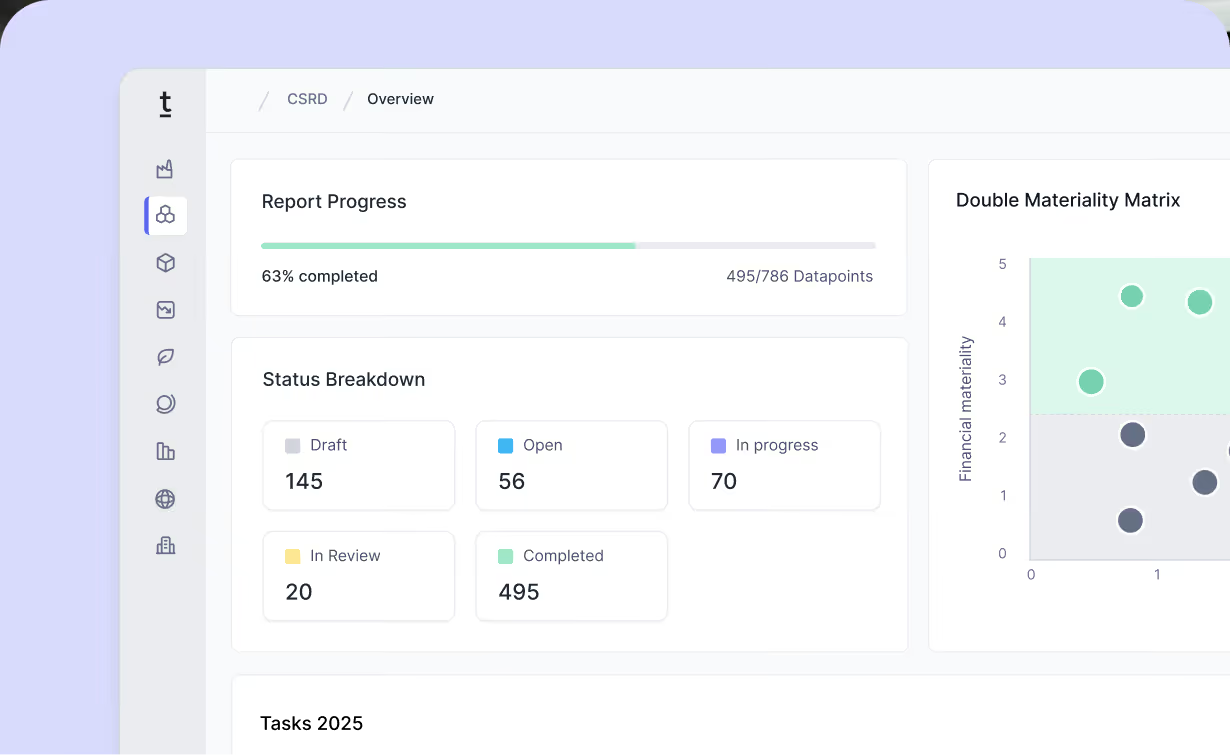
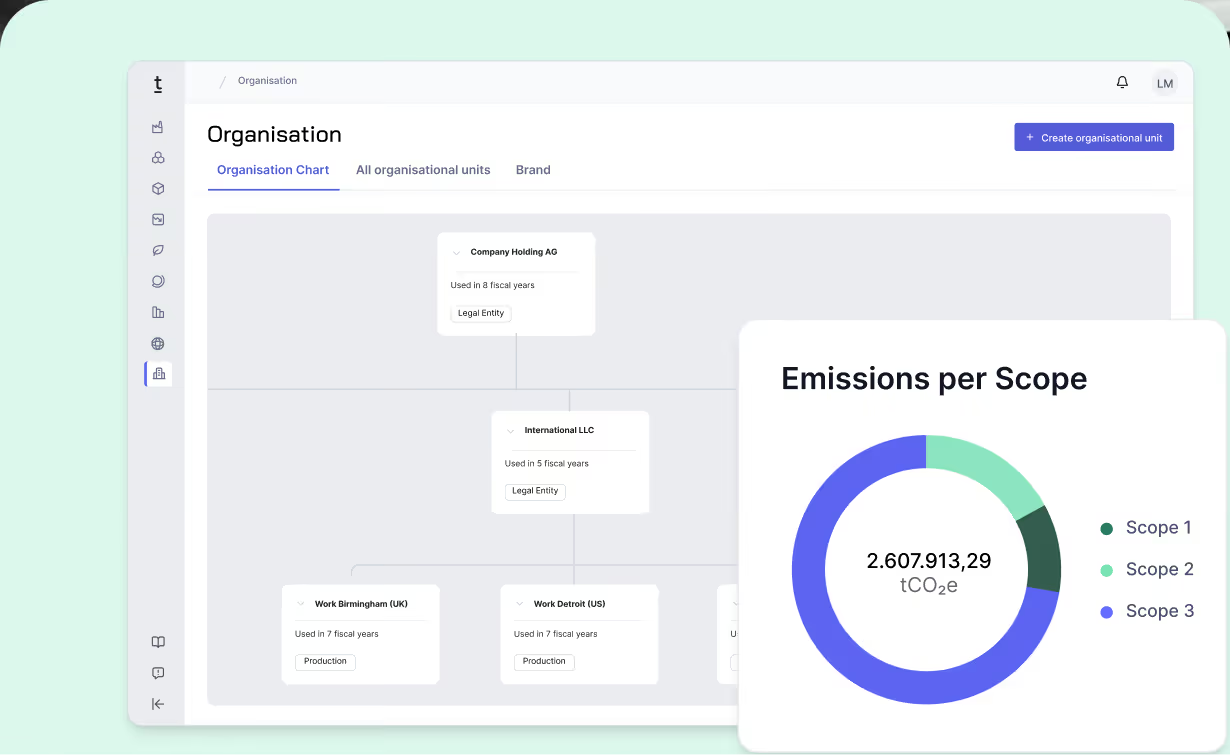
Tanso supports CSRD reporting under the old ESRS and already includes a filter for the draft new ESRS. This enables companies to collect the required data for their sustainability report - including the double materiality assessment and EU Taxonomy - across complex organizational structures in an audit-ready and AI-supported way.
For Wave 2 companies, it is advisable to already prepare one or more test report(s) for 2025/26. This allows processes, data availability, and internal responsibilities to be tested at an early stage.













































































.avif)





.avif)
.jpg)


