
Sustainability communication is changing. Today, companies must explain more precisely than ever which environmental impacts are actually associated with their activities, and what the underlying evidence is. General claims are no longer enough. What is needed are traceable data, transparent methods, and a clearly defined frame of reference.
This is an opportunity for the circular economy in particular. The benefit of recycling cannot only be described in principle. Our partner Interzero shows how it can also be quantified, based on concrete material flows and backed by a scientifically grounded methodology.
Circular economy needs reliable metrics
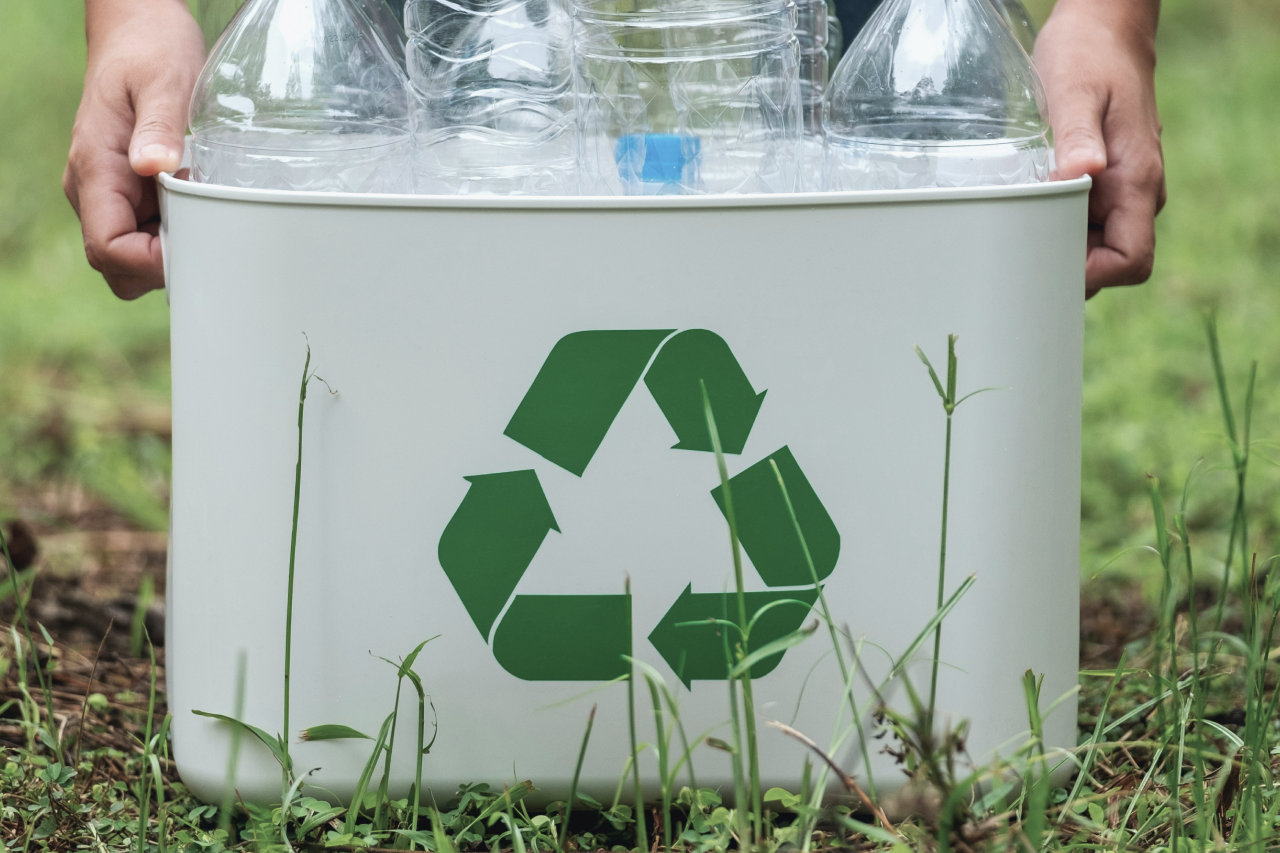
Recycling keeps valuable materials in the loop, reducing the need for newly extracted primary raw materials. At the same time, greenhouse gas emissions from recycling processes differ from those of primary production. But how big is this difference, really?
To answer this question, Interzero has been working with the Fraunhofer Institute for Environmental, Safety, and Energy Technology UMSICHT for nearly 20 years. As part of “resources SAVED by recycling”, Fraunhofer UMSICHT investigates the environmental impacts of circulating valuable materials. The basis is a material-flow-based comparison of two indicators: primary resource consumption and greenhouse gas emissions. For both, production from primary raw materials is compared with recycling. From these differences, it is possible to calculate how much primary resource use is avoided and how many greenhouse gas emissions are prevented. This turns the general statement “recycling saves resources” into a quantifiable metric.
What the current numbers show
The results for 2025 show that Interzero circulated around two million tonnes of valuable materials in Germany, Austria, Poland, Italy, and Slovenia. Compared to primary production, this saved more than 7.2 million tonnes of primary resources and avoided over 900,000 tonnes of greenhouse gas emissions. These figures do more than reveal the potential of closed material loops, they make the differences between recycling and primary production traceable through defined metrics.
From overall impact to the individual contribution
For companies, however, another question arises: what does this impact mean for their own material flows? To answer this, Interzero applies the methodology to customer-specific volumes as well. Companies can therefore see what quantities of primary resources are calculably saved based on their individual material flows, and what greenhouse gas emissions are avoided compared to primary production. This makes environmental impacts visible not only at an aggregate level, but also at the level of each company’s individual contribution. Given the growing demand for transparency, this creates an important foundation: environmental claims can be underpinned with concrete numbers and classified methodologically.
Scientific methodology instead of generic Green Claims
Credible sustainability communication links environmental claims to traceable evidence. This also requires clearly distinguishing between a general environmental statement and a specifically demonstrable environmental impact. Anyone communicating, for example, that recycling has avoided greenhouse gas emissions should be able to explain:
- What was examined?
- Which quantities or material flows form the basis of the calculation?
- Which reference scenario was used for comparison?
- Which methodology was applied?
- Which time period do the figures refer to?
This is exactly where scientifically grounded life cycle assessment adds value. What matters is not the most striking statement, but the robust data foundation behind it. For “resources SAVED by recycling”, this means that savings are not assumed in blanket terms, but derived from comparing primary production with the circular flow of the respective materials.
The next step: Using environmental data in sustainability management and reporting
With this, the role of environmental data within companies also changes. Such data does not only help make sustainability communication more credible. Properly collected and contextualized, it can also help understand different material flows, classify recycling measures, and document progress in a traceable way. This brings a broader question into focus: How can data from the circular economy be made even more usable in the future for sustainability management and reporting?
But to achieve this, data must not only be scientifically robust. For integration into business processes, granularity, clearly defined system boundaries and timeframes, documentation, and consistent data provision are equally crucial. This is one of the next evolutionary steps: generating data from robust impact calculations that companies can systematically integrate into their sustainability processes.
Quantified environmental impact creates transparency for the circular economy
The transformation to a circular economy requires investment security, a market for recycled raw materials, functioning take-back and recycling systems, suitable technologies, and recyclable products. But it equally requires data that allows the impacts to be understood and classified.
“resources SAVED by recycling” shows how this step can be put into practice: from concrete material flows, through a scientifically grounded methodology, to quantified environmental impacts.
This creates a solid foundation for making the contribution of recycling transparent and for steering the circular economy increasingly through data.
Learn more about the methodology and the current results of “resources SAVED by recycling” at Interzero.