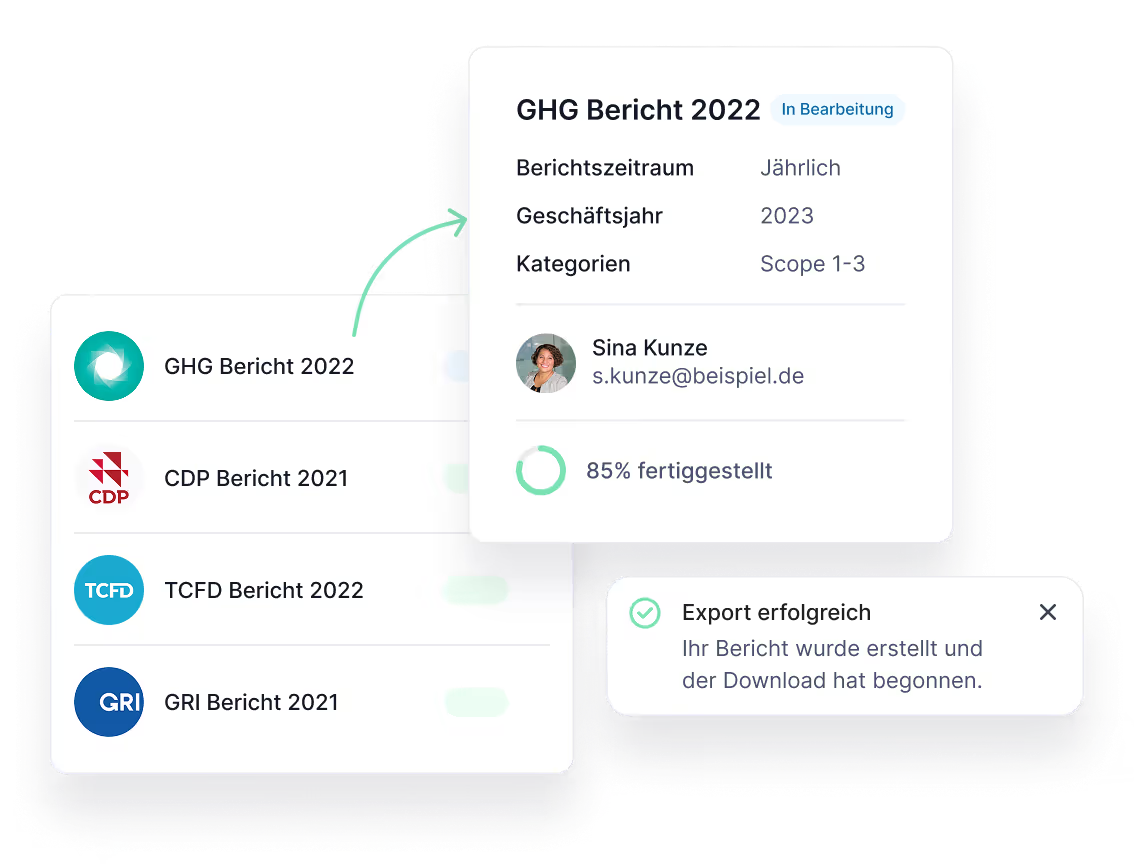
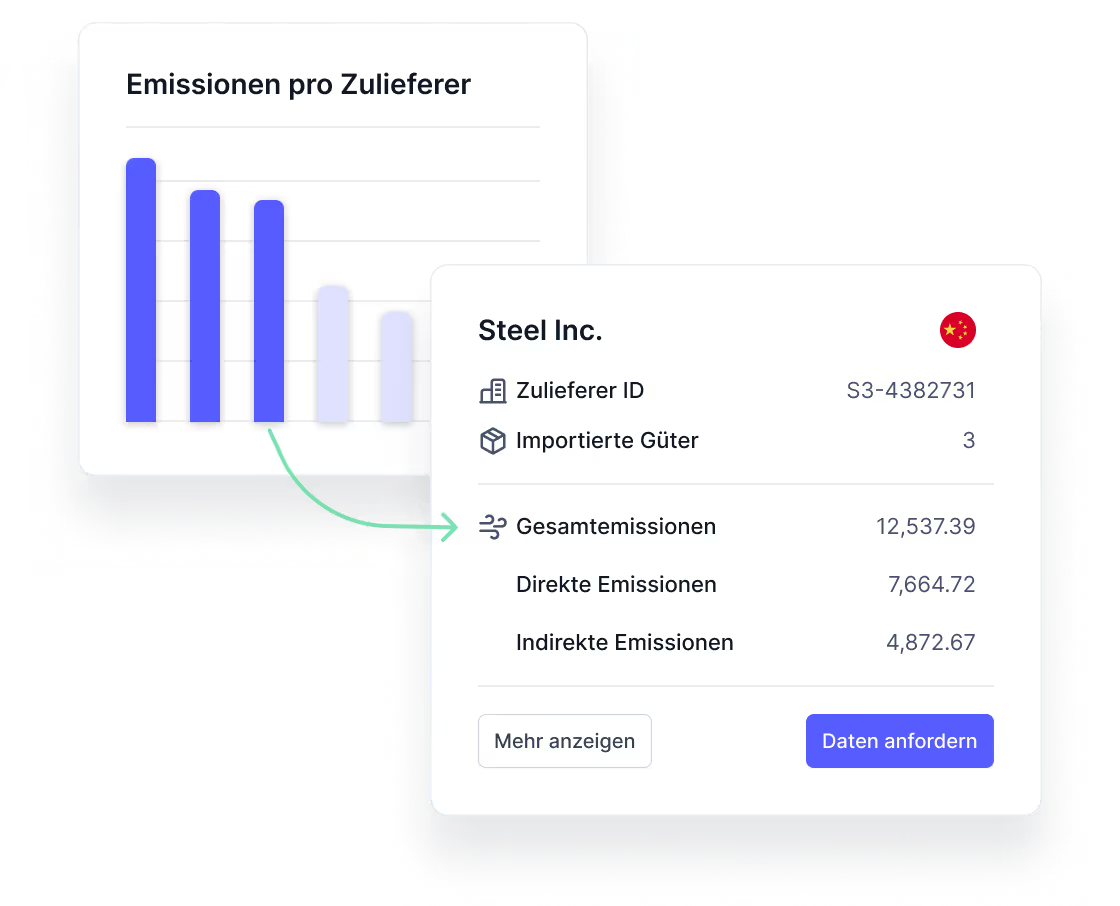
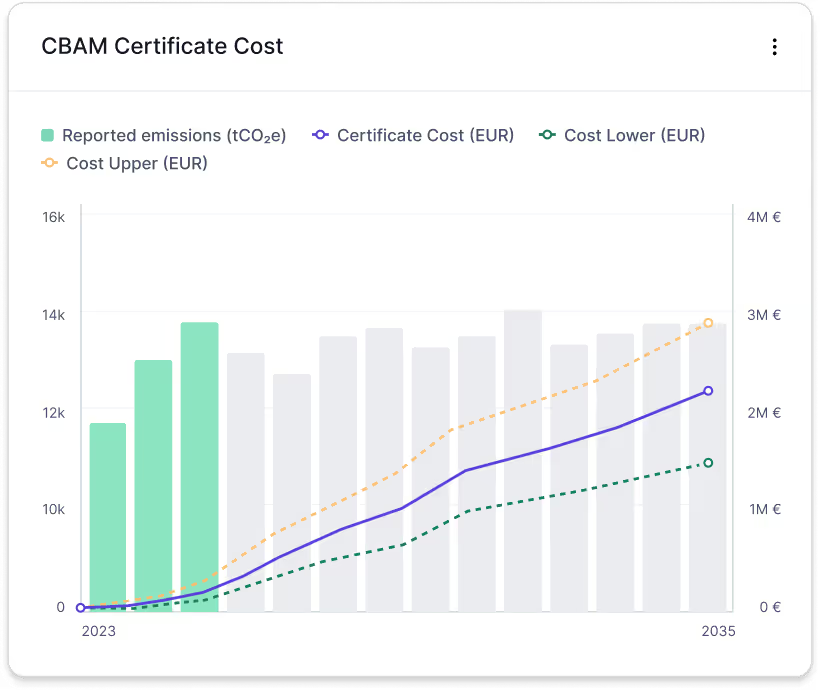
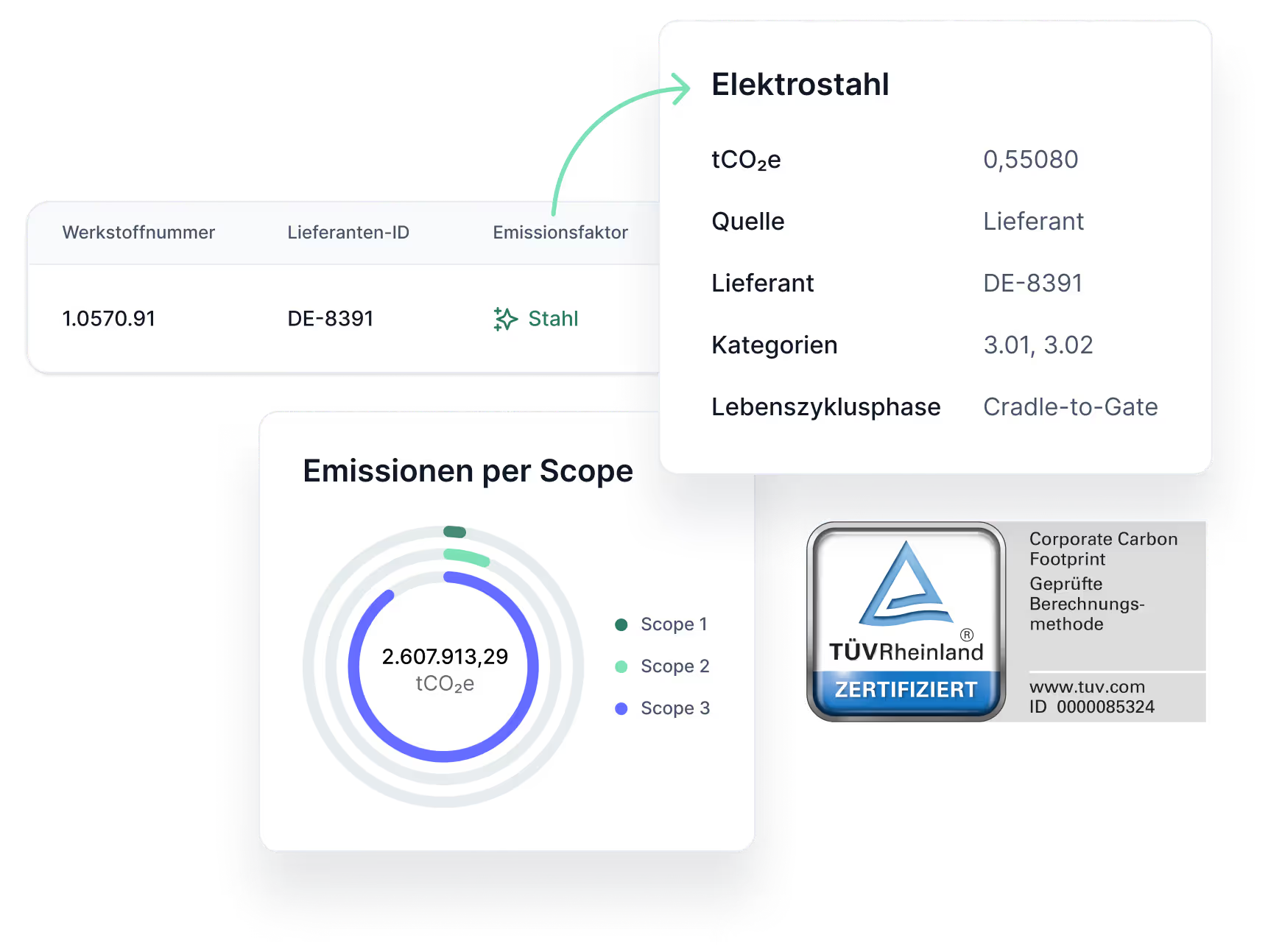
Automatically capture and report CO₂ emissions of imported goods in line with CBAM requirements. Simplify supplier data collection and generate reports
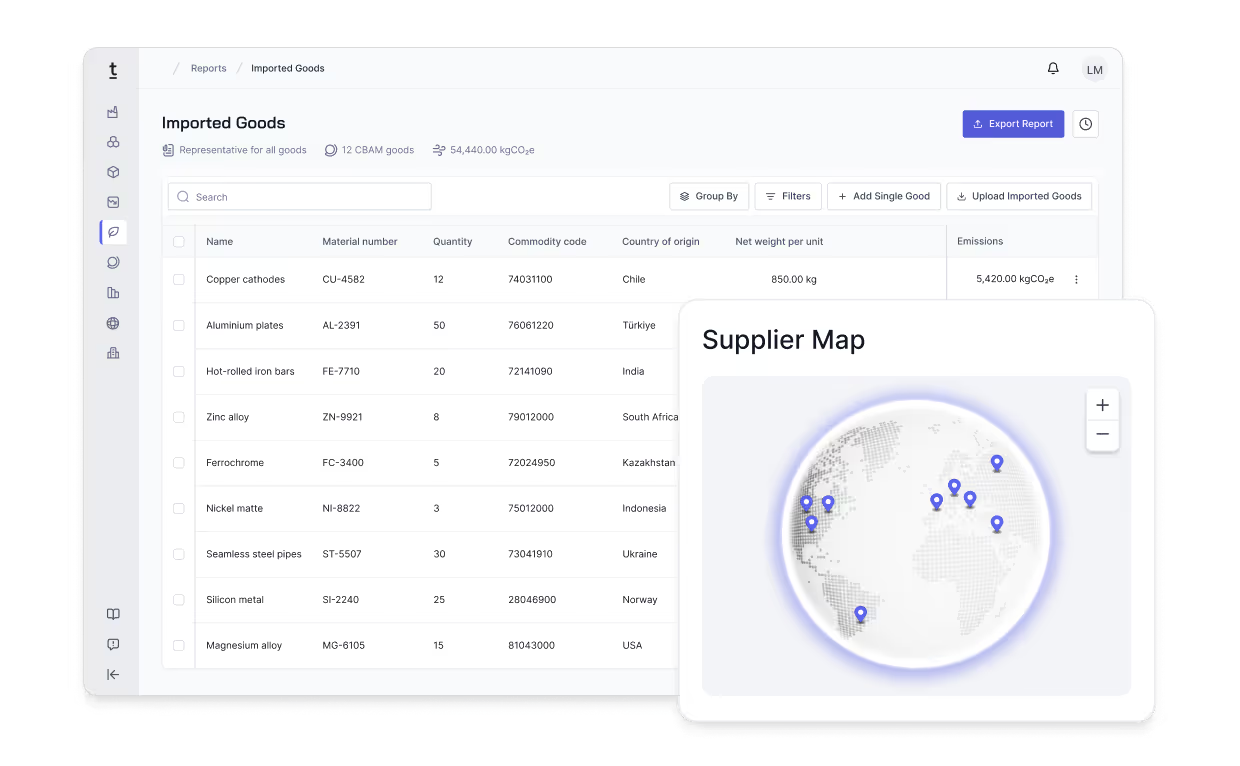

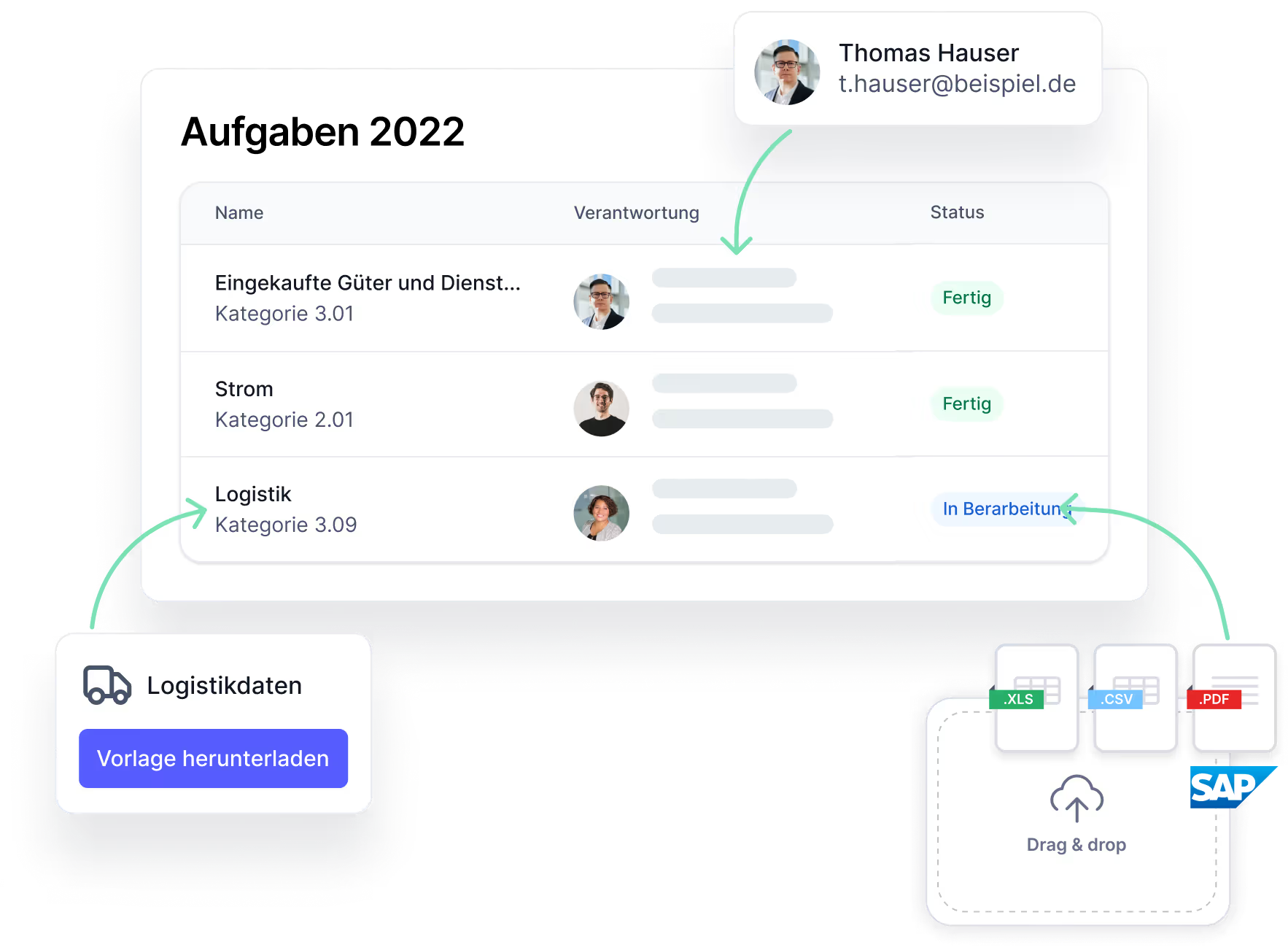
No registration required for suppliers. Built-in calculator for CBAM values. Simply import and centrally manage data.

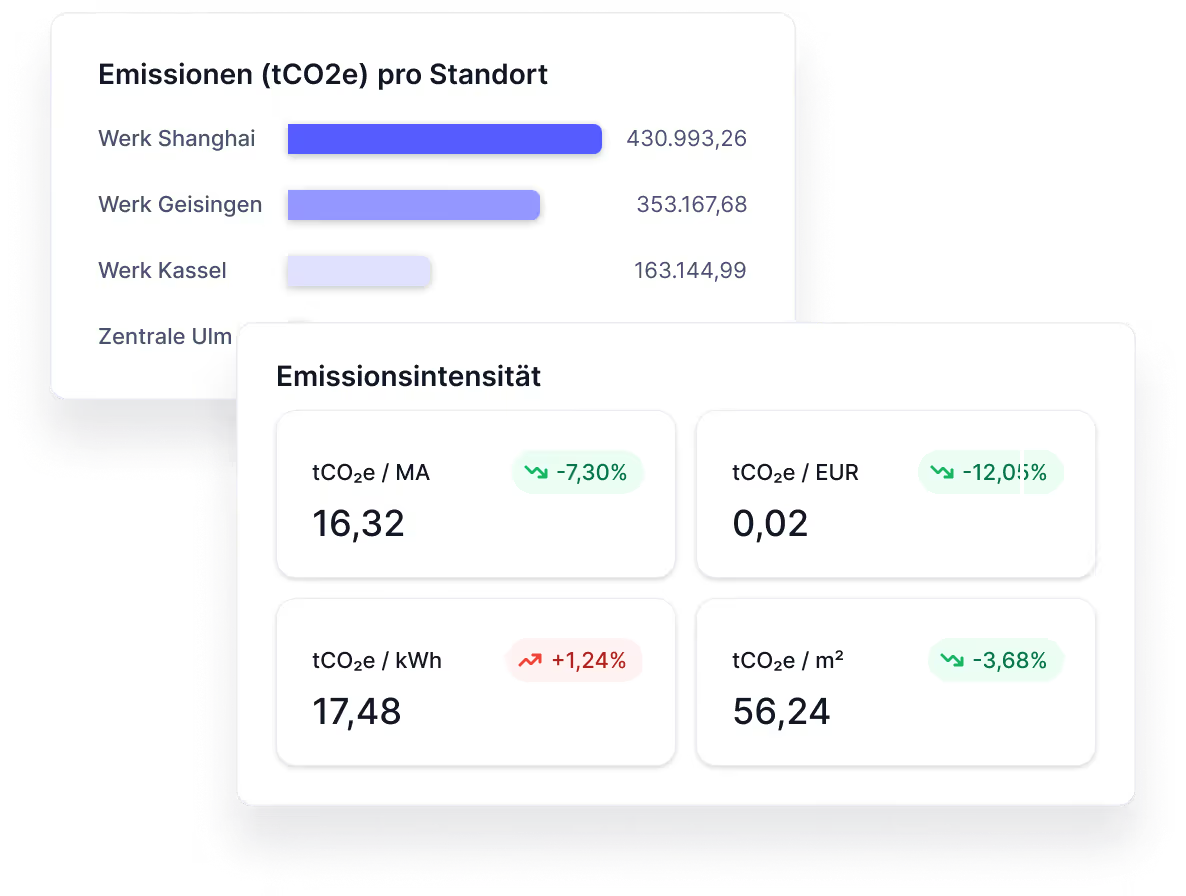
Map complex organizational structures and standardize reporting processes across multiple sites.

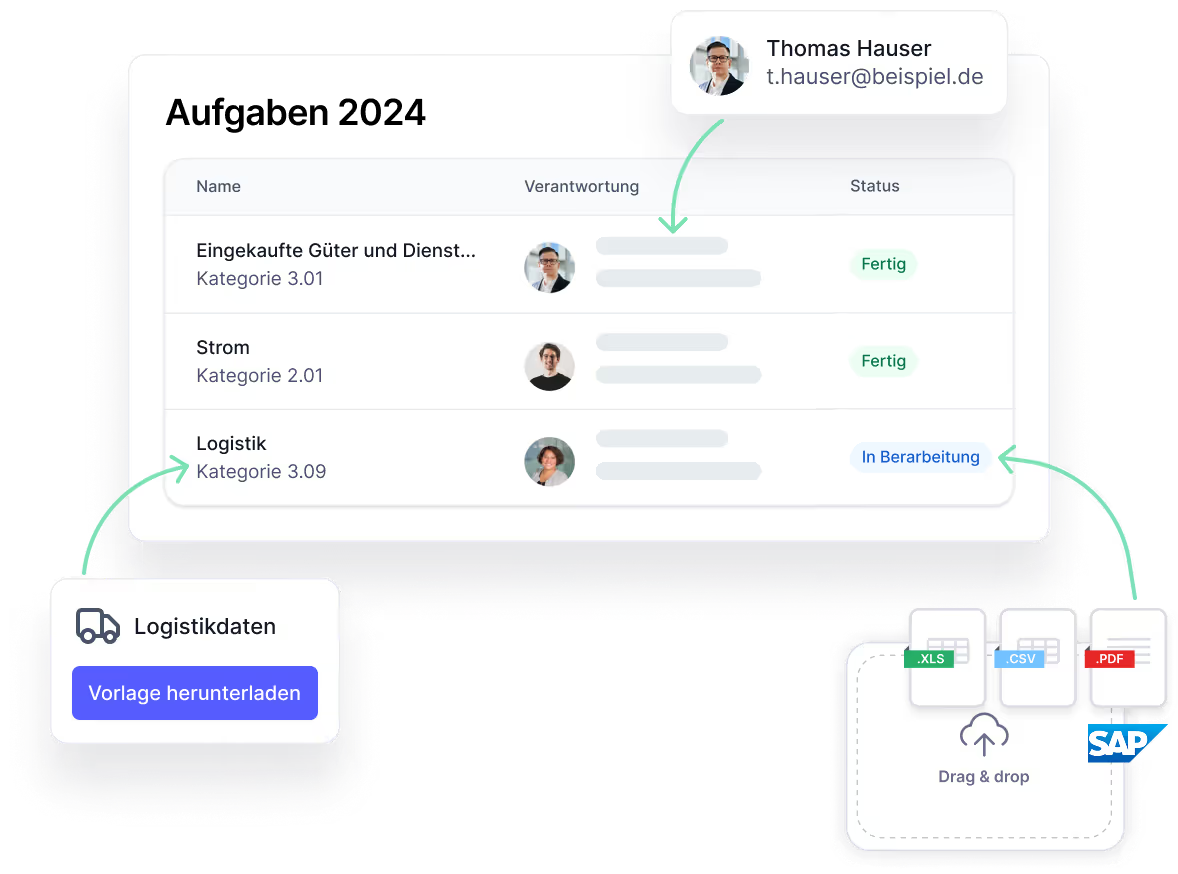
Fewer errors, increased efficiency, and significantly improved response rates from data requests.

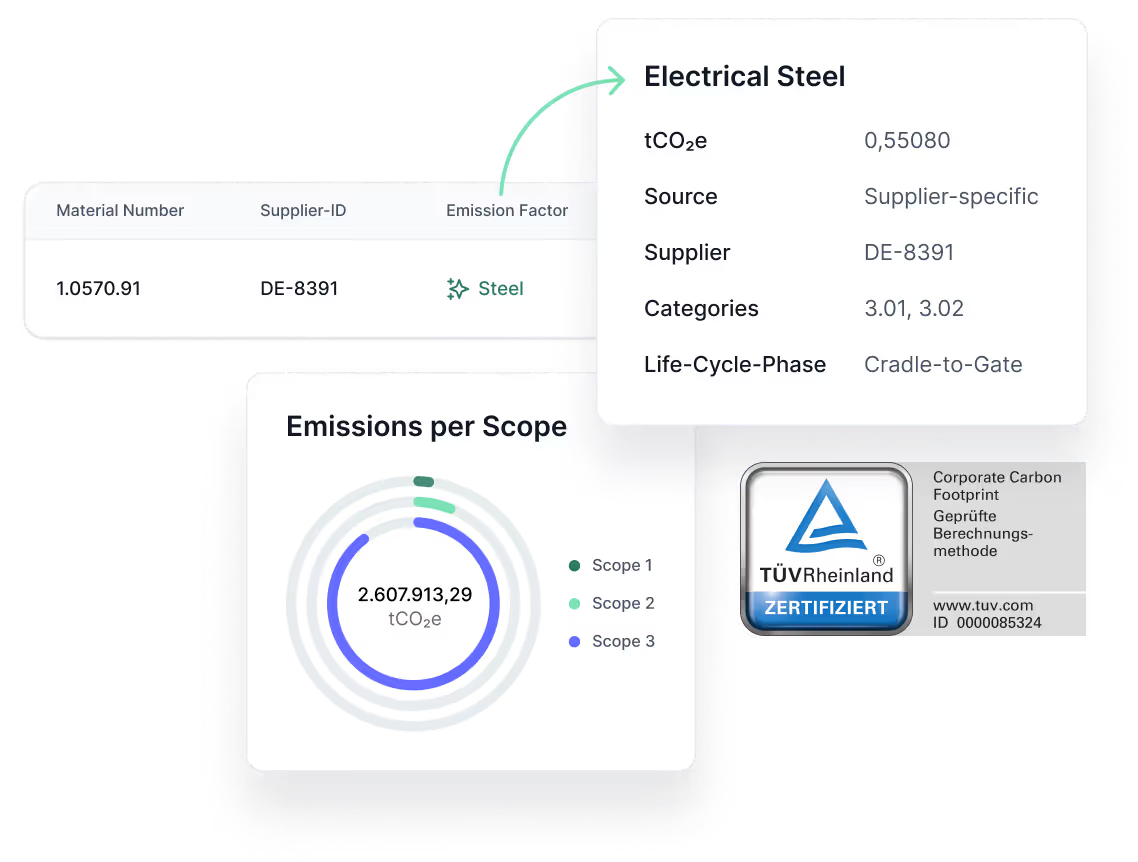
Centralized, transparent, and traceable data storage.






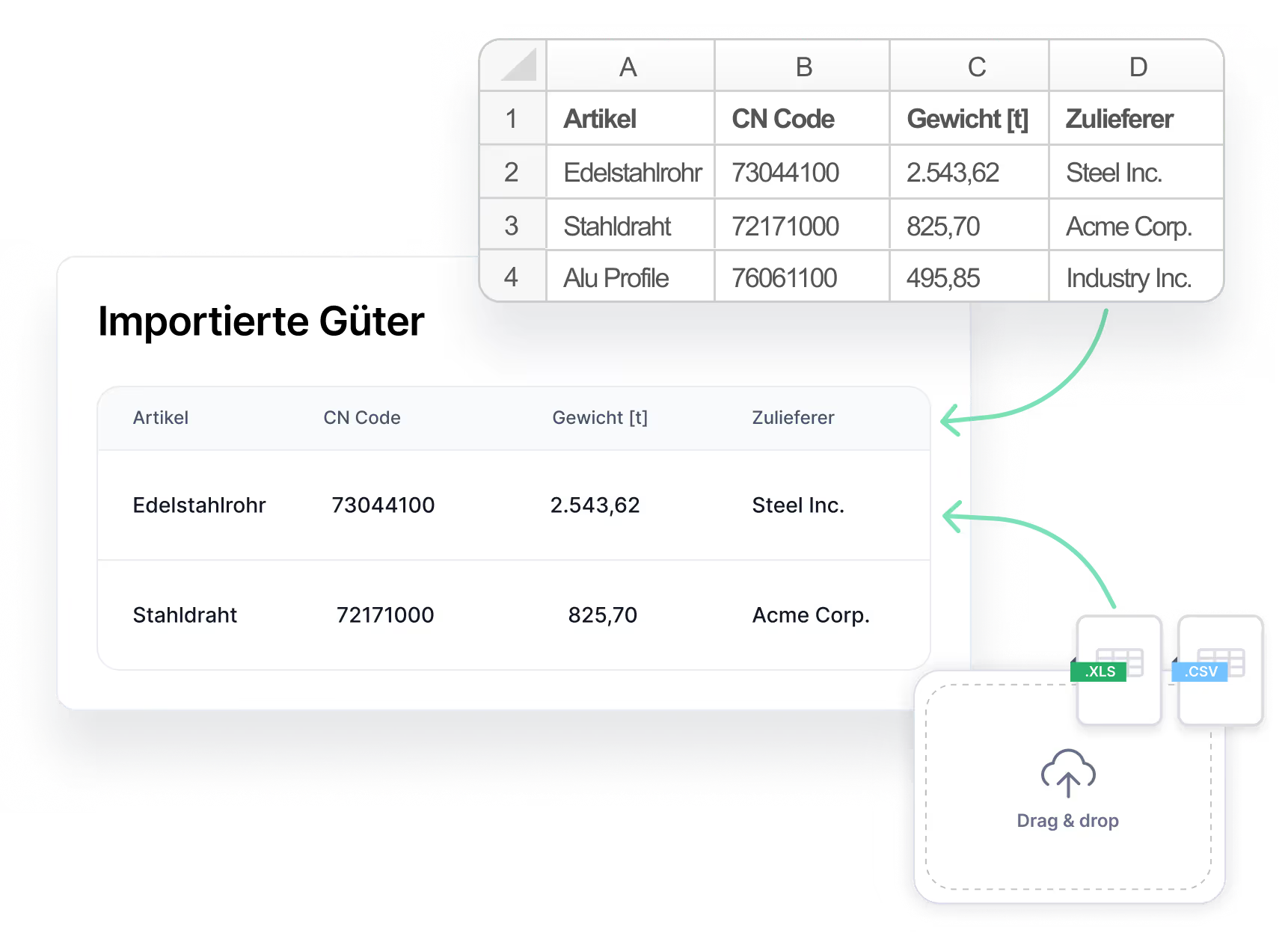



“The import assistant in Tanso is the most helpful feature for me. It makes it much easier to process large amounts of data and allows me to save valuable time.”


"The intuitive interface of the Tanso software, combined with simple and decentralized data collection and reliable support, makes Tanso an indispensable tool for our sustainability reporting."


"My experience with the Tanso software is excellent. The projects are clearly structured, task distribution is effortless, and the operation is very user-friendly and intuitive. Results are immediately visible at a glance, which significantly improves collaboration and greatly simplifies our daily work."

"To leverage sustainability as a strategic success factor, reliable data is needed. Tanso provides the necessary foundation to measure sustainability systematically, manage it strategically, and thereby realize long-term competitive advantages."





PPWR-Compliance ist mehr als Dateneingabe. Die Verordnung entwickelt sich weiter, nationale Regeln unterscheiden sich, und Ihre kniffligsten Fragen entstehen an einer Stelle: Wie passt PPWR zu Ihrem Setup — Ihrem Produktportfolio, Ihrer Lieferkette und bestehenden Prozessen.Deshalb kombinieren wir Software mit optionaler Fachberatung.
Wo wir Sie unterstützen
Unsere Expert:innen und Partner kommen überall zum Einsatz, wo die Verordnung Urteilskraft verlangt — nicht nur Compliance-Häkchen setzen.

hre konkreten Verantwortungen unter PPWR verstehen

Entscheiden, welche Märkte und Verpackungstypen zuerst angehen

PPWR-Daten in bestehende Compliance- und Reportingsysteme einspeisen
Tragfähigen Ansatz für Partner-Compliance aufbauen


Implementierung, Einzelheiten zur Regulatorik und mehr. Finden Sie hier Ihre Antworten.
Sound PPWR preparation starts with transparency over the existing packaging portfolio: which packaging is affected, which data is already available, and which suppliers need to be systematically engaged? What is decisive is building audit-proof data processes along the entire value chain – from the bill of materials through material composition and recycled content to the Declaration of Conformity. Companies that integrate packaging data into their existing sustainability and compliance workflows reduce duplicate effort and create a scalable foundation for PPWR compliance.
From 1 January 2030, grouped, transport and e-commerce packaging must not exceed an empty space ratio of 50 percent, with void fill counted as empty space. Packaging weight and volume must be reduced to what is functionally necessary; design techniques such as double walls, false bottoms or oversized outer packaging will no longer be permitted, with few exceptions. For companies with high shipping volumes and complex transport packaging, this requires early adjustments in packaging design and procurement.
Extended Producer Responsibility (EPR) requires the producer under the PPWR – the economic operator that first places a packaging on the market of a Member State – to bear financial and organisational responsibility for the collection, recovery and disposal of that packaging. Depending on the constellation, this can be the manufacturer, but also an importer or a distributor; what matters is the first placing on the market in the respective Member State. 18 months after publication of the EU criteria, EPR fees will be modulated according to the environmental performance of the packaging – meaning that more recyclable packaging becomes cheaper. Companies supplying goods to several EU countries must register with the relevant national producer registers in each Member State through an authorised representative (in Germany, with the ZSVR via the LUCID register).
From 1 January 2030, packaging must achieve a recyclability performance grade of A, B or C (at least 70 percent); from 2038, only grades A and B will be permitted. For plastic packaging, binding minimum shares of post-consumer recyclate of 10 to 35 percent apply from 2030 depending on the packaging category, rising to up to 65 percent by 2040. Manufacturing companies should assess early which of their packaging materials meet these thresholds and which suppliers will be subject to corresponding documentation obligations.
The EU Declaration of Conformity (DoC) is the written proof that a packaging meets the requirements of Articles 5 to 12 of the PPWR. It is drawn up and signed by the manufacturer – the company that produces the packaging or has it produced under its own name. The basis is a technical documentation covering material composition, structure, substances used, recyclability and minimization. Both documents are mandatory for every packaging placed on the EU market from 12 August 2026 and must be available on request from market surveillance authorities. Downstream actors such as importers, distributors and producers under the PPWR have verification obligations to systematically request and retain the DoCs of their suppliers – a requirement that is difficult to scale without data-based processes at product and bill-of-materials level.
The PPWR distinguishes four core roles along the supply chain: the manufacturer (German: „Erzeuger") produces packaging or has it produced under its own name or trademark; the supplier provides packaging or packaging materials; the importer places packaging from non-EU countries on the EU market; the distributor makes packaging available on the market without being a manufacturer or importer. As an overarching concept, the PPWR uses the term producer (German: „Hersteller") to designate the economic operator that first places a packaging or packaged product on the market of a given Member State – this can be a manufacturer, an importer or a distributor, depending on the constellation. Two points are decisive: there is always exactly one manufacturer per packaging, but potentially several producers, since producer status is assessed per Member State. Additional obligations such as Extended Producer Responsibility (EPR) apply exclusively to producers under the PPWR, whereas conformity assessment and technical documentation sit primarily with the manufacturer.
Specific sanctions are defined at national level and, in Germany, will be further detailed through supplementary legislation. Missing Declarations of Conformity, incomplete technical documentation or failure to register may result in fines of up to 200,000 euros. In addition, marketing bans can be imposed, which represent a direct market intervention for affected companies and can have more far-reaching consequences than financial penalties alone.
The PPWR applies to all economic operators placing packaging or packaged products on the EU market – including manufacturers, importers, distributors and suppliers. This covers packaging manufacturers, brand owners, fulfilment service providers as well as industrial companies using transport, grouped or sales packaging. Suppliers based outside the EU are also indirectly affected as soon as their packaging reaches the European market.
The PPWR entered into force on 11 February 2025 and applies directly from 12 August 2026. Additional requirements will phase in gradually through 2040, with key milestones in 2028 (labelling), 2030 (recyclability, recycled content, empty space), 2035 (industrial recyclability at scale) and 2038 (tightened recyclability grades). 12 August 2026 is the operational cut-off date from which packaging without complete conformity evidence may no longer be placed on the EU market.
The PPWR (Packaging and Packaging Waste Regulation, Regulation (EU) 2025/40) is the new EU Packaging Regulation and replaces the previous Packaging Directive 94/62/EC. As a regulation, it applies directly in all 27 EU Member States and establishes, for the first time, a harmonized legal framework for the design, recyclability, recycled content and labelling of packaging. In Germany, it supersedes parts of the German Packaging Act (Verpackungsgesetz, VerpackG), while the LUCID register operated by the Central Agency Packaging Register (ZSVR) continues to handle producer registration.